

During the meeting, the Ministry’s team presented its updated strategic priorities. Ukraine’s overall digital transformation course remains consistent, while several areas are set to be further strengthened and developed.
Strategic Priorities for Digital Transformation
The key areas presented by the Ministry’s team include:
The discussion also covered open data, cooperation with operators, engagement with local communities, and other areas included in the Ministry’s priorities.
The Role of GovTech Businesses in Advancing Digital Priorities
GTA UA continues to support the Ministry of Digital Transformation in advancing Ukraine’s digital priorities. In particular, the Alliance implements joint initiatives with CDTO Campus and the Global Government Technology Centre Kyiv aimed at strengthening the capacity of Ukraine’s GovTech ecosystem and developing its professional community.
Further work is also planned to establish clear and predictable rules for the sector, including the development of standard document templates for the software development lifecycle (SDLC) within the Digital Competence Centre.
For Ukraine’s GovTech ecosystem to develop, technology businesses need a clear understanding of the government’s strategic needs, while their practical and product expertise should be systematically engaged by public institutions when digital initiatives are designed and implemented.
GTA UA’s participation in the Public Council provides an additional platform for representing the GovTech business community in dialogue with the government and discussing the conditions needed for the further development of Ukraine’s digital government and GovTech ecosystem.
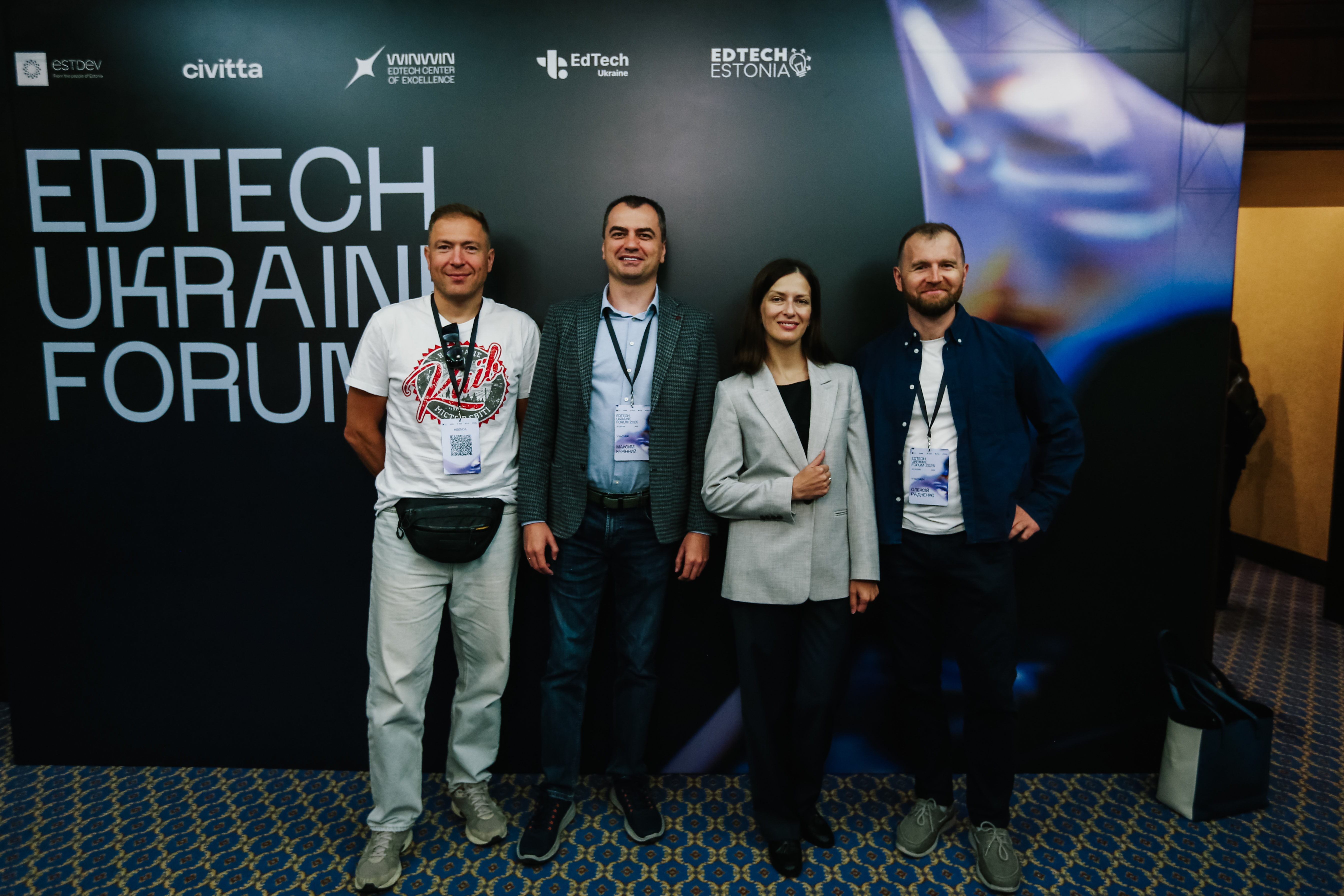
The discussions focused on the development of Ukraine’s EdTech ecosystem, the use of artificial intelligence in education, cooperation between government and technology solution providers, and the potential of Ukrainian EdTech in international markets.
The forum also featured the presentation of a project focused on the research and development of the EdTech ecosystem in Ukraine. The project aims to build a comprehensive understanding of the Ukrainian EdTech market, its stakeholders, needs, and opportunities for further development.
From technology to the needs of the education system
One of the key topics of the forum was the role of technology in advancing education. Participants discussed how digital solutions should be built around specific needs of the education process, including online learning, digital learning materials, automation of administrative processes, learning management, admissions, digital communications, and more.
Estonia’s experience provided a relevant example. President of Estonia Alar Karis spoke about how the country’s EdTech development is based on close cooperation among technology businesses, educational institutions, researchers, and civil society. This model helps shift the focus towards identifying which challenges can be addressed through technology and how technology can improve the learning process.
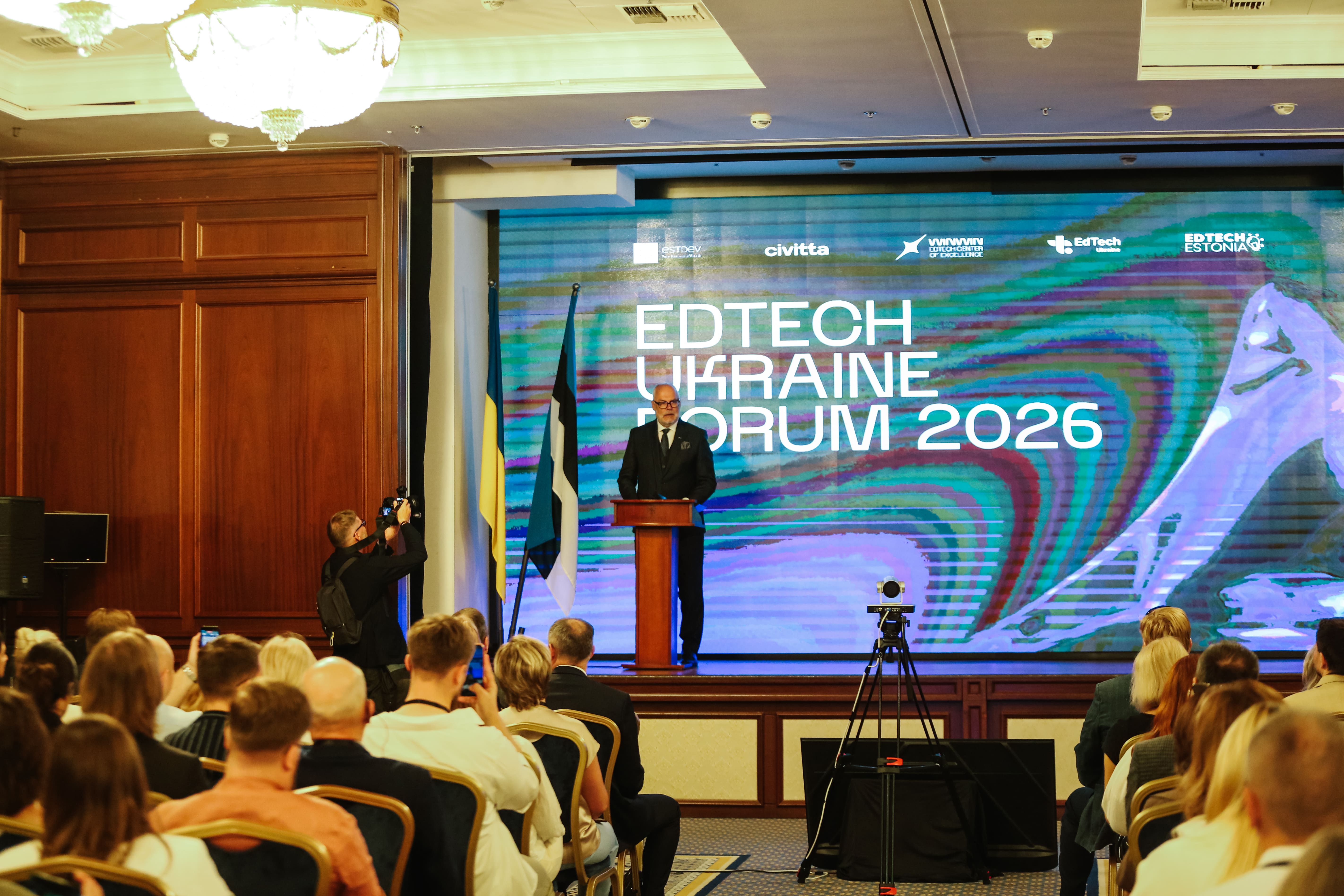
A significant part of the discussion focused on artificial intelligence. Technology should enhance people’s ability to learn, making it important for education systems to develop approaches to AI that help students better understand and absorb learning materials while preserving the need for independent thinking and intellectual effort.
Ukrainian EdTech solutions: resilience and impact assessment
Due to ongoing security challenges, Ukraine’s education system has had to continuously adapt to changing conditions. This creates a competitive advantage for Ukrainian EdTech solutions in international markets: their resilience and ability to operate in rapidly changing environments.
Ukraine already has large-scale digital education systems, including Mriia and the All-Ukrainian School Online. GTA UA member companies have been directly involved in their development: AMEDIA is the developer of Mriia, while Prozori Solutions developed All-Ukrainian School Online.
At the same time, forum participants emphasised the importance of measuring the results of digital solution implementation, including their impact on the education process, the quality and effectiveness of learning, and the development of the education system as a whole. Assessing the effectiveness of such systems should help identify what works best, where improvements are needed, and how digital education products can evolve based on data about their actual use.
Cooperation between government and technology businesses
For GTA UA, one of the key issues discussed at the forum was the model of cooperation between government and technology solution providers. The government should ensure equal access to digital tools in education while providing clear visibility into the sector’s needs and strategic development priorities. This enables EdTech businesses to better understand public sector demand and develop solutions that respond to the actual needs of educational institutions and users.
The procurement of digital solutions was another important topic. In particular, Dmytro Zavhorodnii, CDTO at the Ministry of Education and Science of Ukraine, highlighted the challenges involved in procuring software-as-a-service (SaaS), cloud services, and other modern technology delivery models. Current procedures can make it difficult to select the solution that best meets the specific needs of an educational institution.
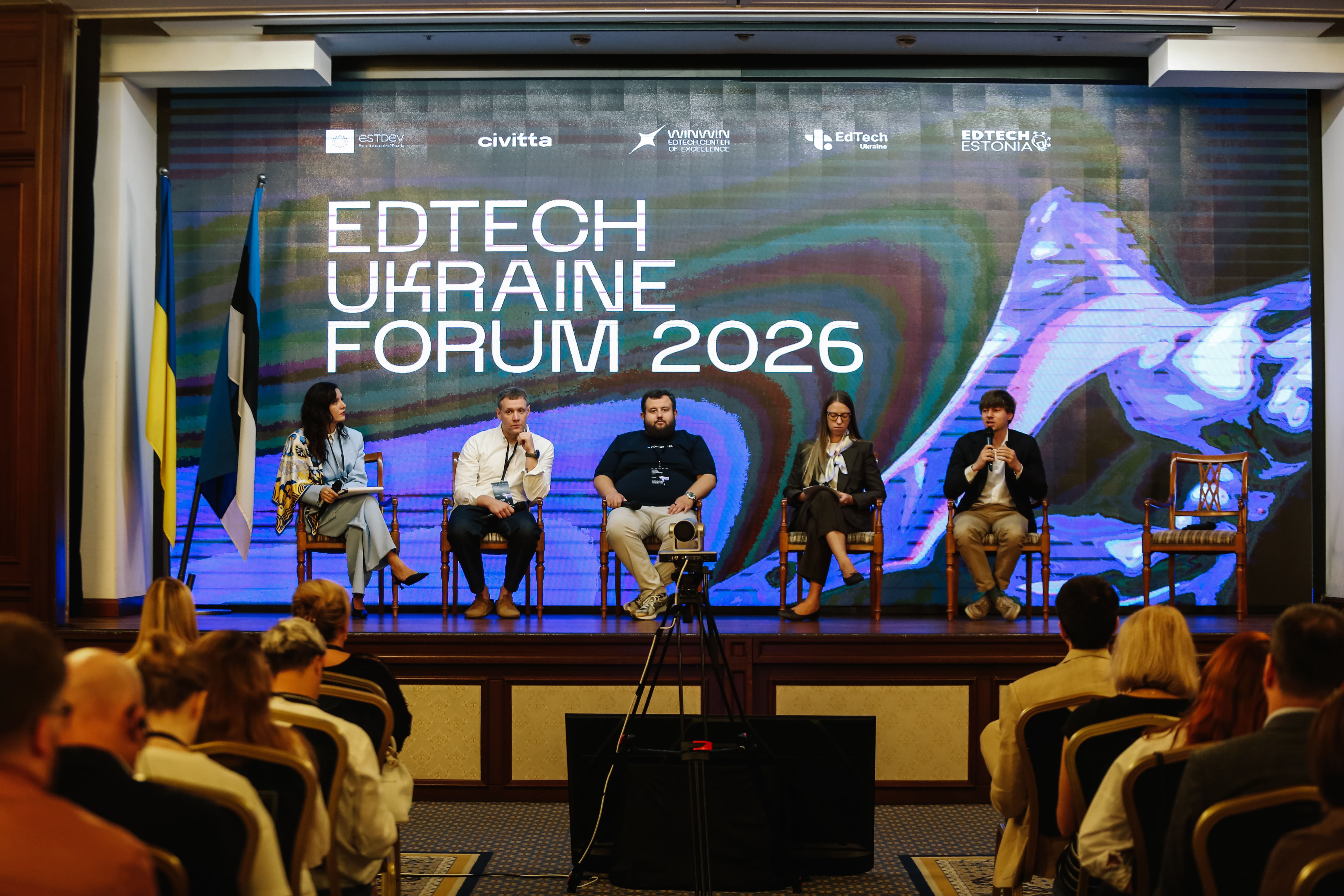
For GTA UA, this issue forms part of our broader work on improving GovTech procurement in Ukraine. An effective model should combine transparency and competition with the ability of public institutions to select technologies based on actual needs and use modern delivery models for digital products and services.
Participation in EdTech Ukraine Forum 2026 provided an opportunity to continue professional dialogue with government and technology sector representatives on the conditions needed to further develop Ukraine’s GovTech and EdTech ecosystems.
The project on researching and developing the EdTech ecosystem in Ukraine was initiated by the Ministry of Digital Transformation of Ukraine and the Ministry of Education and Science of Ukraine, funded by the Estonian Centre for International Development (ESTDEV), and implemented by Civitta together with EdTech Ukraine and EdTech Estonia in partnership with the WINWIN EdTech Centre of Excellence.
Photo: Civitta.

The GovTech Alliance of Ukraine contributed to the development of the programme as part of its partnership with CDTO Campus and the East Europe Foundation. GTA UA member companies – AMEDIA, Kitsoft, and Strimco – delivered training and shared their practical expertise in project management and business analysis for public sector digital transformation with CDTO Delivery Lab participants.
“Sharing the practical experience of the private sector through the training of digital leaders and community development is our investment in strengthening Ukraine’s entire GovTech ecosystem,” said Kateryna Stavniichuk, CEO of the GovTech Alliance of Ukraine.
Practical GovTech Expertise for the Public Sector
The training ran from May to August 2026 in an offline format. Participants included chief and lead specialists from government authorities, state experts, heads of departments and areas, as well as local government officials involved in management projects.
"It's especially valuable that CDTO Delivery Lab participants worked with training cases at every session and could immediately apply tools to specific situations. This approach helps them not just gain new knowledge, but see its practical value across a range of examples. For the public sector, this is an important investment in the teams that directly implement change and develop government services," added Ruslana Korenchuk, CEO of CDTO Campus and Diia.Education, manager of joint projects of East Europe Foundation and the Ministry of Digital Transformation of Ukraine.
The programme combined project management and business analysis tools with the specifics of the public sector. Topics included process reengineering, the development of digital services and registers, public procurement in the IT sector, and working with regulatory frameworks.
The practical component was built around training cases prepared by lecturers for each session. Participants were able to immediately apply project management and business analysis tools to specific management situations.
"The uniqueness of CDTO Delivery Lab lies in the fact that companies with hands-on experience building digital solutions for the government were involved in teaching. This makes it possible to pass on to public sector professionals the expertise and experience gained through real GovTech projects," said Victor Liakh, President of East Europe Foundation.
Building the Capacity of Digital Transformation Teams
As a result of CDTO Delivery Lab, graduates gained practical tools for planning and implementing projects, as well as working with requirements and stakeholders.
For GTA UA, participation in such educational programmes is one way to systematically transfer the practical expertise accumulated by Ukrainian GovTech companies to professionals directly involved in the digital transformation of the public sector.
Engaging technology businesses in training also creates space for knowledge exchange between government and digital solution providers – from understanding needs and conducting business analysis to organising project delivery and implementing digital services. Building the professional capacity of teams and enabling systematic exchange of practical expertise are essential components of a sustainable GovTech ecosystem in Ukraine.
Photo: CDTO Campus.

This year, the forum brought together more than 1,000 representatives of technology and industrial companies, national and regional authorities, local communities, academia, international partners and investors in Kharkiv. The central theme was investment in technology, business and regional resilience, with the programme covering technology business and innovation, digitalisation, human capital, energy independence, security, community development and investment.
These issues are particularly important for Kharkiv and other frontline areas. Businesses operate amid constant security risks, workforce challenges and the need to rapidly adapt their operations. At the same time, frontline regions remain a space for technology entrepreneurship, new business models and investment. One of the key focuses of Global Tech Kharkiv 2026 was therefore identifying practical solutions and partnerships that enable businesses and communities to continue developing during the war.
People, processes and data: how businesses can prepare for digital transformation
Oleksii Radchenko joined the panel discussion “Digital Booster: Digital Transformation of Frontline Businesses”. The participants discussed how technology helps companies adapt to changing conditions, develop their teams and remain competitive.

During the discussion, Oleksii highlighted three areas businesses should focus on when preparing for digital transformation: people, business processes and data.
Successful digital transformation requires more than choosing the right technology. Businesses need to prepare their teams, build effective processes and learn how to use data.
GovTech businesses as partners in building the digital state
Another topic of the panel was the role of the technology sector in building the digital state. Over the past decade, Ukraine has made significant progress in developing digital public products and services. From individual large-scale digital reforms, the country has gradually moved towards an interconnected digital government ecosystem. As this ecosystem evolves, so does the need to further develop the model of cooperation between government and the technology sector.
The GovTech Alliance of Ukraine consistently advocates for an approach in which GovTech companies act as full-fledged partners to the government, bringing practical technology and product expertise into the public sector. This expertise can be brought in even before technical specifications are developed, when public institutions define the problem, design a future digital solution and select the most appropriate implementation model. This allows government institutions to draw on companies’ practical experience in developing, implementing and scaling technology products.
Effective cooperation between government and the GovTech sector requires predictable rules for public digital projects, transparent and competitive procurement models, early involvement of businesses in solution design, and systematic professional dialogue between government and the GovTech community. Developing this model of cooperation is one of GTA UA’s areas of work. The Alliance works to create an environment where the expertise of Ukrainian GovTech companies is systematically included in professional dialogue on the development of digital government and the creation of effective, resilient and scalable digital solutions.
Practical tools for business digitalisation
Global Tech Kharkiv 2026 also provided a platform for presenting practical tools to support the digitalisation of frontline businesses.
The forum featured a presentation of DigitalBooster4SME, a pilot project by Kharkiv IT Cluster aimed at supporting the digitalisation of small and medium-sized businesses in the Kharkiv region. Participants will be able to identify which areas of their businesses should be digitalised, select Ukrainian technology solutions and receive support with their implementation, including financial support through a voucher scheme.
Global Tech Kharkiv 2026 was organised by Kharkiv IT Cluster and Eastern Ukraine EDIH with the support of the Association of Frontline Cities and Communities of Ukraine.
Photo: Kharkiv IT Cluster

The training ran from February to August 2026 and included 18 modules totalling 90 academic hours. The programme covered key aspects of digital transformation, from developing strategies and roadmaps to team and project management, government registries, public procurement, and the use of AI.
As part of the partnership between the GovTech Alliance of Ukraine, CDTO Campus, and East Europe Foundation, the CEO of GTA UA and representatives of GTA UA member companies Strimco, AMEDIA, and MK-Consulting contributed to the programme as lecturers. The experts shared their practical experience in implementing digital projects in the public sector:
Throughout the programme, each participant worked on a transformation initiative for their organisation. The result was a capstone project defining the problem and transformation goal, an implementation roadmap, a governance model, and performance metrics.
Bringing practical GovTech business expertise into educational programmes for public sector digital leaders is one of the areas of cooperation between GTA UA, CDTO Campus, and East Europe Foundation. This format combines management approaches with hands-on experience in developing and implementing digital solutions for the government.
This program is implemented as part of the project "Effective Governance through GovTech and Transparency in Ukraine," implemented by GIZ Ukraine on behalf of the German Government.
Photo: CDTO Campus.

The new categories are now available for submission through the Diia portal:
Both categories allow claims for expenditures financed from the state, regional, and local budgets. Eligible applicants include the State of Ukraine, as well as its central, regional, and local authorities and public institutions. Claims may be submitted by the head of an authority or institution, or by an authorized representative. Authorization can be granted digitally through Diia. All submitted claims undergo verification before being entered into the Register. They will later be transferred to the future International Compensation Commission, which will determine the amount of compensation.
The scale of the challenge remains immense: approximately 4.6 million people are officially registered as internally displaced in Ukraine, while 132,076 km² of the country’s territory remains at risk of contamination by mines and explosive remnants of war.
The digital claims mechanism for the Register of Damage for Ukraine was developed by Kitsoft in partnership with the Ministry of Digital Transformation of Ukraine, using Kitsoft’s AI-powered low-code platform Liquio. Liquio powers the digital claim forms, integrations with state registries, automated data validation, and secure interaction with the Register’s Central Information Management System (RCMS) in The Hague.
“We are building a digital mechanism that helps document war-related damage and creates the foundation for future reparations. Liquio enables the system to evolve continuously by adding new claim categories and integrations without rebuilding each service from scratch. This is particularly important for the Register, as the consequences of Russia’s aggression are diverse and must be documented as comprehensively as possible”, - Vladyslav Furda, Project Manager at Kitsoft.
The development of the Register’s digital claims mechanism continues. The new categories expand the evidence base for losses caused by Russia’s aggression and strengthen the future international compensation mechanism.
This article was prepared by Kitsoft, a member of the GovTech Alliance of Ukraine. The content is the sole responsibility of the author and does not necessarily reflect the views of GTA UA or other Alliance members.

The series aims to establish a permanent professional platform for open dialogue between government institutions, the GovTech industry, international partners, and the expert community on the practical challenges of digital transformation. Unlike traditional conferences, the format focuses on sharing real-world experience, identifying practical solutions, and producing tangible outcomes for Ukraine’s GovTech ecosystem.
The first discussion addressed one of the key challenges in building a digital state: selecting the most effective procurement model for GovTech projects. Participants explored when external contractors should be engaged, how risks should be allocated between contracting authorities and suppliers, which procurement approaches work best in practice, what opportunities are created by the new Law of Ukraine On Public Procurement, and what specific considerations arise when implementing digital projects with international donor support.
“GovTech projects bring together government, businesses, donors, and implementing partners, but each of them views the procurement process from a different perspective. Together with our partners, we organised this practical discussion to create a space where the GovTech community could exchange experience and develop shared approaches that will help the government deliver digital projects more quickly and effectively,” said Kateryna Stavniichuk, CEO of GTA UA and moderator of the event.

The discussion opened with three keynote perspectives representing the key stakeholders involved in GovTech procurement.
Vasyl Zadvornyy, CEO of MK-Consulting and Board Member of GTA UA, presented the shared position of GTA UA member companies on approaches to procuring digital solutions. Ivan Reva, Director of the Digitalisation Department at the Defence Procurement Agency DOT of the Ministry of Defence of Ukraine, shared the government’s perspective as a contracting authority. Mykhailo Kornieiev, Senior Expert at eGA (DT4UA project), presented the donor perspective, using the Digital Competence Centre as an example of a successful public-private partnership model in GovTech.
Presenting GTA UA’s common position, Vasyl Zadvornyy emphasised that the key challenge for the sector is not the lack of procurement mechanisms, but their effective application.
“Ukraine’s public procurement legislation already provides a sufficient set of tools for procuring high-quality digital solutions, and the new Law of Ukraine On Public Procurement further expands these opportunities. The main challenge is not changing the rules or introducing new instruments, but using the existing ones effectively and strengthening the procurement capacity of public authorities. That is why the GovTech sector needs practical guidance, proven approaches, and successful examples of how existing procurement tools can be applied in practice. GTA UA is launching a collaborative effort to advance this work,” he said.
The keynote session was followed by a panel discussion moderated by Vasyl Zadvornyy. The panel featured Mykhailo Mokhnia, Deputy Director of the Public Procurement Department at the Ministry of Economy, Environment and Agriculture of Ukraine; Yuliia Zaplavna, Senior Programme Manager of the EGAP Programme at the East Europe Foundation; Oleksii Dorohan, Executive Director of BRDO; and Mariia Muzyka, COO of the GovTech company Kitsoft.
The discussion focused on selecting appropriate procurement models, planning digital projects, allocating risks between contracting authorities and suppliers, addressing common contracting challenges, managing project delivery under changing requirements and budget constraints, applying the opportunities introduced by the new Law of Ukraine On Public Procurement, and implementing digital projects with international partner support.

Ruslana Korenchuk, CEO of CDTO Campus and Diia.Education, manager of joint projects of East Europe Foundation and the Ministry of Digital Transformation of Ukraine, highlighted the importance of professional discussions in building a shared understanding of how Ukraine’s digital transformation should move forward.
A practical outcome of the event was GTA UA’s initiative to establish a working group in autumn 2026 to develop a GovTech Procurement Guide. The group will bring together representatives of public authorities, GovTech companies, international partners, and the expert community to prepare practical recommendations on selecting procurement models, making effective use of procurement instruments, and contracting digital projects.
The discussion marked the first event in a new series of practical discussions for the GovTech community, jointly organised by GTA UA and CDTO Campus. Among the upcoming topics, one event will focus on the practical implementation of Cabinet of Ministers Resolution No. 205 and the development of standard documentation templates for the lifecycle management of public digital products.
The program is implemented by CDTO Campus as part of the project "Effective Governance through GovTech and Transparency in Ukraine," implemented by GIZ Ukraine on behalf of the German Government, executed by the East Europe Foundation.

This is more than just a statistics portal. The platform provides open access to data on key developments across the country, covering areas such as the economy, healthcare, education, environmental sustainability, gender equality, and other sustainable development indicators. It serves as a valuable resource for government institutions, international partners, researchers, and the public, enabling evidence-based decision-making through access to reliable and up-to-date data.
The modernization marks an important step in adapting Ukraine’s SDG monitoring system to the realities of war and the country’s future recovery. The upgraded platform makes data more accessible and provides users with improved analytical tools and a more intuitive experience.
The project was implemented with the support of the United Nations Development Programme (UNDP) in Ukraine and funded by the Government of Japan. Expert support was provided within the framework of the Diia Support Project, implemented by UNDP with funding from the Government of Sweden.
Supporting Data-Driven Recovery and Development
The SDG Monitoring Platform is the official source of open data on Ukraine’s progress toward achieving the United Nations Sustainable Development Goals. The platform enables government agencies, international organizations, donors, and experts to assess progress, identify development priorities, and shape informed decisions for the country’s recovery and long-term development.
Administered by the State Statistics Service of Ukraine, the platform ensures transparent access to official indicators and helps stakeholders monitor changes based on verified data rather than assumptions.
Improved Navigation, Accessibility, and Data Experience
As part of the modernization, Kitsoft upgraded the platform to the latest version, enhanced its structure, and introduced new functionality to support updated SDG indicators.
One of the key improvements is a redesigned navigation system. Users can now simultaneously access both previous and updated indicators for each Sustainable Development Goal, making it easier to compare data, analyze changes, and track the evolution of Ukraine’s SDG monitoring framework.
The upgrade significantly improves the platform’s usability for government institutions, international organizations, analysts, and researchers who rely on SDG data to evaluate the country’s development and plan future recovery efforts.
In addition, the Kitsoft team:
During the modernization process, historical data from the previous monitoring system was preserved, allowing users to track long-term trends and compare indicators over time.
This article was prepared by Kitsoft, a member of the GovTech Alliance of Ukraine. The content is the sole responsibility of the author and does not necessarily reflect the views of GTA UA or other Alliance members.
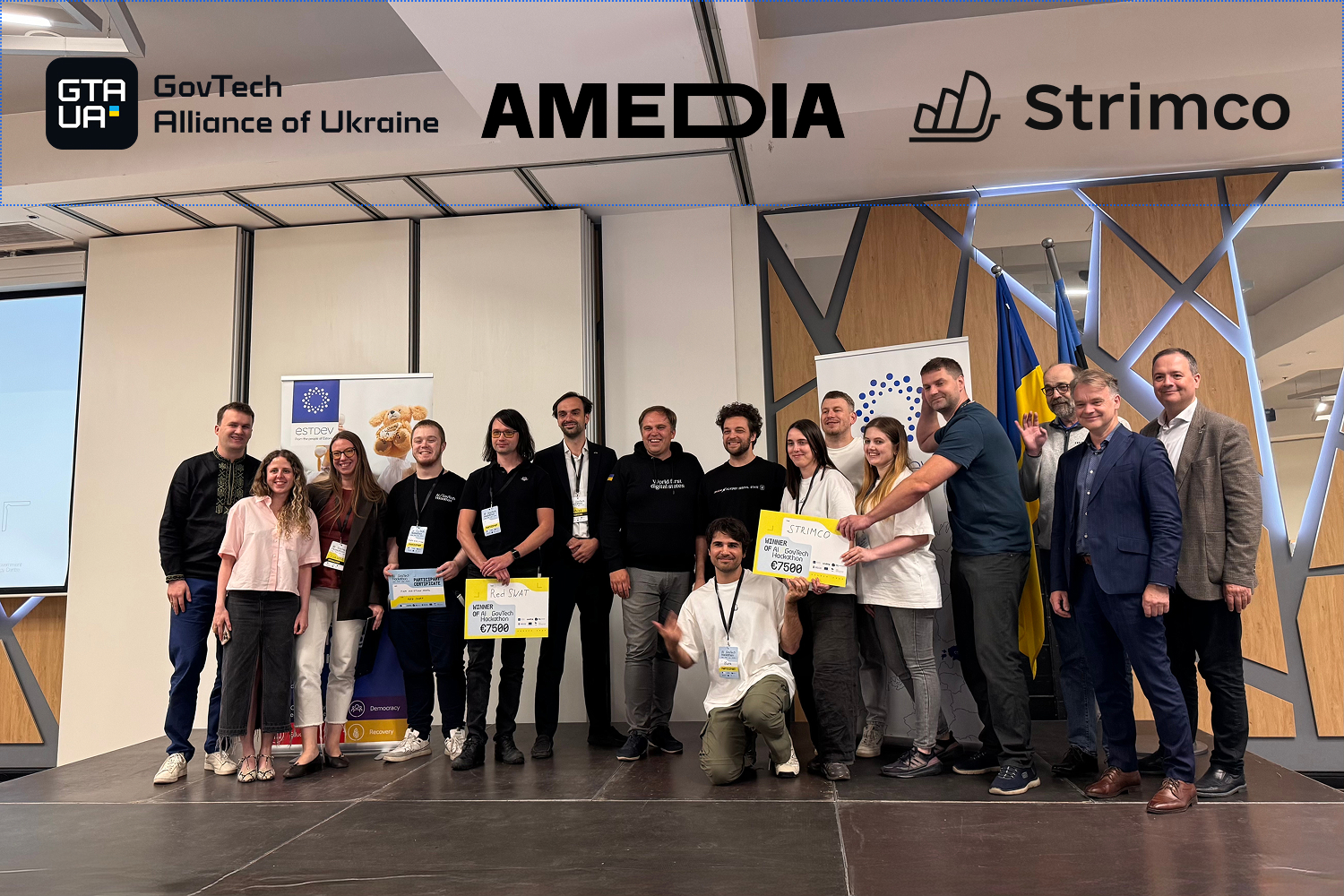
The hackathon served as a collaborative platform for developers, GovTech teams, AI experts, and public sector representatives to address five real-world digital transformation challenges. Participants developed solutions related to public registries, procurement, child protection, cybersecurity, and business–government interaction.
The Strimco team worked on the challenge “AI-Indicator of Procurement Documentation Quality.” Their project, TenderDog, is an AI-powered tool designed to analyse tender documentation and identify potential risks and shortcomings. The team included Yurii Makukha, Dmytro Bilan, Lana Reutska, Olena Bondarenko (Strimco), Maryna Moiseieva, and Priit Oja, a business analyst and QA specialist from Estonia.
.jpg)
AMEDIA worked on the challenge “AI-Assisted Discovery and Remediation of Vulnerabilities in Government Code.” The team presented RedSWAT, a RedBox solution for comprehensive automated penetration testing powered by artificial intelligence. The project team included Maksym Vereshchak and Artem Kostiuk (AMEDIA), Tom Kristian Abel, an ethical hacker from Estonia, and team advisor Artem Iehorov (AMEDIA).
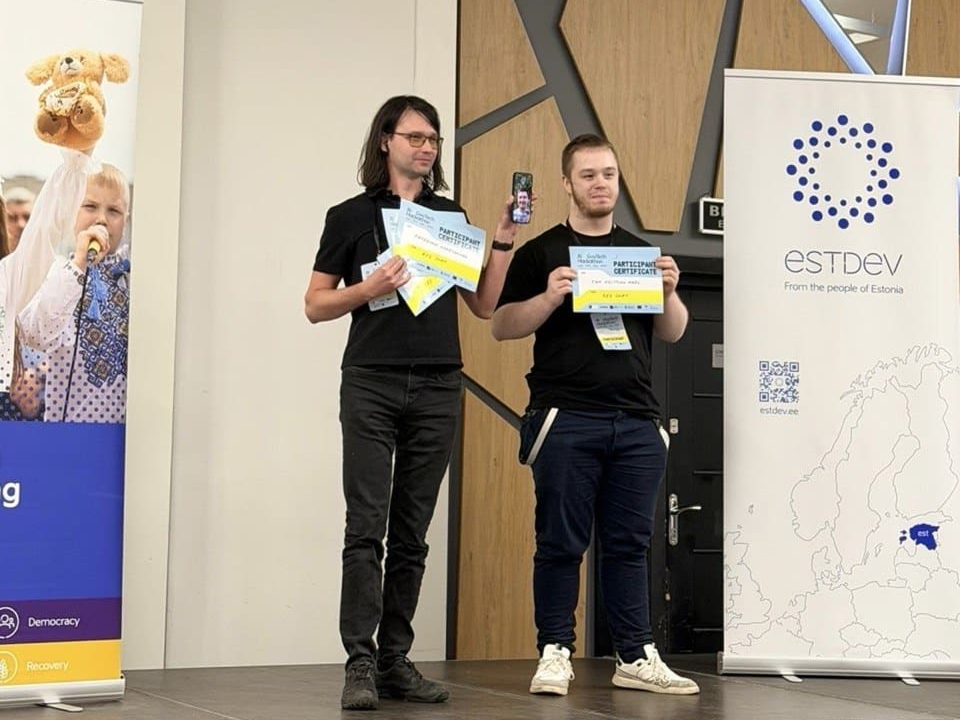
The hackathon results once again demonstrate the strong expertise of Ukrainian GovTech companies in addressing complex public sector challenges. The teams showed not only a deep understanding of public administration processes, but also the ability to rapidly apply advanced technologies, particularly AI, to develop practical solutions with the potential for implementation in the public sector.
An important aspect of the hackathon was the collaboration between Ukrainian and Estonian experts. Working in joint teams with representatives from Estonia, one of the world’s leading digital societies, encouraged knowledge exchange, strengthened professional networks, and contributed to the international integration of the Ukrainian GovTech ecosystem.
For GTA UA, these results confirm that Ukrainian GovTech companies are not only experienced providers of digital solutions for government, but also a source of innovation and practical expertise that is relevant both in Ukraine and internationally.
The AI/GovTech Hackathon was organised by CIVITTA and the Estonian Centre for International Development (ESTDEV), with financial support from the Estonian Ministry of Justice and Digital Affairs and in cooperation with the Ministry of Digital Transformation of Ukraine and GGTC Kyiv.
The event was held with the information support of the GovTech Alliance of Ukraine (GTA UA) and 1991.

It will bring together everything people need for career development in one place: from job search and reskilling to qualification verification and access to government support. Kitsoft joined the project at the stage of building its technological foundation: the company designed the solution architecture, deployed infrastructure based on the Liquio low-code platform, transferred the environment to the customer, and trained teams to work with the platform.

A new labour market ecosystem
Obrii will become part of the Diia ecosystem, with new services available through both the portal and the mobile application in a convenient digital format. The platform is designed for people seeking employment, learning new skills, or changing careers, as well as for employers. Special attention is given to economically inactive Ukrainians who are currently outside the labour market, including veterans, internally displaced persons, people with disabilities, young people, women with children, and people aged 50+. Dedicated support pathways and access opportunities are planned for these groups.
By the end of June, Obrii plans to launch beta testing of its first two services — a professional development grant and a service for resignation from employment in temporarily occupied territories. Following testing, both services will become available to users through Diia.
The ecosystem will continue to be rolled out throughout 2026–2027. Future stages include the launch of a register of working-age individuals, electronic employment functionality, AI-powered job and learning recommendations, as well as proactive support services for people currently outside the labour market. Among the nearest planned services are unemployment registration and unemployment benefit applications.
From Diia to Obrii: a shared technological foundation
The Kitsoft team deployed two environments at the State Employment Centre’s infrastructure facilities — production and testing. Company specialists configured the infrastructure and system settings and transferred full control of both environments to the customer for further operation and development.
Kitsoft also provided training for the specialists building Obrii. The programme involved 10 representatives from project teams and contractor organisations. The 128-hour training course covered platform operations, business process creation and configuration, administration, and practical use of Liquio tools.
“For us, it is important not only to deliver the platform but also to help the customer’s team become independent in its further development. That is why we train teams to work with Liquio, conduct certification programmes, and help build in-house expertise. Today, eight independent IT teams are already working with the platform and creating digital services without Kitsoft’s involvement,” said Oleksandr Iefremov.
The technological foundation of Obrii is the open-source Liquio platform, created by the Kitsoft team for launching and developing digital public services. The platform’s open-source code provides customers with full access to the codebase, enabling them to independently develop solutions and engage different contractors.
Liquio powers the Diia portal, It's a baby (eMaliatko), eEntrepreneur, and uResidency services, the Ecosystem platform, eVeteran, and other digital products used daily by millions of Ukrainians.
“The platform architecture is designed so that individual services can evolve independently while the overall system remains stable even under high loads. This enables rapid deployment of new digital services, scalable growth based on user needs, and quick adaptation to legislative changes,” commented Andrii Horishniakov, Project Manager at Kitsoft.
Liquio also includes built-in artificial intelligence tools for digital service development and AI assistant creation. The platform is listed in the international GovStack catalogue as a recommended technology for building digital public services. Particular attention has been paid to security: the platform has received certification from the State Service of Special Communications and Information Protection of Ukraine with a G2 assurance level, confirming compliance with national information security requirements.
A new wave of GovTech solutions
Today, Ukraine is moving beyond the digitalisation of individual services towards creating sector-specific ecosystems that unite services, data, and processes around user needs.
Obrii is one example of this approach. Its goal is not simply to add new services but to create a unified digital space for interaction between citizens, employers, educational institutions, and public sector organisations in the field of employment.
“If the first wave of digital transformation in Ukraine was primarily associated with Diia, we are now entering a new phase — sectoral digital systems that help transform entire sectors. Obrii and similar projects are examples of this trend, which will only continue to strengthen in the coming years,” noted Oleksandr Iefremov, CEO of Kitsoft.

For Kitsoft, participation in the project represents another step in developing technologies that help public institutions launch digital services faster, build internal expertise, and create modern digital products for citizens.
This article was prepared by Kitsoft, a member of the GovTech Alliance of Ukraine. The content is the sole responsibility of the author and does not necessarily reflect the views of GTA UA or other Alliance members.

This year, the Congress brought together 322 participants from 36 countries. The programme featured 19 panel discussions, presentations of the investment potential of Ukrainian cities and communities, and dedicated sessions on business support instruments, innovation, and human capital development.
Kateryna Stavniichuk, CEO of the GovTech Alliance of Ukraine (GTA UA), participated in the panel discussion “Doing Business in Ukraine: From Reforms to Results”, where speakers discussed the impact of reforms on the business environment, Ukraine’s investment attractiveness, and the steps needed to further align the country with European Union standards.

During the discussion, Kateryna Stavniichuk highlighted that digital transformation has become one of the key factors improving interaction between businesses and the state in Ukraine. Thanks to the development of digital infrastructure, electronic services, public registries, digital identity solutions, and interoperability mechanisms, businesses today benefit from significantly faster and more convenient access to public services.
Special attention was given to the role of GTA UA as a platform that brings together government, technology companies, and international partners to support the development of a mature GovTech ecosystem. GTA UA facilitates the systematic involvement of industry expertise in public policy development, promotes professional standards, and supports the international positioning of Ukrainian GovTech.
The discussion also addressed the future development of Ukraine’s digital state. Among the key priorities for the coming years are the harmonisation of digital infrastructure with European standards, the advancement of interoperability, digital identity, cyber resilience, and the creation of a more predictable regulatory environment for businesses.
For GTA UA, participation in international platforms such as the Fifth Foreign Investment Congress is an important opportunity to represent the Ukrainian GovTech ecosystem within a broader economic and investment context, while strengthening understanding of the role digital technologies play in Ukraine’s recovery and long-term development.
We thank the organisers of the Fifth Foreign Investment Congress for the invitation and the opportunity to contribute to the dialogue on the future of Ukraine’s investment and technological development.


The event brought together representatives of GovTech companies, the public sector, international partners, and the expert community for an open discussion on how Ukrainian GovTech can scale its international presence — not only through individual digital products, but through offering practical experience in transforming government systems.
Today, Ukrainian GovTech is attracting increasing attention from international partners, governments, and digital ecosystems across different regions of the world. At the same time, there is still a significant gap between the international recognition of Ukraine’s digital state and the actual expansion of Ukrainian GovTech companies into new markets.

“One of GGTC Kyiv’s core missions is to serve as a bridge between Ukraine and global GovTech: helping international partners better understand Ukraine’s progress in digital transformation, while supporting Ukrainian teams in building new forms of global cooperation. Today, it is important not only to talk about success stories, but also to openly discuss practical experience — what worked, what did not, what barriers exist, and how we can collectively create clearer pathways for Ukrainian GovTech internationally,” said Kateryna Frolova, Head of GGTC Kyiv.
One of the key messages of the event was that Ukrainian GovTech cannot be viewed as a set of ready-made “boxed solutions” that can simply be exported to another country without adaptation. GovTech solutions are deeply connected to local legislation, procurement rules, governance models, registry architecture, interoperability levels, and digital culture.
That is why the real value of Ukrainian GovTech lies not only in creating individual digital services, but in the experience of systemic transformation of government processes.
During her keynote speech, Kateryna Stavniichuk, CEO of the GovTech Alliance of Ukraine, emphasized that Ukrainian GovTech was shaped under constant crises: the pandemic, cyberattacks, political transformations, and the full-scale war. This created a unique combination of speed, scalability, resilience, and the ability to deliver public digital solutions under conditions of high complexity.
.jpg)
“Ukrainian GovTech is not only about UI/UX or client-oriented public services. It is about rethinking government processes, human-centered product thinking, resilience, speed, and the ability to work with complex systems. But for international development, we need to better structure knowledge and experience, strengthen the visibility of companies, and build a united voice for the industry,” Kateryna Stavniichuk emphasized.
Special attention during the discussion was devoted to the fact that international GovTech today is not only about selling technology. For governments and international partners, the following factors are critically important:
Participants also discussed that GovTech international integration begins long before tenders — through building professional networks, participating in international ecosystems, cooperating with local partners, and jointly searching for solutions to public-sector challenges.
The practical part of the event focused on case studies from companies and teams that already have international experience or are exploring opportunities in new markets. Insights were shared by:
Speakers discussed different models of international expansion — from work in European and African markets to projects in countries of the Global South. At the same time, common conclusions emerged across the cases: entering any GovTech market requires trust, local presence, understanding of the regulatory environment, and readiness to work with long decision-making cycles.
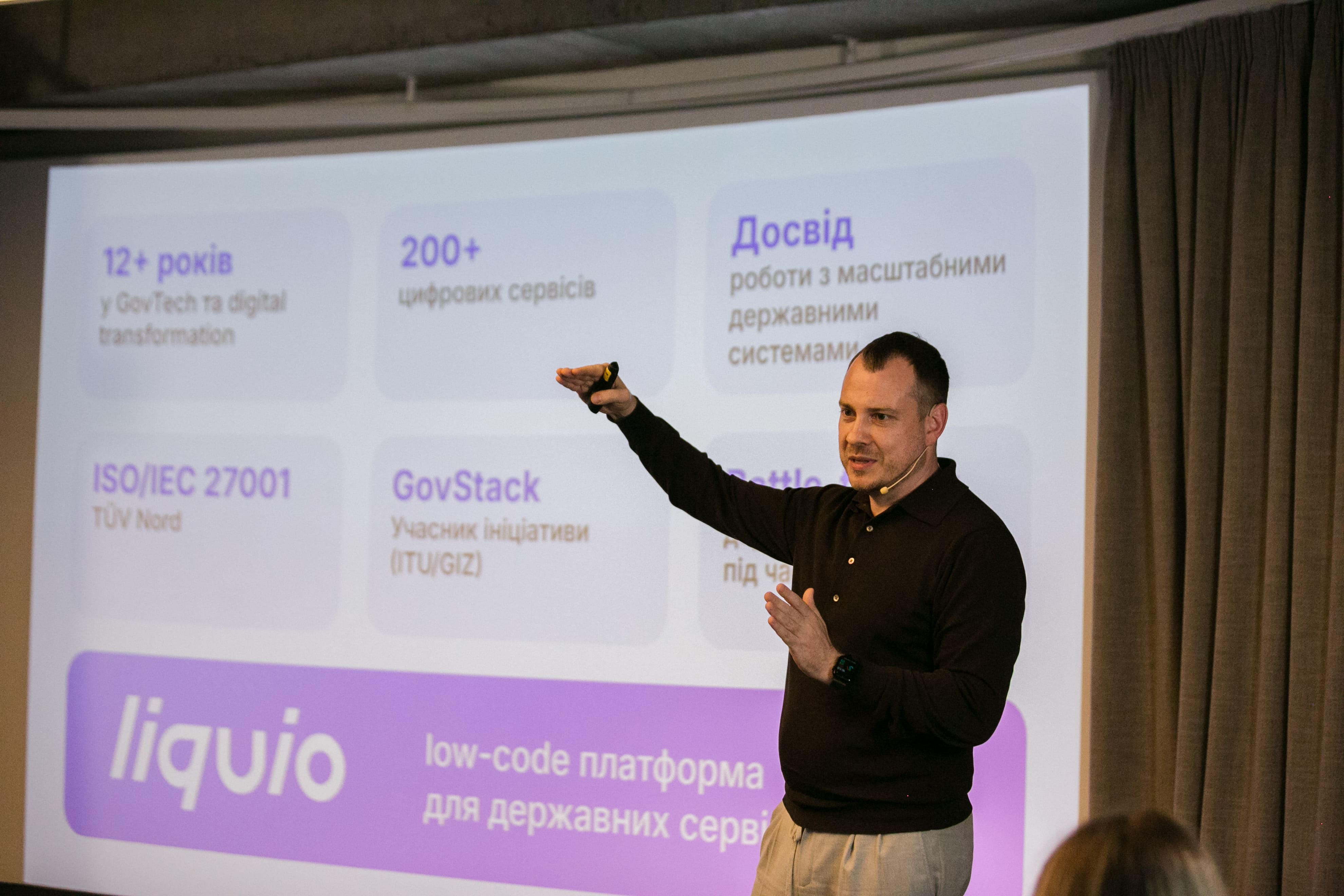
“On the international GovTech market, it is no longer enough to simply have a good product. Governments are looking for partners who know how to work with national digital systems, launch services quickly, comply with security standards, and become part of the global ecosystem,” said Oleksandr Iefremov, CEO of Kitsoft.
For the GovTech Alliance of Ukraine, international integration and positioning of Ukrainian GovTech is one of the Alliance’s strategic priorities. GTA UA supports the integration of the Ukrainian GovTech ecosystem into the international context through partnerships, network cooperation, and representation of industry expertise. The Alliance works on building a more coordinated and visible Ukrainian GovTech ecosystem, creating institutional preconditions for Ukrainian companies to participate in international projects and consortia, and strengthening the international presence and export capacity of Ukrainian GovTech.
GTA UA also plans to continue developing cooperation with GGTC Kyiv and other partners in this direction to strengthen connections between Ukrainian and international GovTech communities and support the international integration of Ukrainian GovTech.
GovTech MeetUp: Connecting Ukrainian GovTech Internationally was organized by the Global Government Technology Centre (GGTC) Kyiv and the GovTech Alliance of Ukraine with the support of the Swiss-Ukrainian EGAP Program implemented by the East Europe Foundation.

Previously, users could receive an e-Veteran ID only after obtaining a physical document. As a result, some veterans with confirmed status, including combat participants and people with war-related disabilities, were unable to access veteran digital services in Diia.
With the new update, the electronic ID is generated directly from the data stored in the USRWV. This gives veterans faster and easier access to state services and benefits.
Services currently available through the e-Veteran ID include:
How to add the document in Diia
The photo for the digital ID is taken from the user’s ID card or international passport.
Information from the USRWV is now also available in the Veteran PRO section in Diia. Users can check their status and basic personal information directly in the app without visiting Administrative Service Centers or other government institutions.
As part of the project, Kitsoft also introduced electronic ID number generation for all categories in the register.
“The e-Veteran ID update is another important step toward making public services more accessible for veterans. It not only improves convenience, but also helps prevent issues related to lost or damaged paper documents,” says Viktoriia Doroshenko, Business Analyst of the project.
This article was prepared by Kitsoft, a member of the GovTech Alliance of Ukraine. The content is the sole responsibility of the author and does not necessarily reflect the views of GTA UA or other Alliance members.

GTA UA representatives evaluate regulatory and legal acts based on their long-standing industry expertise. Practical experience in implementing digital solutions in the public sector serves as the foundation for an independent assessment of the feasibility and long-term potential of government regulatory initiatives.
Representing GTA UA on the Expert Board:
The second issue analyzes 249 regulatory and legal acts adopted during Q3-Q4 2025 – more than twice the number reviewed in the first half of the year (109 acts). The overall Index score reached 1.84 out of 3.0 in both quarters, compared to 1.98 in the first half of 2025.
The decline is explained by a shift toward secondary legislation that operationalizes previously adopted decisions. Such acts tend to have clearer implementation mechanisms but lower levels of novelty and innovation.
Key trends identified in the second half of 2025 include:
The second volume demonstrates that the government is introducing fewer high-profile initiatives and more decisions that can realistically be implemented. This reflects institutional maturity, while also signaling that the innovation momentum requires further strengthening.
The research was conducted with the support of the Swiss-Ukrainian EGAP Program implemented by the East Europe Foundation.

The program is implemented by CDTO Campus in partnership with the GovTech Alliance of Ukraine and the East Europe Foundation.
Experts from GTA UA member companies – AMEDIA, Kitsoft, and Strimco – joined the program as lecturers and practitioners. These are professionals with practical experience in delivering digital transformation projects for the public sector, including registries, digital public services, government IT systems, and lifecycle management of digital products.
The program is built around practical work with real-life cases. Participants will go through the full project management cycle – from problem definition and requirements gathering to implementation of digital solutions and evaluation of results.
A dedicated focus of the program is the specific context of public sector digitalization, including:
%20ENG.jpg)
“Digital transformation is not only about technology, but also about the ability to properly define a problem, gather requirements, make decisions, and bring a project to a real result. Practical experience in implementing digital solutions in the public sector is critically important for teams within central government institutions. GovTech is not about abstract concepts – it is about working with real challenges, processes, and systems, while sharing responsibility for outcomes,” emphasized GTA UA CEO Kateryna Stavniichuk during the opening of the program.
She also highlighted that the partnership between GTA UA and CDTO Campus is part of a broader systemic effort to develop professional educational programs in digitalization and strengthen state capacity through practical GovTech expertise.
GTA UA views the involvement of GovTech companies in educational initiatives as an important contribution to the development of a professional GovTech community and the dissemination of practical digital transformation experience.

The first two episodes are already available on Spotify, Apple Podcasts, and YouTube. The podcast is released in English.
About the podcast
Code the State explores the real side of digital transformation — technological solutions, managerial trade-offs, failed projects, and real breakthroughs. Each episode is built around a specific story or case: what worked, what didn’t, and why.
In each episode:
The podcast explains complex GovTech topics in simple language and shows how to apply this knowledge in practice.
Host — Olena Uvarenko, International Program Lead at Kitsoft. The project will be of interest to those working in government digital teams or international organizations, building GovTech products, advising governments — or simply wanting to understand how digital transformation actually happens.
Two episodes of the Code the State podcast have been released
The first episode focuses on why some governments move through digital transformation faster than others. Guests include Daniel Korski — co-founder of PUBLIC and one of the pioneers of GovTech in Europe — and Oleksandr Iefremov, CEO of Kitsoft. The conversation explores risk culture in public institutions, trust in digital services, the role of AI, and what truly drives digital breakthroughs.
The second episode focuses on how digital services move from idea to prototype and eventually create real impact on people’s lives. Together with Tuntufye Mwamlimina Ntaukira — Digital Governance Analyst at United Nations Development Programme (Malawi) and mentor of the Women in GovTech Challenge — and Oleksandr Iefremov, we discuss how to build government services quickly, why even the best solutions sometimes fail, and where real digital transformation begins.
First season: Women in GovTech
The first season of Code the State is dedicated to the Women in GovTech Challenge 2026 — a global program in which women from 85 countries develop prototypes of digital public services. Participants learn prototyping on Liquio — a low-code platform with a Community Edition created by the Kitsoft team for developing digital public services.
The season includes conversations with challenge participants, mentors, and international experts from UNDP, the World Bank, GIZ, EY — thought leaders and specialists in digital governance, cybersecurity, and public infrastructure development.
“Code the State is about the real experience of digital transformation in governments. For me, it is an opportunity to hear from people who are actually changing systems and to understand how these changes happen from the inside. I invite you to listen to the first episode,” — Olena Uvarenko.
More about the podcast and new episodes — on the Code the State page.
This article was prepared by Kitsoft, a member of the GovTech Alliance of Ukraine. The content is the sole responsibility of the author and does not necessarily reflect the views of GTA UA or other Alliance members.
.png)
Among the company’s key projects are the Diia portal – the national web platform that provides citizens with access to government services online, and over 200 other digital services used by 24+ million citizens.
At the same time, global cyber threats continue to rise, and Ukraine is on the front lines. According to the Microsoft Digital Defense Report 2025, Ukraine is among the top 5 most attacked countries in the world and ranks first in Europe, with 25% of all hostile operations originating from Russian cyber structures. According to the National Security and Defense Council of Ukraine, the number of attacks in 2025 increased by 37% compared to the previous year, highlighting the unprecedented pressure on Ukrainian cyberspace.
In response to these unprecedented challenges, we integrate rigorous security standards into our solutions at every stage. The ISO 27001 certification validates the core processes of our daily operations:
By systematizing these practices, we have turned daily discipline into proven reliability.
"Today, for our partners, this means deeper trust, faster compliance, and transparent, predictable processes. For us, it is the formalization of the excellence we strive for every day." – Oleksandr Iefremov, CEO of Kitsoft.
Achieving ISO/IEC 27001 is a key milestone in our broader security roadmap:
This comprehensive approach ensures the resilience of our products and the continued trust of our partners. Together, we are building a secure digital future.

What the 2025 study figures show:
Behind these figures lies a question that will define the trajectory ahead: how the digital sector will develop and what role GovTech will play in that process. High-quality public digital infrastructure sustains the pace and development of the digital economy, creates predictable rules of the game, and provides the conditions for sustainable growth and the scaling of innovation. That is why the development of GovTech is no longer only a matter of digitalisation — it is a matter of the country’s competitiveness.
In this context, the structure of IT service exports offers additional insight for analysis. The concentration of 90% of exports in the US and EU markets is both a strength and a risk. To strengthen Ukraine’s international presence, Ukrainian GovTech expertise and solutions must meet global standards, be backed by successful use cases, and be integrated into international partnerships.
At the same time, the market is sending a clear signal about technological priorities. Investment in startups with an AI component is 2.8 times higher than in startups without one. This means that the integration of innovative technologies into the IT sector — including GovTech — is becoming a necessary condition for attracting capital and further developing digital solutions.
Taken together, these factors shape a new framework for the development of the digital economy, in which GovTech acts not merely as a separate segment, but as its systemic foundation.
It is with this understanding that GTA UA works by:
We thank the organisers and participants for a meaningful event and for a study that creates space for discussion about systemic change not only within Ukraine, but also at the global level.
The Tech360: Policy Meets Technology conference was organised by the IT Ukraine Association.

According to the report, 52% of the analysed websites reached a sufficient or high level of basic accessibility, while the number of top-performing resources increased more than fourfold compared to the previous year. These results reflect not only the advancement of individual digital products but also serve as an indicator of the growing maturity of the Ukrainian GovTech ecosystem.
Leaders in basic accessibility
Seven out of 16 websites that received the highest score for basic accessibility were developed with the involvement of GTA UA member companies.
The report highlights digital platforms developed by Kitsoft:
The Diia.City website, developed by AMEDIA, was also highlighted.
Building inclusive digital services
When developing digital solutions for the public sector, companies integrate accessibility principles by adhering to modern international standards, including WCAG 2.1 and National Standard of Ukraine EN 301 549:2022, while systematically advancing the human-centred design of public sector information systems.
Accessibility is embedded across all stages of development — from interface design to functionality and content creation. Close collaboration with the beneficiary institution is essential: while GovTech companies are responsible for the technical implementation, the respective ministry or public authority ensures accessible content, including image descriptions, logical text structure, and compliant documents.
The results of the in-depth assessment confirm that even platforms with high baseline scores require ongoing support for content accessibility and improvement.
This reinforces a key principle shared within GTA UA: digital accessibility is a continuous process that must be institutionalised through policies, standards, and development practices. Such an approach ensures scalability, sustainability of results, and strengthens both user experience and trust in public digital services.
“For us, digital accessibility is a reflection of respect for every citizen. In times of war, the need for inclusive solutions becomes even more critical. Accessibility of public services must not be an exception but the norm — and a foundation upon which a modern digital state is built,” the Kitsoft team notes.
Knowledge sharing within the community and the development of unified approaches to building digital products — including accessibility requirements — are essential for delivering high-quality public services and strengthening the GovTech ecosystem as a whole.
As part of the working groups of the Digital Competence Centre of the Ministry of Digital Transformation of Ukraine, GTA UA continues to contribute practical expertise and supports the systematisation of knowledge to advance harmonised standards in public sector digital projects.
The monitoring study was carried out at the end of 2025 by UNDP in Ukraine together with the Digital Accessibility Competence Centre as part of the DIA Support project, implemented with financial support from Sweden.
.png)
Maintaining the momentum of digitalisation remains one of the state’s key priorities. This was the focus of a roundtable discussion organized by the Reform Index project of VoxUkraine. The event brought together representatives of national and local government authorities, business, and sectoral experts involved in advancing digital transformation. From the GovTech Alliance of Ukraine, the event was attended by Kateryna Stavniichuk, CEO of GTA UA, and Oleksii Radchenko, CEO of Prozori Solutions.
Ukraine has already demonstrated its capacity for rapid digital transformation even amid full-scale war. At the same time, the next stage of building a digital state requires strategic clarity for the entire GovTech ecosystem. This was emphasised by GTA UA CEO Kateryna Stavniichuk during her remarks at the discussion.
Under Ukrainian Global Innovation Strategy 2030 (WINWIN 2030), GovTech is identified as one of the key priority sectors. A logical next step is the development and public articulation of a sectoral framework that would align the efforts of government, business, and international partners. Clear strategic guidelines create a predictable investment environment, help prevent resource fragmentation, and enable the systematic engagement of the expert community in implementing and monitoring strategic objectives.
GTA UA reaffirms its readiness to partner in developing and implementing such solutions. Representatives of the Alliance are already involved in the Expert Board of Ukraine’s GovTech Reform Index — an independent mechanism for assessing draft regulations based on criteria of innovation, feasibility, and long-term impact.
Particular attention was also paid to the financial sustainability of digital transformation reform in the public sector. The reduction of external institutional support for the GovTech sector at the beginning of 2025 has reshaped the operating environment. At the same time, challenges are not diminishing — they are becoming more complex, ranging from ensuring ethical and responsible AI deployment in the public sector to strengthening cybersecurity of government information systems.
In this new context, the development of GovTech exports is gaining strategic importance as a tool for long-term financial sustainability and the preservation of sectoral expertise. Ukrainian solutions tested at the national scale — including under crisis conditions — have strong potential for international scaling. Strengthening the sector's export capacity not only opens new markets for companies but also reinforces the resilience of the domestic digital ecosystem.
The CEO of GTA UA noted that Ukraine’s digital transformation has been made possible through a partnership between the state, the private sector, and international donors. Sustaining the pace in 2026 will require further deepening of this cooperation and institutionalising dialogue among all ecosystem stakeholders. It is precisely systemic cooperation and strategic clarity that can ensure the preservation and scaling of achieved results, as well as the transition from rapid wartime solutions to a long-term sustainable GovTech development model in Ukraine.
GTA UA expresses gratitude to the organisers for providing a platform for constructive dialogue aimed at shaping Ukraine’s digital future.
The event was organised by the NGO Vox Ukraine with the support of the Askold and Dir Foundation, administered by ISAR Ednannia within the Strong Civil Society of Ukraine – A Driver of Reforms and Democracy Project with financial support from Norway and Sweden. The content of the event is the responsibility of the NGO Vox Ukraine and does not necessarily reflect the views of the governments of Norway, Sweden, or ISAR Ednannia.
SoloMono has joined GTA UA — the company is a Ukrainian developer of complex digital solutions with deep expertise in designing and delivering scalable, high-load platforms for both private and public sector clients.
SoloMono’s expertise in designing architecturally resilient platforms, complex integration solutions, and systems with large user bases directly addresses the challenges faced by the public sector. Performance, stability, scalability, and service continuity are critical requirements for both commercial platforms and government information systems.
The company has experience in developing custom SaaS solutions, building large catalogues, and creating open-architecture platforms. This creates significant potential to apply its expertise in the B2G domain — particularly in the development of government services, sectoral registries, electronic platforms, and infrastructure solutions.
“When standard solutions are no longer enough, real innovation begins. For us, it is important to apply a platform approach and architectural resilience in projects that carry long-term value for both the state and business,” said Serhii Kolesnyk, Founder and CEO of SoloMono.
GTA UA brings together companies working on technological solutions for the public sector and sharing the principles of transparency, competition, and responsible development of digital infrastructure. SoloMono’s membership expands the Alliance’s expertise in scalable digital platform development — an essential component of a mature GovTech market.
Systematic Integration of New Members
The expansion of GTA UA is accompanied by a structured onboarding process for new participants. After joining, companies go through an integration phase that includes:
This approach ensures not merely formal membership, but actual participation in the development of Ukraine’s GovTech ecosystem.
Today, GovTech in Ukraine is entering a scaling phase that requires not only innovation but also mature digital architecture and resilient solutions. Bringing together companies with complementary expertise creates the foundations for the sustainable development of the sector, while GTA UA consistently expands its community and shapes a consolidated voice of Ukrainian GovTech companies.

The GovTech Alliance of Ukraine took part in the Kyiv International Cyber Resilience Forum 2026 (KICRF 2026), demonstrating the role of Ukrainian GovTech business as a systemic partner of the state in strengthening cyber resilience.
KICRF 2026 is one of the key platforms for discussing issues of state cyber resilience, the development of the domestic cyber product market, and international partnership in the field of security. The forum brought together representatives of public authorities, business, international partners, and the expert community around a shared goal – to strengthen the cyber domain for Ukraine and the Allies through cyber resilience based on the experience and knowledge gained during cyber warfare, by strengthening international cooperation and synergy with global players in the public and private sectors..
Cybersecurity as a Strategic Priority of the State
In accordance with the Cybersecurity Strategy of Ukraine, the protection of state information resources and critical information infrastructure is an integral component of national security. Over the past four years, Ukraine has made significant progress in the development of the cyber domain, in particular through:
At the forum, particular attention was paid to the need for a shared understanding of threats, the implementation of practical standards of interaction, and the formation of teams capable of creating and developing effective cybersecurity solutions.
A New Threat Landscape: Technological and Information Dimensions
During the discussions, emphasis was placed on the transformation of cyber threats:
Ukraine is already actively involved in developing practical solutions to counter these challenges through the development of its own cyber ecosystem, international cooperation, and the implementation of innovative technologies for protecting state information systems.
GovTech Business Expertise: Security as Part of Architecture
During the forum, representatives of Ukrainian GovTech businesses shared practical approaches to building secure public digital solutions.
In particular, Roman Lanskyi, co-founder and CEO of Strimco, a GTA UA member company, delivered a presentation titled “How to plan user-oriented and secure IT products in the defense sector.” The presentation emphasized that modern digital solutions in the defense and public sectors must simultaneously meet two critical requirements: a high level of cybersecurity protection and usability in real operational conditions.
It highlighted the need to embed security at the architectural level, consider real-life system usage scenarios, minimize access risks, and implement systematic vulnerability management. Such an approach reflects the broader contribution of Ukrainian GovTech companies to building a resilient and secure digital infrastructure for the state.
.jpg)
The Role of GTA UA Member Companies in Strengthening the Cyber Resilience of State Information Systems
GTA UA member companies have practical experience in:
Participation in the forum became a continuation of the Alliance’s systematic work to strengthen Ukraine’s GovTech ecosystem, as reflected in the GTA UA Annual Report for 2025.
Partnership as the Key to Cyber Resilience
During the event, international partners, including senior representatives of the U.S. Embassy in Kyiv, British Embassy Kyiv, and Embassy of Canada to Ukraine, as well as CRDF Global, acknowledged Ukraine’s leadership, partnership, and commitment in the field of cybersecurity.
At the forum, it was repeatedly emphasized that the development of cyber resilience requires a strong internal ecosystem based on strategic cooperation between the state and business, support for professional teams working in Ukraine and the development of the domestic cyber product market, systematic threat data sharing, the implementation of unified technical standards, as well as the active involvement of Ukrainian companies with practical cybersecurity experience in shaping policies and the regulatory framework in this field.
GTA UA continues to be a united voice of Ukrainian GovTech companies, strengthening the state’s cyber resilience and developing expertise relevant both nationally and internationally.
Recently, member companies of the GovTech Alliance of Ukraine — Kitsoft and Strimco — met with project partners of the Register of Damage for Ukraine (RD4U) at the Register’s headquarters in The Hague. In cooperation with international partners, Ukrainian companies are developing the Register. The Register is designed to function as a record of all eligible claims seeking compensation for the damage, loss and injury inflicted by the aggression of the Russian Federation in and against Ukraine.
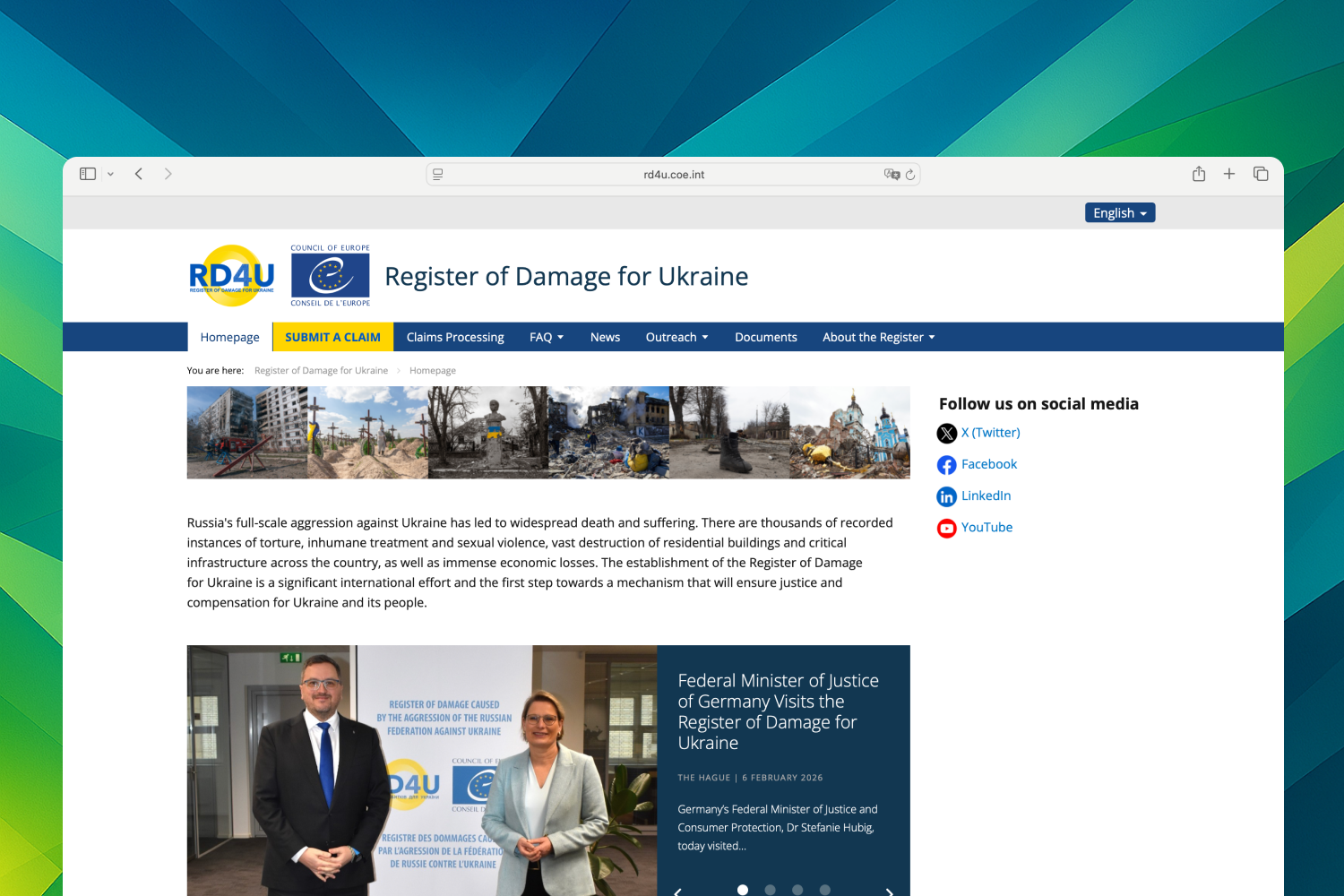
What Is Important to Know About the Register?
The project is rooted in Ukrainian expertise and context, with Ukrainian organizations playing a driving role.
Progress to Date
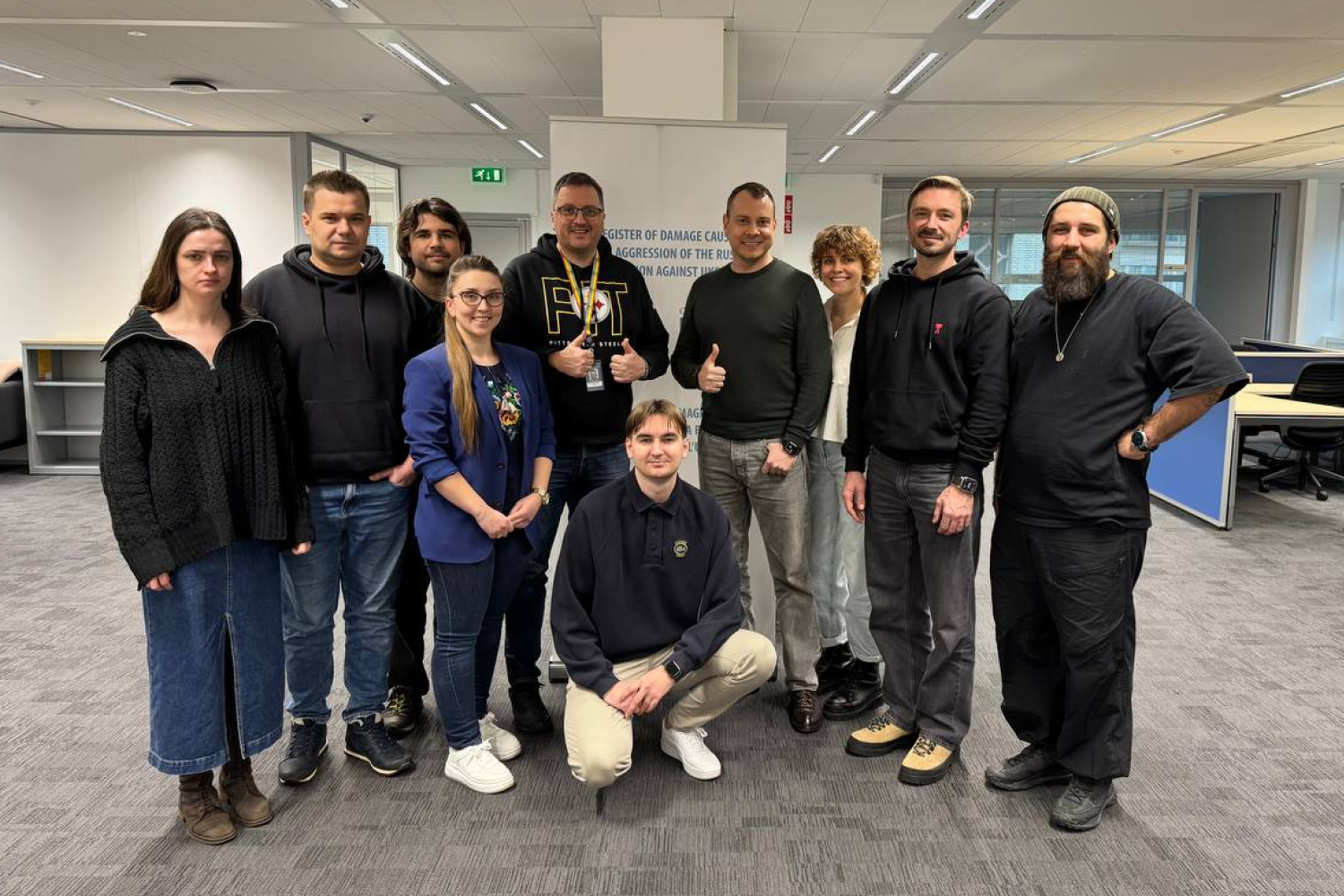
During their meeting in The Hague, the teams developed a joint strategic development plan for 2026. In the near future, the list of claim categories will be expanded to include loss of business operations, damage to infrastructure, loss of assets, loss of access to healthcare and education, and other violations of human rights and international humanitarian law. The launch of claim submissions through Administrative Service Centres across Ukraine is also planned.
Kitsoft describes its contribution as follows:
“We configured and launched the services for submitting claims to the Register using the low-code platform Liquio, developed by our team. To ensure accessibility through both the Diia portal and the mobile application, we implemented the necessary integrations, including with the Register’s Central Claims Management System.”
Strimco outlines its role in the project:
“We are involved in R&D related to claim requirements and in implementing claim submission to the RCMS — the Register’s system that collects claims. We develop artifacts for development teams, including technical and business documentation, prototypes, BPMN models, and API protocols — all materials necessary for understanding what and how to implement.”
The Systemic Role of Ukrainian GovTech Companies in the Development of the Register
The involvement of Ukrainian GovTech companies in developing the Register of Damage for Ukraine is of systemic importance. Ukrainian teams possess a deep understanding of the context of war, the needs of citizens, and the specificities of state information systems. Their extensive experience in GovTech, including developing national registries and integrating interagency systems, ensures the project meets both technical requirements and the practical needs of the state and society.
The implementation of RD4U reflects the values shared by GTA UA members. Cooperation between Ukrainian GovTech companies and international partners is based on coordinated efforts and a shared commitment to tangible outcomes. The project applies modern technological approaches while adhering to high standards of professional ethics and transparency.
At the same time, the establishment of the Register contributes to the evidentiary foundation for the accountability of the Russian Federation for crimes committed in Ukraine and lays the groundwork for a future compensation mechanism and reconstruction processes.
The Register of Damage for Ukraine represents a large-scale international effort and an important step toward establishing a mechanism to ensure justice and compensation for Ukraine and its citizens. GTA UA wishes the teams at Kitsoft and Strimco, as well as their international partners, continued success and will closely follow the further development of the Register. This initiative marks the beginning of systemic work that is significant not only for the sector but for Ukraine as a whole.

Kitsoft built the core of the system, including electronic dashboards, a data-collection module, analytics, and registries of gambling operators.
The system has been assembled, tested, and launched in a pilot operation mode, forming the foundation for its further development.
The foundation of the online gambling monitoring system: a low-code platform Liquio
The SOGMS was created on the low-code platform Liquio, developed by the IT company Kitsoft. Its architecture made it possible to immediately set the scale at the national level: the online gambling monitoring system is designed to process up to 100,000 operations per second, with the possibility of further load growth.
“Liquio makes it possible to build systems that work with large volumes of data and process many operations in real time. Importantly, the low-code approach does not limit complex government solutions; on the contrary, it provides speed, flexibility, and the ability to build systems that meet international standards,” says Kitsoft CEO Oleksandr Iefremov.
Liquio is included in the international GovStack catalogue and is certified by the State Service of Special Communications at assurance level G2, confirming compliance with government information security requirements.
Importantly, Liquio ensures the state’s digital sovereignty. Thanks to its open-source approach, solutions built on this platform can be developed by different teams and adapted to new needs. This guarantees system stability, long-term development, and continued state control over digital services.
The platform underpins a range of digital services, including the Diia portal, the e-Entrepreneur, uResidency, eMalyatko, and e-Veteran portal, among others.
Electronic workspaces: how the market connects
The Kitsoft team developed electronic workspaces:

Through the gambling operator workspaces, users can:
User roles are clearly defined in the system — each user has access only to their own functions. Login to the workspaces is carried out using a qualified electronic signature (QES).
The online gambling monitoring system architecture is designed to support a large number of users. The PlayCity and State Tax Service dashboards support dozens of authorized officials, while on the market side, the system supports over 1,000 gambling operator accounts.
What data the system is already ready to process
As part of the first phase, the Kitsoft team implemented processing of core gambling business operations in the online gambling monitoring system:
Data transmission is automated via application programming interfaces (APIs). Each transaction is validated and recorded in the system in real time.
A transparent market in numbers
The first phase includes 11 analytical reports grouped into four categories: operational, regulatory, analytical, and financial. They allow government authorities to see:

Registries: all data in one place
The system includes the “Registries” information and communication system, which covers:
The registries contain data on operator licenses, gambling venues, equipment, websites, and mobile applications.
How the team worked
Work on the first phase lasted 2.5 months. A cross-functional Kitsoft team worked on the project, including developers, business analysts, project managers, designers, and cybersecurity specialists.
The Kitsoft and PlayCity teams worked in constant dialogue: holding joint discussions, creating prototypes, modelling regulatory scenarios, and conducting load testing.
This article was prepared by Kitsoft, a member of the GovTech Alliance of Ukraine. The content is the sole responsibility of the author and does not necessarily reflect the views of GTA UA or other Alliance members.

The event brought together representatives of the private sector, academia, civil society, and the IT sector. Participants discussed the preliminary findings of Ukraine’s AI readiness assessment and engaged in a structured dialogue on the desired future development of an ethical and responsible AI ecosystem.
The workshop applied the backcasting methodology, a strategic approach that involves defining a long-term vision (2030 and 2035) and identifying practical steps to achieve it. Particular attention was given to the legal, socio-cultural, and scientific-educational dimensions of Ukraine’s readiness to implement AI.
GTA UA’s Participation in the Workshop
The GovTech Alliance of Ukraine took part in the workshop as representatives of the GovTech sector, directly engaged in the development and implementation of digital and AI-driven solutions in the public sector.
Ukraine already has internationally recognized experience in applying AI in the areas of security and defense. At the same time, the use of AI in the civilian public sector remains at an early stage and requires clear rules, high-quality data, and practical models of cooperation between the state and business.
Based on the discussions and their own expertise, GTA UA representatives emphasized the need to move from declarative approaches to practical mechanisms for AI implementation — in particular through pilot projects, transparent procedures, and public–private partnership models capable of overcoming systemic barriers.
“For the GovTech community, artificial intelligence is not only about technology, but first and foremost about responsibility, trust, and practical value for the state and citizens. That is why GTA UA’s participation in such discussions is important: we bring the voice of business that works daily with real data, constraints, and users, and can help the state move from concepts to actionable solutions,” said Kateryna Stavniichuk, CEO of the GTA UA.
“Artificial intelligence can be a catalyst for the digital transformation of the state: it speeds up the launch of new GovTech services and lowers barriers to their adoption. At the same time, AI interfaces — particularly chatbots — make public services more accessible by helping citizens navigate even complex administrative processes in a clear and user-friendly way,” — Volodymyr Sichka, CTO at Kitsoft.
Representatives of the Alliance’s member companies joined the discussions on behalf of GTA UA:
“The implementation of AI in public services, much like in the commercial sector, is no longer just a trend today—it is a complex challenge involving significant risks. That is why evaluating Ukraine against international standards is critically important. It matters for us—to objectively understand where we stand and benchmark ourselves against global practices—and for the international community, as Ukraine finds itself in a unique position, both technologically and due to the context of the war. It was fundamental for us to discuss not only the obvious constraints—financial ones and those caused by the full-scale invasion—but also the opportunities provided by GovTech: the rapid deployment of technology in government services, short user feedback loops, and the application of modern solutions for both defense and economic recovery. It is vital that we preserve and enhance this innovativeness and openness to experimentation”, — Vasyl Zadvornyy.
Key Takeaways
Amid the rapid growth of interest in AI, it is critically important to balance large-scale, long-term initiatives with applied, cost-effective solutions that deliver quick, tangible results and meet the needs of the public sector.
Ukraine’s AI readiness assessment, as well as the development of the regulatory framework, should be grounded in international best practices, real-world challenges, and broad stakeholder engagement across government, business, academia, and civil society. This approach will enable a shift from “soft law” to effective, practical regulatory instruments.
The leadership role of the Ministry of Digital Transformation of Ukraine in advancing AI creates an opportunity to systematically disseminate knowledge and best practices across the public sector. At the same time, it is essential that these tools respond to the practical needs of civil servants—simplifying routine tasks, automating processes, and strengthening the effectiveness of managerial decision-making.
One of the key factors for scaling AI in the public sector is the implementation of clear and transparent public–private partnership models. Such models reduce the burden on the state, create opportunities for businesses to develop expertise and products, and provide a foundation for the effective launch of pilots, investment in national AI tools and infrastructure, capacity-building in the public sector, and developers’ access to high-quality data.
GTA UA believes that the next stage for Ukraine is a transition from concepts and discussions to action: embedding ethical principles, implementing practical mechanisms for AI adoption, and building partnerships that turn AI into a tool of real value for the state, business, and society.
The assessment is conducted at the request of UNESCO and funded by the European Union, with the aim of identifying and evaluating the challenges, strengths, and opportunities related to the ethical development and use of AI.
Since mid-last year, the GovTech Alliance of Ukraine has been actively involved in the monitoring and assessing digital reforms in Ukraine. We are a full member of the Expert Board responsible for calculating the GovTech Reform Index by evaluating regulatory and legal acts (all of which have a direct or indirect impact on digital transformation). These acts were carefully selected by the teams of VoxUkraine and GGTC Kyiv.
An Inside Look: How Does It Work?
In addition to GTA UA, the Expert Board includes representatives from civil society, business, and academia with experience in public administration, digital technologies, economics, and law.
Good news: the Expert Board is currently expanding. This creates a real opportunity for professionals to directly influence digital reform processes and contribute to the development of Ukraine’s digital governance ecosystem.
We invite independent experts to join us, work side by side with experience. Apply here

The GovTech Alliance of Ukraine (GTA UA) was featured in several key panels, sharing practical cases, insights on the development of the GovTech market, and approaches to strengthening cooperation between the state and technology companies.
Panel: “The Value of Cluster Membership for Business: Practical Cases” — Community Stage
Kateryna Stavniichuk, CEO of GTA UA, joined the discussion and spoke about the role of industry associations in shaping the market, strengthening companies, and creating practical value for their members.
Kateryna shared GTA UA’s experience in developing updated requirements for the lifecycle of public digital products — created in response to the private sector’s request for clearer rules of the game in the GovTech domain. This work was conducted within the working groups of the Digital Competence Center of the Ministry of Digital Transformation of Ukraine, coordinated by State Enterprise “Diia” and supported by the European Union within the DT4UA project, implemented by the e-Governance Academy (eGA).
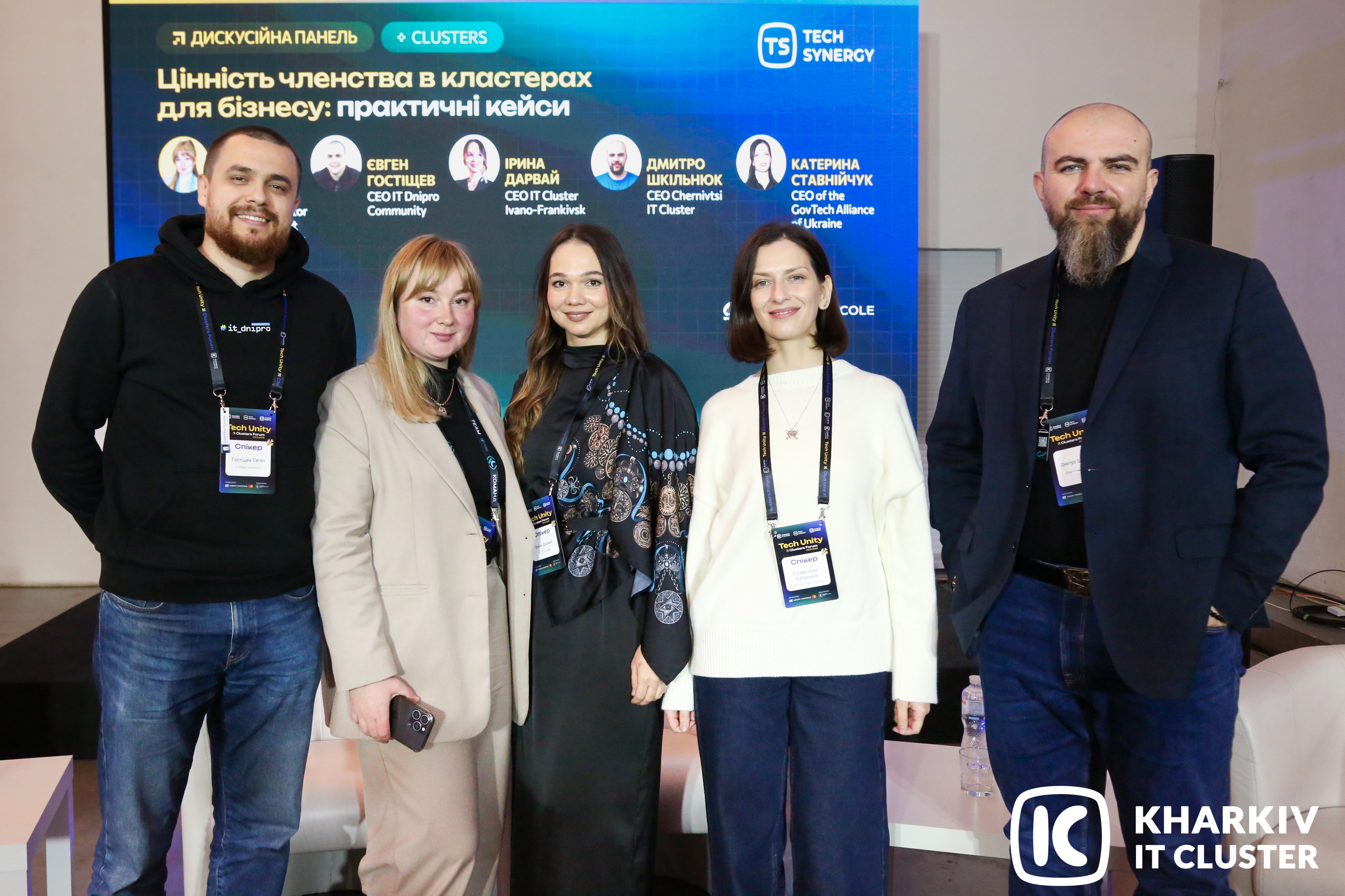
She also highlighted GTA UA’s partnership with CDTO Campus and the involvement of member companies in training digital leaders for the public sector — one of the strategic steps toward strengthening Ukraine’s GovTech ecosystem.
Panel: “GovTech: Success Stories and Key Bottlenecks. How Do We Move to the Next Level of Digitalisation?” — Community Stage
GTA UA was represented by:
The speakers shared practical experience from their companies’ large-scale digital transformation projects and spoke about the challenges they had faced. They outlined major barriers hindering GovTech development in Ukraine and offered their perspectives on tools and approaches that can move the sector forward.

A significant focus was placed on cybersecurity challenges. Roman Lanskyi emphasized that ineffective regulation based on outdated standards may cause more harm than the potential risks of digitalizing processes and data within public institutions. Oleksandr Iefremov stressed the importance of recognising and assuming responsibility by all parties involved in public-sector digitalisation projects, which is critical for the resilience of information and communication systems.
The speakers also discussed Ukrainian GovTech export potential — opportunities for scaling Ukrainian solutions to international markets and the unique expertise Ukrainian teams bring globally.
Panel: “Technology for Education and Education for Technology: Showcases” — Workshop Stage
Oleksii Radchenko, Founder & CEO of Prozori Solutions and GTA UA Board Member, moderated the discussion in which participants reflected on technologies used in the education sector and the growing need for skilled technical professionals.

Under his moderation, experts explored real opportunities and limitations of using AI in education, the role of engineers in building complex digital solutions, and the challenges young people face in career orientation. Oleksii facilitated a meaningful dialogue, underscoring the importance of practical technical training even in the era of rapidly evolving AI tools.
The Tech Unity: Clusters Forum became an important platform for dialogue between technology communities, business, and the state. The event demonstrated that synergy between communities, coordinated efforts, and shared standards are essential for building a resilient and competitive digital ecosystem in Ukraine.
“Tech Unity signals that Ukraine’s tech ecosystem is becoming mature and coordinated. In GovTech, it’s crucial to build strong networks of partnerships between business, the state, and regional clusters. These connections enable us to create complex solutions and scale them internationally. A strong ecosystem creates strong products — and strong products give Ukraine a chance to become a global leader in digital government,” — Oleksandr Iefremov, CEO of Kitsoft.
GTA UA supports initiatives that strengthen the state’s capacity in digital governance and values the opportunity to contribute to an open dialogue on challenges facing the tech industry. We will continue sharing our expertise and helping identify effective ways to overcome these challenges.
Photo: Kharkiv IT Cluster.

The forum provided an opportunity to reflect on the role of the GovTech community within the broader context of the country’s transformation, particularly regarding cooperation between business and the state, shared responsibility of communities, and the development of new formats of collaboration for the public good.
“Over the past 10 years, Ukraine has undergone a unique transformation — cultural, mental, and geopolitical. Sometimes it is important to pause and recognise the path we have already taken in order to find the strength to move forward,” says Kateryna Stavniichuk.
One of the key topics of the forum was culture as a source of strength and identity. Participants discussed the processes of cultural renewal, the growing interest in Ukrainian content, and the importance of consciously rejecting Russian cultural influence as an element of national resilience.
Special attention was also given to the vision of Ukraine in 2035 from the perspective of its citizens, presented in the survey “Ukraine 2035: strengths, vulnerabilities, and potential” conducted by Gradus. The findings showed that IT and digital technologies consistently rank among the areas Ukrainians are most proud of and consider critical for the country’s development. At the same time, the research revealed a value-based dissonance between aspirations for freedom and individualism and expectations of a high level of state paternalism.
“This is a serious challenge. The state must create conditions for development, but it is the responsibility of communities and businesses to unite and jointly build communities, initiatives, and institutions. This is exactly how the GovTech Alliance of Ukraine operates — by bringing together expertise and strengthening the voice of the GovTech community,” Kateryna Stavniichuk emphasises.
Another important topic of the forum was the architecture of new leadership, including the need to acknowledge achievements, overcome feelings of inferiority, and build continuity. These approaches resonate with GTA UA’s vision of mature leadership focused on the long-term development of the country and on building strong, trust-based partnerships between business and the state.
The forum also highlighted the importance of the Ukrainian cultural space as a foundation for shaping values and leadership, including through artistic performances and cultural initiatives that added strong emotional resonance to the event.
GTA UA thanks Deloitte for the invitation and all forum participants for an open and meaningful dialogue. Such events help create an environment in which strong ideas, mature leaders, and partnerships emerge — all of which are essential for the development of a modern digital Ukraine.
Photo: Deloitte, X Conductors of Changes Forum.

GTA UA considers the DCC to be one of the key platforms for developing shared approaches to digital transformation, preserving institutional memory, standardising solutions, and establishing transparent “rules of the game” for public authorities, digital transformation teams, and GovTech companies. At the same time, the DCC plays an important educational role, fostering the development of competencies and professional growth of teams.
“When functioning properly, the Digital Competence Center is about creating a shared language, preserving institutional memory, standardising approaches, and establishing transparent rules of the game for everyone involved in digital transformation. It is also a platform for learning and growth for public sector teams and GovTech companies,” says Kateryna Stavniichuk, CEO of the GovTech Alliance of Ukraine.
GTA UA’s engagement in the work of the DCC is also aimed at the structured accumulation and systematic dissemination of Ukrainian digital transformation expertise. Ukrainian GovTech is already recognised internationally, in particular thanks to the efforts of the Ministry of Digital Transformation of Ukraine. The next step is to institutionalise this experience so that not only the Digital Ukraine brand is visible globally, but also specific companies, products, solutions, and approaches.
An important milestone for the development of the DCC was the kick-off event “Ukraine – EU: United by Digitalisation”, held on October 31, 2025, which was attended by representatives of GTA UA. The purpose of the event was to mark the launch of the second phase of the EU-funded project “Digital Transformation For Ukraine” (DT4UA Phase II).
One of the key objectives of DT4UA Phase II is to support the activities of the DCC as an institutional platform for accumulating, systematising, and disseminating expertise, developing professional competencies, and implementing harmonised standards in public sector digital projects.
“Digital transformation has long ceased to be an experiment — it is a strategic reality. To maintain pace, scale, and trust, we need institutions that work systematically with experience, standards, and people,” Kateryna Stavniichuk emphasises.
GTA UA welcomes the continued support for the development of the DCC by the e-Governance Academy (eGA) within the framework of DT4UA Phase II, which lays the foundation for the long-term institutional capacity of the DCC and the further development of Ukraine’s GovTech ecosystem.
More about the role and development of the DCC can be found in the interview with Andrii Piskun and Mykhailo Korneiev, Senior Experts at eGA, titled “How the Digital Competence Center Shapes the Rules of the Game for Digital Ukraine”: Part 1, Part 2 (in Ukrainian).
Photo: eGA, kick-off event “Ukraine – EU: United by Digitalisation”.

On November 6, 2025, Global Government Technology Centre in Kyiv (GGTC Kyiv) and Vox Ukraine presented the findings of their joint report “Reform Radar: Tracking Ukraine’s Digital Transformation”, which analyzed over 100 legal and regulatory acts adopted from 2019 to 2024 and their impact on Ukraine’s digital public ecosystem.
The event also marked the launch of the GovTech Reform Index — a new analytical tool for quarterly monitoring of Ukraine’s digital reforms. The Index evaluates new digital policies and regulatory initiatives based on innovation, feasibility, and expected impact.
The evaluation process is led by an independent Expert Board that includes representatives from, business, civil society, and international organizations. From the GovTech Alliance of Ukraine (GTA UA), the following leaders are on the Board:
Speaking on behalf of the Expert Board, Kateryna Stavniichuk noted:
“Digitalization has become the foundation of modern public governance. The ‘digital dimension’ must become part of quality policy-making — each new policy or regulation should also be assessed in terms of its impact on digital transformation.”
She added that the GovTech Reform Index is a logical continuation of Ukraine’s digital policy introduced in 2019, which included official digital impact assessments of draft laws and regulations. Now, the GovTech Reform Index extends this approach through independent expert evaluation.
“The goal of the GovTech Reform Index is not just to assess compliance but to identify which reforms have lasting value — and which challenges still need to be addressed. It complements government efforts and enables smarter planning through evidence-based insights.”
The event also featured a panel discussion “Start – Stop – Continue: Lessons from Digital Transformation”, moderated by Oleksandr Strelnykov, Editor-in-Chief of AIN.UA. Speakers included representatives from the Ministry of Justice, the DREAM Project office, Strimco, and UNDP Ukraine.
GTA UA fully supports strategic initiatives like the GovTech Reform Index, which enhance Ukraine’s digital governance capacity through data, transparency, and expert collaboration — essential pillars of sustainable digital development.
The analytical study and the event were conducted with the support of Switzerland within EGAP Program, which is carried out by East Europe Foundation (EEF).
Photo: GGTC Kyiv.

On November 4, 2025, as part of the WINWIN Summit 2025: The Power of Innovations, a roundtable discussion “Artificial Intelligence in the Digital State of the Future” was held, co-organized by the Global Government Technology Centre in Kyiv and the WINWIN AI Centre of Excellence.
The event brought together key stakeholders from government, business, investors, and international organizations. Representing the GovTech Alliance of Ukraine (GTA UA) were Kateryna Stavniichuk, CEO of the Alliance, and Volodymyr Sichka, CTO of Kitsoft, a GTA UA member company.
The discussion focused on several key topics:
During the roundtable, Kateryna Stavniichuk emphasized that AI as a tool alone is not enough to ensure meaningful transformation of public governance. Instead, she highlighted the need to implement new models of collaboration between the state and private sector that can help overcome systemic barriers.
“GovTech companies cannot build effective AI solutions without access to structured, machine-readable, high-quality data. We need a model of ‘government APIs as a service’, where the state opens data access interfaces through standardized agreements. In turn, developers can help design these APIs based on real usage scenarios.”

Volodymyr Sichka shared Kitsoft’s practical experience in integrating AI into their product — the Liquio low-code platform, designed for rapid deployment of digital public services:
“An AI assistant helps low-code developers analyze technical specifications and design online service workflows on the platform. It also acts as a co-pilot — providing contextual suggestions and referencing an internal knowledge base.”

At GTA UA, we firmly believe that technological innovation — especially in AI — must be guided by ethical standards, real public and business needs, and open collaboration. This is only possible through strong partnerships, transparent data access, and inclusive developer involvement.
We support initiatives that help build a new trust infrastructure and sustainable digital governance through analytics, expertise, and ongoing dialogue across the GovTech ecosystem.
WINWIN Summit 2025: The Power of Innovations is organised by the IT Ukraine Association, with the support of the Ministry of Digital Transformation of Ukraine.General Partners: UKRSIBBANK BNP Paribas Group and Mastercard. Strategic Partners: Estonian Centre for International Development (ESTDEV) and Digitalisation for Growth, Integrity and Transparency Project (UK DIGIT), implemented by Eurasia Foundation and funded by UK Dev. Better Regulation Delivery Office (BRDO) is the implementing partner for UK DIGIT. This event is supported within the framework of the project «Stiykist: Building a sustainable and inclusive Ukrainian Labor Market» that is implemented within the framework of an agreement between the Swedish International Development Cooperation Agency (Sida) and Helvetas Swiss Intercooperation with the support of Sweden, and EIT Food. Partner: N-iX

On November 4, 2025, Kyiv hosted WINWIN Summit 2025: The Power of Innovations — an international conference that brought together representatives from government, business, academia, education, and international organizations to define the next steps in strengthening Ukraine’s innovation potential. GTA UA joined the summit as a representative of the GovTech ecosystem and a participant in the strategic dialogue on the country’s digital transformation.
During the summit, Ukraine’s Global Innovation Strategy until 2030 WINWIN was presented. The Strategy outlines 14 priority sectors, including DefenseTech, MedTech, BioTech, GreenTech, EdTech, AgriTech, AI, XR, AUV, Semiconductors, Secure Cyberspace, SpaceTech, GovTech, and Fluid Economy. It aims to strengthen Ukraine’s innovation and technological capacity, integrate the country into the global innovation ecosystem, and attract investment into high-tech sectors.
The Ministry of Digital Transformation of Ukraine presented the first milestones of the WINWIN Strategy’s implementation, with a particular focus on artificial intelligence, medical technologies, biotechnologies, semiconductors, and GovTech. Special emphasis was placed on the transition from the concept of a Digital State to an Agentic State — one where artificial intelligence supports decision-making, automates processes, and improves interaction between government and citizens.
The summit also featured the presentation of the draft National Artificial Intelligence Development Strategy of Ukraine, developed within the WINWIN AI Center of Excellence. The document outlines approaches to integrating AI across public governance, education, healthcare, defense, and business, and foresees further public consultations and phased implementation.
A key highlight of WINWIN Summit 2025 was the signing of seven international cooperation documents — memorandums and a letter of intent aimed at implementing the WINWIN Strategy and strengthening international partnerships in technology and innovation. Practical initiatives announced during the summit included projects in AI, MedTech, microelectronics, and digital resilience, such as piloting AI-powered phage therapy solutions and launching a MedTech Sandbox for the safe testing of medical innovations in clinical settings.
A separate focus of the summit was the Startup Alley, where Ukrainian teams presented innovative solutions designed for global markets — ranging from AI platforms and robotics to MedTech, EdTech, and GreenTech solutions.
Participation in WINWIN Summit 2025 reaffirmed the important role of the GovTech community in implementing Ukraine’s national innovation strategy, fostering partnerships between the state and business, and shaping a modern digital state focused on citizens’ needs.
WINWIN Summit 2025: The Power of Innovations is organised by the IT Ukraine Association, with the support of the Ministry of Digital Transformation of Ukraine. General Partners: UKRSIBBANK BNP Paribas Group and Mastercard. Strategic Partners: Estonian Centre for International Development (ESTDEV) and Digitalisation for Growth, Integrity and Transparency Project (UK DIGIT), implemented by Eurasia Foundation and funded by UK Dev. Better Regulation Delivery Office (BRDO) is the implementing partner for UK DIGIT. This event is supported within the framework of the project «Stiykist: Building a sustainable and inclusive Ukrainian Labor Market» that is implemented within the framework of an agreement between the Swedish International Development Cooperation Agency (Sida) and Helvetas Swiss Intercooperation with the support of Sweden, and EIT Food. Partner: N-iX.

The GovTech Glossary is not merely a collection of definitions, but a practical tool for aligning approaches, informing policymaking, and enabling the implementation of innovative solutions that work in real-world environments. The glossary includes over 60 definitions that combine Ukraine’s practical experience with standards and approaches of the OECD, the World Bank, and the European Union, complemented by examples from Ukraine and international practice.
The project aims to standardise the language of digital transformation, which is essential for effective collaboration among all stakeholders in the GovTech ecosystem — from developers and public-sector buyers of digital solutions to regulators and educational institutions.
The GovTech Glossary will be a valuable resource for:
The project was implemented by the Global Government Technology Centre in Kyiv (GGTC Kyiv). The project’s information partners include GTA UA, CDTO Campus, and Digital Hromada. GTA UA also contributed directly to the development of the GovTech Glossary definitions, with active involvement from its member companies Kitsoft, MK-Consulting, and Strimco. Thanks to their hands-on experience, the glossary reflects real challenges and needs faced by the GovTech sector on a daily basis.
GTA UA thanks its partners for their cooperation and encourages the GovTech community to use the GovTech Glossary and share it with colleagues as a core reference tool for digital transformation.

Innovation is a driving force of transformation in the public sector. That’s why the GovTech Alliance of Ukraine has supported the launch of GovTech Lab UA programme from day one — the first open innovation program for the public sector in Ukraine, implemented by the Global Government Technology Centre Kyiv, with the support of the Ministry of Digital Transformation of Ukraine, the World Economic Forum, and East Europe Foundation (EEF).
One of the program’s key milestones is now complete — an independent Advisory Board has selected three priority challenges submitted by public authorities. These challenges will now advance to the next phase: the development and testing of pilot solutions.
The selected challenges were evaluated based on their policy relevance, potential for impact, scalability, and feasibility within the programme. The selection was conducted by an independent Advisory Board, which included representatives of the Ministry of Digital Transformation of Ukraine, East Europe Foundation (EEF), WINWIN Project Office, GovTech Alliance of Ukraine, PUBLIC London, GGTC Kyiv, and international GovTech experts.
Among the board members was Kateryna Stavniichuk, CEO of GTA UA, who represented the unified voice of the Ukrainian GovTech business. Her participation helped ensure that the selected challenges reflect areas where technology can bring the greatest impact for citizens and the state.
The next step: an open call for startups whose solutions will be implemented in partnership with public authorities in the near future.
Picture: GGTC Kyiv.
Ukraine’s GovTech sector continues to evolve — and we’re proud to be among those driving these transformations!
In our new article on Digital State UA, we explain the recent update to Cabinet of Ministers Resolution No. 205 — a key regulation that sets a modern framework for the entire lifecycle of government digital systems. This update brings Ukraine closer to EU standards and supports the development of an open and competitive digital market.
GTA UA actively contributed to these changes as part of the working groups of the Digital Competence Centre under the Ministry of Digital Transformation. We continue to serve as the unified voice of Ukraine’s GovTech business, advocating for clear and transparent rules for the sector.
Read the article to learn:
Share this publication with your colleagues and partners — it’s important that as many GovTech stakeholders as possible understand the updated requirements.
Read the full article on Digital State UA.

On August 15, 2025, the GovTech Alliance of Ukraine (GTA UA), in partnership with CDTO Campus and the Ministry of Digital Transformation of Ukraine, held an open presentation and Q&A session on the updated requirements for the lifecycle of public digital products.
These updates are the result of several months of collaborative work among government representatives, IT businesses, and the expert community. The changes were approved by Government Resolution No. 205 and significantly modernize the approach to creating, administering, and maintaining public IT solutions.
Key changes:
Kateryna Stavniichuk, CEO of GTA UA, expressed gratitude to Vadym Konoval, Director of the Directorate for the Development of the National Informatization Program at the Ministry of Digital Transformation, and Oksana Kazakova, Chief Specialist of the Expert Group at the same Directorate, for their comprehensive presentation and active engagement in open dialogue with participants.
GTA UA sees regulatory development as one of its key priorities in shaping a high-quality and competitive GovTech market in Ukraine. The Alliance will continue contributing to the Digital Competence Centre at the Ministry of Digital Transformation, particularly in further detailing the lifecycle of ICT systems and developing a methodology for implementing national IT standards.
The activities of the Digital Competence Center of the Ministry of Digital Transformation are supported by the European Union within the DT4UA project, implemented by the e-Governance Academy (eGA).

On July 25, 2025, the graduation ceremony of the “Digital Transformation in Public Administration” program took place, preparing a new generation of leaders driving digital change in the public sector.
The program contributed to participants’ professional growth, strengthened their leadership and management skills, broadened their strategic vision, and expanded their capacity to scale national digital initiatives.
The GovTech Alliance of Ukraine (GTA UA) joined the initiative in partnership with CDTO Campus and the East Europe Foundation, supporting the development of professional competencies and strategic vision among future leaders of digital transformation.
Throughout the educational process, experts from GTA UA member organizations contributed as lecturers, generously sharing their hands-on experience in developing and implementing GovTech solutions.
We sincerely thank all our colleagues for their active involvement:
The final stage of the program was the Demo Days — a presentation of the digital transformation projects from program participants that they had been working on for several months. From GTA UA, the expert team included Kateryna Stavniichuk, Roman Lanskyi, Vasyl Zadvornyy, and Taisiya Valko.
“We are grateful to the CDTO Campus, the Ministry of Digital Transformation of Ukraine and the East Europe Foundation (EEF) for implementing this impactful educational program and for the opportunity for the GovTech businesses to be part of it. GTA UA is proud to support initiatives that strengthen the GovTech ecosystem of Ukraine and develop effective cooperation between the state and the private sector,” — said Kateryna Stavniichuk, CEO of GTA UA.
CDTO Campus is implemented by East Europe Foundation (EEF), funded by Visa Foundation, the Federal Ministry for Economic Cooperation and Development (BMZ), and supported by Deutsche Gesellschaft für Internationale Zusammenarbeit (GIZ) GmbH, in cooperation with the Digitality Govtech Centre of Excellence, under the auspices of the Ministry of Digital Transformation of Ukraine. The technology partner of the space is Cisco.
Photo: CDTO Campus.

This is a major step toward more transparent, efficient, and innovation-friendly digital transformation in the public sector. The updated Regulation introduces international standards, typified technical documentation, stronger accountability mechanisms, and more open access for Ukrainian GovTech business.
Members of the GovTech Alliance of Ukraine — AMEDIA, Kitsoft, MK-Consulting, Prozori Solutions, and Strimco were actively involved in drafting these changes through working groups within the Digital Competence Centre. We're proud to see our joint work with the Ministry of Digital Transformation of Ukraine, State Enterprise “Diia”, experts from the DT4UA project and Better Regulation Delivery Office (BRDO) reflected in the final document — and we thank our partners for effective collaboration.
Developing Ukraine’s GovTech ecosystem isn’t just about innovations — it's about shaping clear, fair, and forward-looking rules that foster competition, protect public interests, and strengthen the quality of digital services. At GTA UA, we remain committed to ensuring that the professional voice of GovTech businesses is part of national policy-making.
We encourage GovTech companies to engage in these processes — contributing to standards and policy is a real way to shape the market and build long-term expertise.

On July 9, 2025, during the strategic workshop “GovTech — AI for a Modern State”, organized by the AI Center of Excellence of the Ministry of Digital Transformation of Ukraine and Digital Nation, member companies of the GovTech Alliance of Ukraine (GTA UA) — AMEDIA, Kitsoft, MK-Consulting, Prozori Solutions, and Strimco — joined representatives of government bodies, local authorities, and international organizations to discuss the Ministry’s vision for AI implementation in Ukrainian GovTech.
Kateryna Stavniichuk, CEO of GTA UA, presented the consolidated position of member companies on the key challenges and proposed solutions.
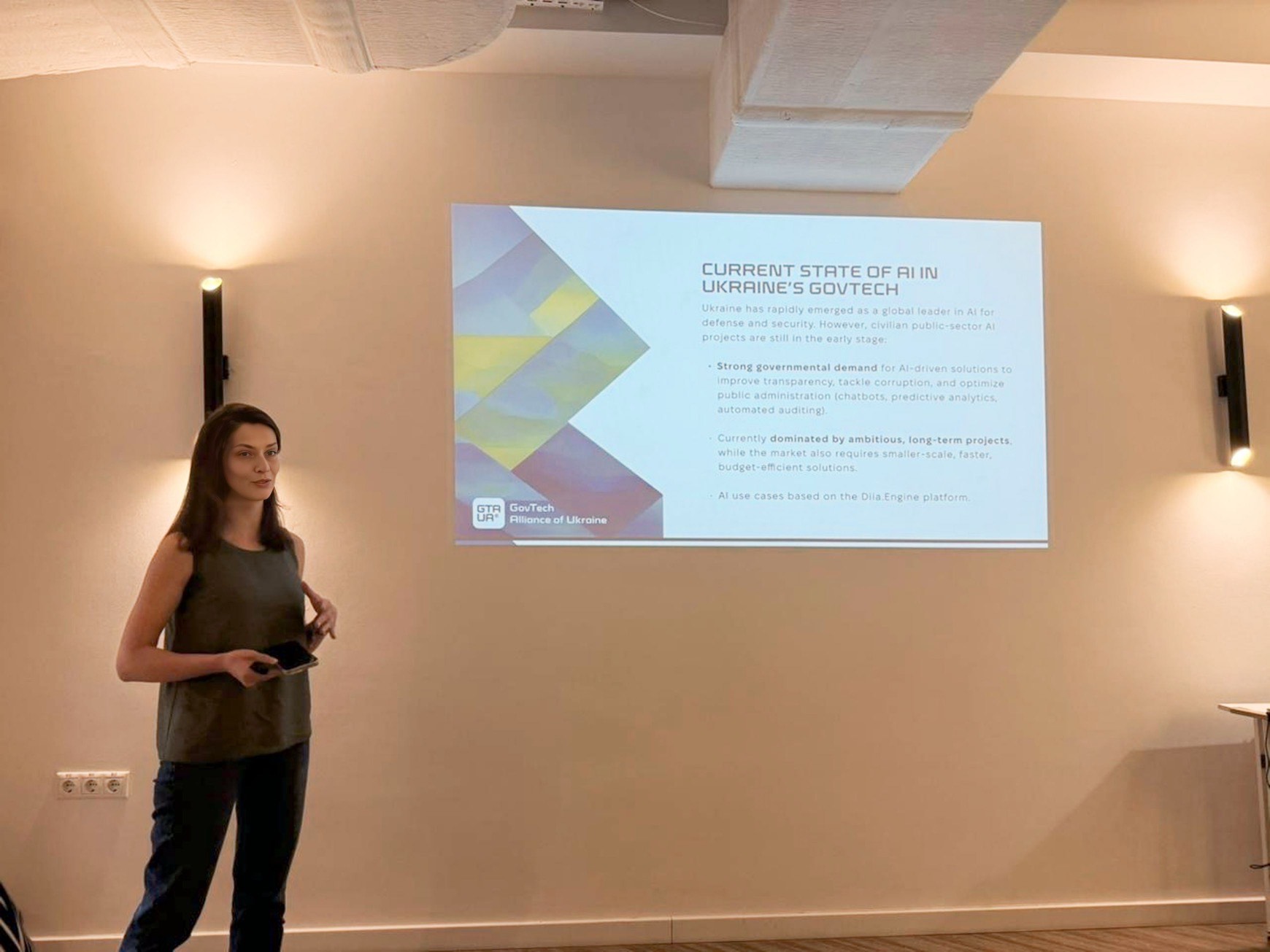
Key challenges:
GTA UA recommendations:
“AI is already our reality. Addressing the challenges of its implementation in public governance is only possible through systemic collaboration between government, business, and the research community,” — noted GTA UA.
GTA UA expresses gratitude to the AI Center of Excellence of the Ministry of Digital Transformation and Digital Nation for the invitation to join the dialogue. The Alliance remains committed to helping shape a future of Ukrainian public administration that is innovative, secure, and ethical.

The event brought together representatives of key Ukrainian government institutions, leading technology companies, and international partners to discuss the challenges of building a digital state — and to identify actionable solutions. The GovTech Alliance of Ukraine (GTA UA) participated in the event as the national community of IT companies building innovative digital solutions for the public sector.
Key themes of the discussion included:
During the second panel discussion, which focused on the launch of GovTech Lab, a public innovation program by GGTC Kyiv, Roman Lansky, CEO of Strimco (a GTA UA member company), delivered a short Pecha Kucha-style presentation. He shared Strimco’s vision of effective partnership between the state and the GovTech sector, emphasizing the importance of shared responsibility for the outcomes of reform.
“We believe the power of digital transformation lies in new approaches and deep, trust-based partnerships between the public sector and GovTech business,” — said Kateryna Stavniichuk, CEO of GTA UA.
GTA UA thanks the organizers for the opportunity to contribute to a meaningful exchange of ideas — and for creating a space for synergy that continues shaping Ukraine’s digital future.
Photo: Global Government Technology Centre in Kyiv.

AI opens up new opportunities for the public sector — from process automation and risk prediction to personalized citizen services. However, it also brings challenges: ensuring ethical, transparent, and secure use of technology.
“AI-based innovations will strengthen Ukraine’s leadership in digital transformation,” says Kateryna Stavniichuk, CEO of the GovTech Alliance of Ukraine (GTA UA), in a comment for SPEKA. “It is essential to build an ethical and transparent framework for their use today.”
GTA UA advocates for a systemic approach to AI implementation — through close collaboration between government, business, and the expert community. Such joint efforts will help ensure high-quality, safe, and responsible AI regulation.
In June 2025, representatives of GTA UA took part in several key events dedicated to AI development:
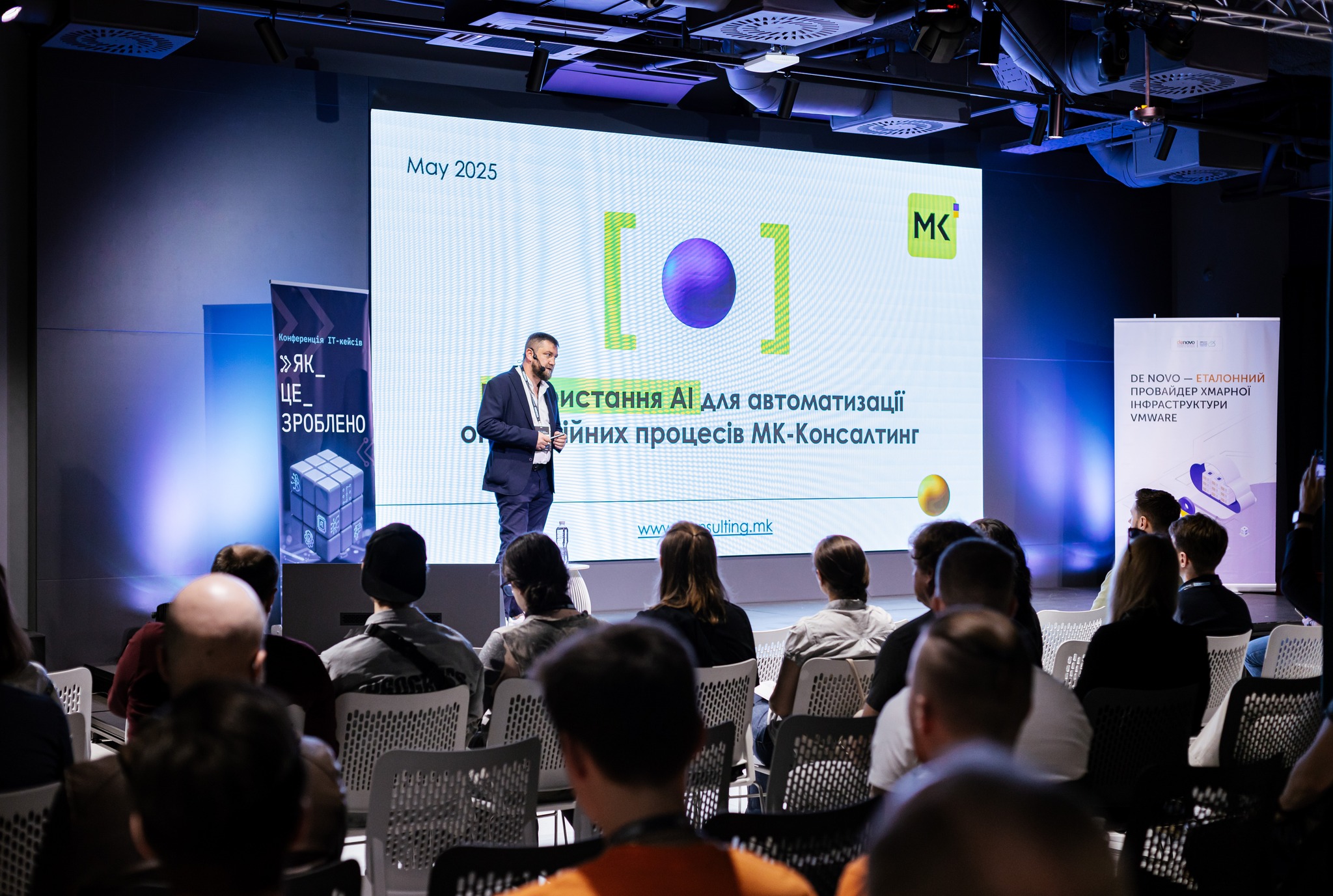

GTA UA has also joined the AI Working Group of the Digital Competence Centre (DCC) under the Ministry of Digital Transformation of Ukraine, focusing on developing a framework for safe, ethical, and innovative AI use in the public sector.
Useful Resources:
Photo: GGTC Kyiv.
In an article by dev.ua, Kateryna Stavniichuk, CEO of the GovTech Alliance of Ukraine and GTA UA members — Oleksii Radchenko, CEO of Prozori Solutions and Oleksandr Iefremo, CEO of Kitsoft — explain why vendor lock-in is not just a threat to competition, but a strategic vulnerability for the state.
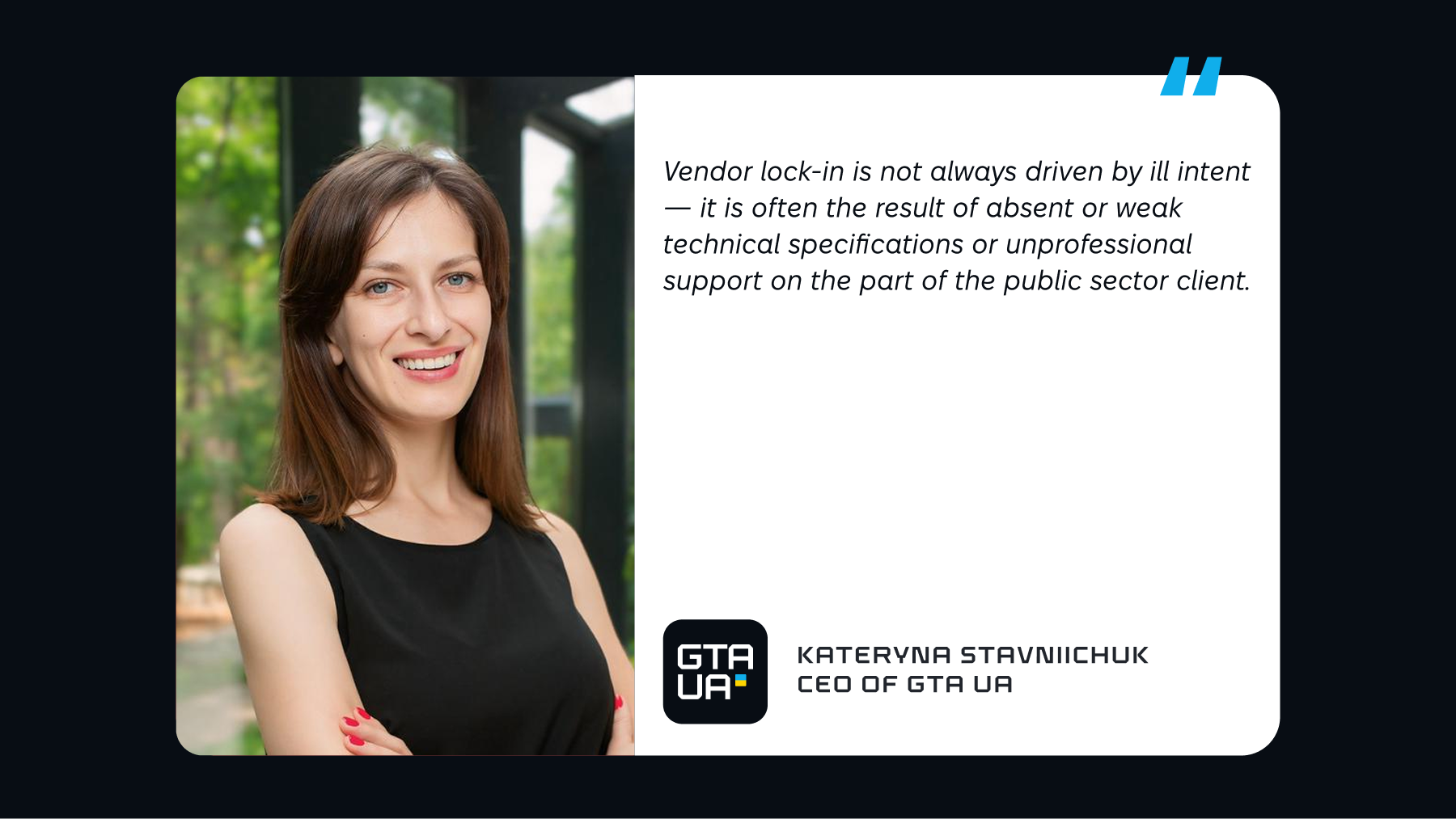
What are the consequences?
What needs to change?
“An important step to avoid vendor lock-in is using standard and widely adopted technologies, as well as developing solutions based on industry best practices.” — Oleksii Radchenko, CEO of Prozori Solutions, a member company of GTA UA.
“To prevent vendor lock-in, public sector institutions should receive the source code and system documentation, while also building internal technical competence. That’s what we always do.” — Oleksandr Iefremov, CEO of Kitsoft, a member company of GTA UA.
GTA UA is actively working to prevent vendor lock-in. Our members — Kitsoft, Prozori Solutions, MK-Consulting, Strimco, AMEDIA — are contributing to updates to a Resolution of the Cabinet of Ministers of Ukraine on February 21, 2025, No. 205, as part of working groups under the Digital Competence Centre. We also support the training of digital leaders through collaboration with CDTO Campus.
Read the full article on dev.ua (in Ukrainian).

On May 6, 2025, representatives of the GovTech Alliance of Ukraine (GTA UA) took part in the GovTech Meetup on Digital Diplomacy organized by our partners at the Global Government Technology Centre in Kyiv (GGTC Kyiv).
The special guest of the event was Eva Ilves — cybersecurity expert, advisor to the Ministry of Digital Transformation of Ukraine, and former First Lady of Estonia.
Participants discussed key challenges in digital governance, cybersecurity, public trust in government services, and the strategic role of technology in the global geopolitical context. Ms. Ilves shared insights based on Estonia’s, Latvia’s, and Ukraine’s journeys toward building digital states.
One of the central messages: Ukraine should not only focus on IT exports but also invest in building a strong national brand as a digital state — one based on:
These elements are essential for increasing Ukraine’s influence on the international stage and boosting its investment attractiveness.
Special attention was given to WINWIN — Ukraine’s Global Innovation Strategy until 2030. Its success depends heavily on effective public-private collaboration, including the involvement of GovTech companies and the broader innovation ecosystem in creating practical and scalable digital solutions.
GTA UA extends its thanks to GGTC Kyiv and Eva Ilves for the inspiring discussion. Events like this not only strengthen the GovTech ecosystem but also build Ukraine’s resilience in wartime and shape its digital future.
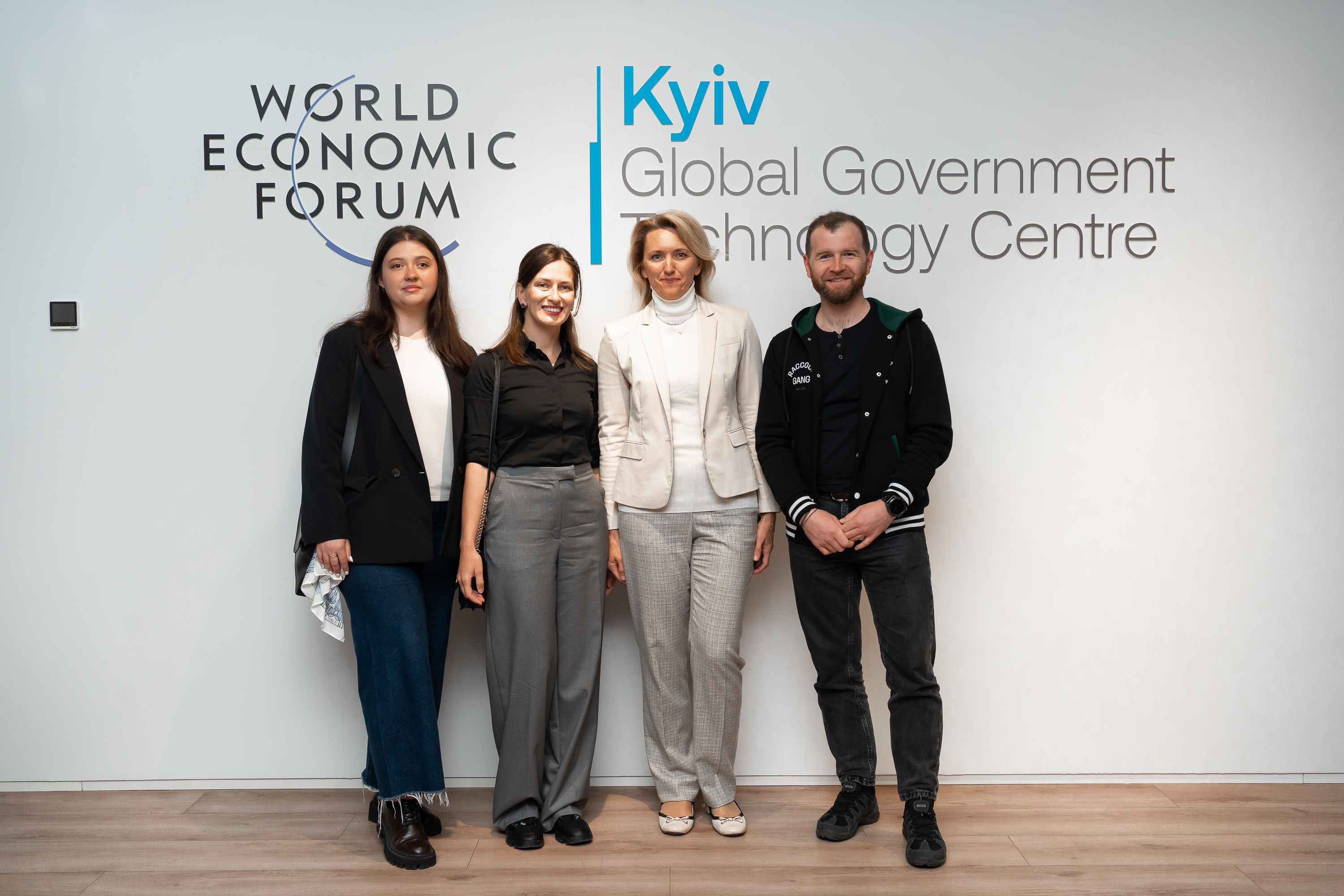
Photo: Global Government Technology Centre in Kyiv.
.jpg)
Key outcomes of the DT4UA project include: an improved digital ecosystem, a new version of the Trembita interoperability system, more than 150 updated and new e-services, the recognition of Diia.Signature in the EU, and the launch of the Ministry’s Digital Competence Centre (DCC), etc.
“At the Ministry of Digital Transformation, we create technological solutions that transform our state. As part of the DT4UA project, together with our partners, we launched the Digital Competence Centre — a space where we collect, develop, and share Ukrainian expertise in digital transformation. It’s a platform for those who are already driving digital change in the public sector or preparing to become a CDTO. As part of the project, we also work closely with the CDTO Campus. The knowledge, frameworks, and standards developed here are equally valuable for both government and business.
The Centre already hosts several working groups, each focused on a specific area. One of the key ones is the WINWIN AI Center of Excellence.
Innovation must become our national idea. It is a tool for building a new economy, new opportunities, and a better quality of life for every Ukrainian.” — Valeriya Ionan, Deputy Minister of Digital Transformation for European Integration.
These achievements reflect the deep expertise and efforts of the project team, with whom the GovTech Alliance of Ukraine (GTA UA) is honored to cooperate under the framework of the DCC, chaired by Valeriya Ionan as Head of its Expert Council.
Since early 2025, GTA UA has been actively involved in the DCC working groups on standardizing legal and technical documentation, enabling its member companies to contribute valuable GovTech expertise. Joint efforts have already resulted in the development of work plans for the groups and proposals to amend the Resolution of the Cabinet of Ministers of Ukraine on 21.02.2025 No. 205.
GTA UA will continue supporting the institutional development of the DCC and will contribute to developing template documents in the next phase of the DT4UA project.

The partnership focuses on:
The Memorandum was signed by:
This initiative is part of a broader effort to strengthen institutional capacity and drive innovation in public governance.
CDTO Campus is implemented by East Europe Foundation (EEF), funded by Visa Foundation, the Federal Ministry for Economic Cooperation and Development (BMZ), and supported by Deutsche Gesellschaft für Internationale Zusammenarbeit (GIZ) GmbH, in cooperation with the Digitality Govtech Centre of Excellence, under the auspices of the Ministry of Digital Transformation of Ukraine. The technology partner of the space is Cisco.

Among GTA UA’s key objectives is the building a strong and cohesive GovTech community in Ukraine — one that goes beyond the implementation of individual technological solutions or narrow business interests. The Alliance is building a shared professional environment for structured dialogue between IT companies, public authorities, and civil society, fostering transparent, effective, and responsible deployment of digital services.
Commenting on the Alliance, Valeriya Ionan, Deputy Minister of Digital Transformation of Ukraine for European Integration, noted:
“This initiative strengthens Ukraine’s leadership in the field of digital governance.The establishment of the GovTech Alliance of Ukraine is a strategically significant step that will foster effective cooperation between the state and business while opening new opportunities for international contracts. This initiative reinforces Ukraine’s leadership in digital governance”.
In light of the global trend toward the digitalisation of public services and Ukraine’s growing GovTech expertise — now increasingly recognised by international partners — GTA UA in 2025 is also focused on laying the groundwork for international cooperation and the export of Ukrainian GovTech solutions. The Alliance positions itself as a global collaboration platform, facilitating knowledge exchange, sharing best practices in e-government, cybersecurity, and digital transformation, as well as the development of international partnerships.
The article outlines GTA UA’s roadmap for the coming period. Follow our activities on the website and social media channels to stay informed and not miss upcoming developments.
Read the full article by the link.

On the initiative of the Digital Competence Centre of the Ministry of Digital Transformation of Ukraine, the GovTech Alliance of Ukraine, the e-Governance Academy (eGA), and with the support of the Global Government Technology Centre in Kyiv (GGTC Kyiv), representatives of the government and the GovTech community discussed the future impact of the new regulations. This dialogue allowed stakeholders to address key questions from developers regarding the development of technical documentation and the software transfer process to public authorities.
"It is clear that we need to move away from outdated Soviet regulations and software development standards. This process is long and complex, but through joint efforts of the government, developers, international partners, and civil society, we can significantly liberalize the GovTech market in Ukraine," said Vadym Konoval, Head of the National Informatization Program.
Participants agreed to jointly develop proposals for legislative changes in the field of digitalization and create standard templates for technical and legal documentation necessary for the development and transfer of software to public authorities. This work will be carried out within the framework of the newly established Digital Competence Centre, which includes representatives from the government, developers, and international organizations.
"For GTA UA members, it is crucial to have an effective dialogue between the state and business to ensure transparent and understandable rules for the GovTech market. GTA UA serves as a platform for such cooperation through a systematic approach. We initiate discussions on critical issues in the field, involve experienced GovTech experts, and develop proposals for legislative changes," said Kateryna Stavniichuk, CEO of the GovTech Alliance of Ukraine.
The event was organized by the GovTech Alliance of Ukraine and the e-Governance Academy (eGA) with the support of the Global Government Technology Centre in Kyiv. Representatives from Better Regulation Delivery Office (BRDO), State Enterprises “Diia” and “National Information Systems” also took part in the discussions. GTA UA, together with partners, continues to foster a growth-driven environment for the development of GovTech in Ukraine.



What’s inside?
GTA UA members also shared with DOU why they founded the Alliance — to represent the shared interests of the entire sector, rather than those of individual companies.
“The GTA UA will allow Ukrainian companies to engage with government institutions of other countries or international GovTech clusters. In Europe, partnerships between the public sector and GovTech associations are very common — especially when it comes to piloting new technologies or training people,” — said Oleksandr Iefremov, founder of Kitsoft.
“Since 2014, when progressive GovTech products began to emerge, they’ve often been tied to reform processes. Developing a system means helping modernize outdated state institutions — something entirely different from building a commercial fintech product. Working in GovTech, you not only make life easier for Ukrainians, but also help reform the state,” — added Maksym Korzhenevskyi, founder of MK Consulting.
At GTA UA, we believe that innovation, transparency, and collaboration are the foundation of a strong digital government. Our mission is to unite the efforts of Ukrainian IT companies, government institutions, and international partners in creating innovative, transparent, and effective public solutions, contributing to the sustainable development of Ukraine's GovTech sector and its global presence.
Read the full article on DOU (in Ukrainian).

During the event, participants presented and defended projects aimed at improving public services and governance. The ideas included digital solutions to support veterans, tools for managing the agricultural sector, automation of state processes, services for local self-government, and other impactful concepts that may shape future transformations.
The projects were evaluated by an expert panel:
Thanks to the comprehensive evaluation by representatives of public institutions and the private sector — including leading GovTech companies — participants received objective feedback on the technical feasibility, economic viability, and potential value of their solutions for end users. This format significantly enhances the robustness of projects at the development stage.
The collaboration between GTA UA and CDTO Campus within this Crash Test marks the first step in a broader joint initiative aimed at strengthening digital expertise among public servants and advancing the GovTech ecosystem in Ukraine. Ahead lie new activities, joint events, and sustained support for professionals driving the digital transformation of the state.
We invite everyone to join CDTO Campus and develop meaningful digital solutions for the public sector!
Photo: CDTO Campus.
The publication highlights key forecasts and trends in the AI sector that are already shaping Ukraine’s digital future. GTA UA representatives shared their perspectives on the practical challenges and strategic directions for AI development.
Kateryna Stavniichuk, CEO of GTA UA, believes that AI will enhance digital transformation in the public sector and emphasized the importance of a systemic approach to AI regulation:
“Innovative products — such as proactive services in Diia and AI-powered analytics systems — will strengthen Ukraine’s leadership in the adoption of digital technologies in the public sector. At the same time, we must already be forming an ethical and transparent framework for their use.”
Vasyl Zadvornyy, Business Development Officer at MK-Consulting, highlighted the practical impact of AI on the public sector:
“AI can improve the efficiency of public services, making them more accessible and transparent. Initiatives to automate government registries and services can significantly reduce bureaucracy and strengthen public trust in state institutions.”
Oleksandr Iefremov, CEO of Kitsoft, spoke about the practical use of AI in Ukrainian GovTech products:
“At our company, we are actively integrating AI into our product — the low-code platform Liquio, designed for rapid deployment of public services. Our AI assistant helps low-code developers analyze technical requirements and build the business process of an online service on the platform. It also operates in co-pilot mode, offering contextual suggestions and drawing on an internal knowledge base. This accelerates routine work on launching digital public services and allows specialists to focus on creatively solving complex problems.”
At the same time, Kateryna Stavniichuk outlined key challenges the Ukrainian GovTech sector will face with deeper AI integration in systems and services, including:
At GTA UA, we believe that sustainable AI development in the public sector is only possible with strong ethical standards, cross-sector collaboration, and a human-centered approach. That’s why we support initiatives that foster open dialogue between government, business, and experts on AI implementation in GovTech.
Full article on SPEKA (in Ukrainian).

GTA UA focuses on:
Five leading Ukrainian IT companies specializing in GovTech have already joined GTA UA:
GTA UA also plans to expand its community by welcoming new members and forging partnerships. Currently, the team is working on creating transparent and fair membership and partnership rules to ensure effective collaboration among all stakeholders.
"The establishment of the GovTech Alliance of Ukraine is a strategically significant step that will not only foster effective cooperation between the state and business but also create opportunities for securing international contracts with governments of other countries. This initiative strengthens Ukraine's position as a digital leader on the global stage. Together with Ukrainian businesses, we will promote our GovTech solutions worldwide because a successful business is the foundation of a strong economy. I congratulate the GTA UA team on this achievement and wish them growth in the number of alliance members. Let’s move forward, building collaboration!" — Valeriya Ionan, Deputy Minister of Digital Transformation for European Integration.
Follow us on Facebook and LinkedIn for updates as we shape the future of GovTech in Ukraine and beyond!
During the meeting, the Ministry’s team presented its updated strategic priorities. Ukraine’s overall digital transformation course remains consistent, while several areas are set to be further strengthened and developed.
Strategic Priorities for Digital Transformation
The key areas presented by the Ministry’s team include:
The discussion also covered open data, cooperation with operators, engagement with local communities, and other areas included in the Ministry’s priorities.
The Role of GovTech Businesses in Advancing Digital Priorities
GTA UA continues to support the Ministry of Digital Transformation in advancing Ukraine’s digital priorities. In particular, the Alliance implements joint initiatives with CDTO Campus and the Global Government Technology Centre Kyiv aimed at strengthening the capacity of Ukraine’s GovTech ecosystem and developing its professional community.
Further work is also planned to establish clear and predictable rules for the sector, including the development of standard document templates for the software development lifecycle (SDLC) within the Digital Competence Centre.
For Ukraine’s GovTech ecosystem to develop, technology businesses need a clear understanding of the government’s strategic needs, while their practical and product expertise should be systematically engaged by public institutions when digital initiatives are designed and implemented.
GTA UA’s participation in the Public Council provides an additional platform for representing the GovTech business community in dialogue with the government and discussing the conditions needed for the further development of Ukraine’s digital government and GovTech ecosystem.
The discussions focused on the development of Ukraine’s EdTech ecosystem, the use of artificial intelligence in education, cooperation between government and technology solution providers, and the potential of Ukrainian EdTech in international markets.
The forum also featured the presentation of a project focused on the research and development of the EdTech ecosystem in Ukraine. The project aims to build a comprehensive understanding of the Ukrainian EdTech market, its stakeholders, needs, and opportunities for further development.
From technology to the needs of the education system
One of the key topics of the forum was the role of technology in advancing education. Participants discussed how digital solutions should be built around specific needs of the education process, including online learning, digital learning materials, automation of administrative processes, learning management, admissions, digital communications, and more.
Estonia’s experience provided a relevant example. President of Estonia Alar Karis spoke about how the country’s EdTech development is based on close cooperation among technology businesses, educational institutions, researchers, and civil society. This model helps shift the focus towards identifying which challenges can be addressed through technology and how technology can improve the learning process.
A significant part of the discussion focused on artificial intelligence. Technology should enhance people’s ability to learn, making it important for education systems to develop approaches to AI that help students better understand and absorb learning materials while preserving the need for independent thinking and intellectual effort.
Ukrainian EdTech solutions: resilience and impact assessment
Due to ongoing security challenges, Ukraine’s education system has had to continuously adapt to changing conditions. This creates a competitive advantage for Ukrainian EdTech solutions in international markets: their resilience and ability to operate in rapidly changing environments.
Ukraine already has large-scale digital education systems, including Mriia and the All-Ukrainian School Online. GTA UA member companies have been directly involved in their development: AMEDIA is the developer of Mriia, while Prozori Solutions developed All-Ukrainian School Online.
At the same time, forum participants emphasised the importance of measuring the results of digital solution implementation, including their impact on the education process, the quality and effectiveness of learning, and the development of the education system as a whole. Assessing the effectiveness of such systems should help identify what works best, where improvements are needed, and how digital education products can evolve based on data about their actual use.
Cooperation between government and technology businesses
For GTA UA, one of the key issues discussed at the forum was the model of cooperation between government and technology solution providers. The government should ensure equal access to digital tools in education while providing clear visibility into the sector’s needs and strategic development priorities. This enables EdTech businesses to better understand public sector demand and develop solutions that respond to the actual needs of educational institutions and users.
The procurement of digital solutions was another important topic. In particular, Dmytro Zavhorodnii, CDTO at the Ministry of Education and Science of Ukraine, highlighted the challenges involved in procuring software-as-a-service (SaaS), cloud services, and other modern technology delivery models. Current procedures can make it difficult to select the solution that best meets the specific needs of an educational institution.
For GTA UA, this issue forms part of our broader work on improving GovTech procurement in Ukraine. An effective model should combine transparency and competition with the ability of public institutions to select technologies based on actual needs and use modern delivery models for digital products and services.
Participation in EdTech Ukraine Forum 2026 provided an opportunity to continue professional dialogue with government and technology sector representatives on the conditions needed to further develop Ukraine’s GovTech and EdTech ecosystems.
The project on researching and developing the EdTech ecosystem in Ukraine was initiated by the Ministry of Digital Transformation of Ukraine and the Ministry of Education and Science of Ukraine, funded by the Estonian Centre for International Development (ESTDEV), and implemented by Civitta together with EdTech Ukraine and EdTech Estonia in partnership with the WINWIN EdTech Centre of Excellence.
Photo: Civitta.
The GovTech Alliance of Ukraine contributed to the development of the programme as part of its partnership with CDTO Campus and the East Europe Foundation. GTA UA member companies – AMEDIA, Kitsoft, and Strimco – delivered training and shared their practical expertise in project management and business analysis for public sector digital transformation with CDTO Delivery Lab participants.
“Sharing the practical experience of the private sector through the training of digital leaders and community development is our investment in strengthening Ukraine’s entire GovTech ecosystem,” said Kateryna Stavniichuk, CEO of the GovTech Alliance of Ukraine.
Practical GovTech Expertise for the Public Sector
The training ran from May to August 2026 in an offline format. Participants included chief and lead specialists from government authorities, state experts, heads of departments and areas, as well as local government officials involved in management projects.
"It's especially valuable that CDTO Delivery Lab participants worked with training cases at every session and could immediately apply tools to specific situations. This approach helps them not just gain new knowledge, but see its practical value across a range of examples. For the public sector, this is an important investment in the teams that directly implement change and develop government services," added Ruslana Korenchuk, CEO of CDTO Campus and Diia.Education, manager of joint projects of East Europe Foundation and the Ministry of Digital Transformation of Ukraine.
The programme combined project management and business analysis tools with the specifics of the public sector. Topics included process reengineering, the development of digital services and registers, public procurement in the IT sector, and working with regulatory frameworks.
The practical component was built around training cases prepared by lecturers for each session. Participants were able to immediately apply project management and business analysis tools to specific management situations.
"The uniqueness of CDTO Delivery Lab lies in the fact that companies with hands-on experience building digital solutions for the government were involved in teaching. This makes it possible to pass on to public sector professionals the expertise and experience gained through real GovTech projects," said Victor Liakh, President of East Europe Foundation.
Building the Capacity of Digital Transformation Teams
As a result of CDTO Delivery Lab, graduates gained practical tools for planning and implementing projects, as well as working with requirements and stakeholders.
For GTA UA, participation in such educational programmes is one way to systematically transfer the practical expertise accumulated by Ukrainian GovTech companies to professionals directly involved in the digital transformation of the public sector.
Engaging technology businesses in training also creates space for knowledge exchange between government and digital solution providers – from understanding needs and conducting business analysis to organising project delivery and implementing digital services. Building the professional capacity of teams and enabling systematic exchange of practical expertise are essential components of a sustainable GovTech ecosystem in Ukraine.
Photo: CDTO Campus.
This year, the forum brought together more than 1,000 representatives of technology and industrial companies, national and regional authorities, local communities, academia, international partners and investors in Kharkiv. The central theme was investment in technology, business and regional resilience, with the programme covering technology business and innovation, digitalisation, human capital, energy independence, security, community development and investment.
These issues are particularly important for Kharkiv and other frontline areas. Businesses operate amid constant security risks, workforce challenges and the need to rapidly adapt their operations. At the same time, frontline regions remain a space for technology entrepreneurship, new business models and investment. One of the key focuses of Global Tech Kharkiv 2026 was therefore identifying practical solutions and partnerships that enable businesses and communities to continue developing during the war.
People, processes and data: how businesses can prepare for digital transformation
Oleksii Radchenko joined the panel discussion “Digital Booster: Digital Transformation of Frontline Businesses”. The participants discussed how technology helps companies adapt to changing conditions, develop their teams and remain competitive.
During the discussion, Oleksii highlighted three areas businesses should focus on when preparing for digital transformation: people, business processes and data.
Successful digital transformation requires more than choosing the right technology. Businesses need to prepare their teams, build effective processes and learn how to use data.
GovTech businesses as partners in building the digital state
Another topic of the panel was the role of the technology sector in building the digital state. Over the past decade, Ukraine has made significant progress in developing digital public products and services. From individual large-scale digital reforms, the country has gradually moved towards an interconnected digital government ecosystem. As this ecosystem evolves, so does the need to further develop the model of cooperation between government and the technology sector.
The GovTech Alliance of Ukraine consistently advocates for an approach in which GovTech companies act as full-fledged partners to the government, bringing practical technology and product expertise into the public sector. This expertise can be brought in even before technical specifications are developed, when public institutions define the problem, design a future digital solution and select the most appropriate implementation model. This allows government institutions to draw on companies’ practical experience in developing, implementing and scaling technology products.
Effective cooperation between government and the GovTech sector requires predictable rules for public digital projects, transparent and competitive procurement models, early involvement of businesses in solution design, and systematic professional dialogue between government and the GovTech community. Developing this model of cooperation is one of GTA UA’s areas of work. The Alliance works to create an environment where the expertise of Ukrainian GovTech companies is systematically included in professional dialogue on the development of digital government and the creation of effective, resilient and scalable digital solutions.
Practical tools for business digitalisation
Global Tech Kharkiv 2026 also provided a platform for presenting practical tools to support the digitalisation of frontline businesses.
The forum featured a presentation of DigitalBooster4SME, a pilot project by Kharkiv IT Cluster aimed at supporting the digitalisation of small and medium-sized businesses in the Kharkiv region. Participants will be able to identify which areas of their businesses should be digitalised, select Ukrainian technology solutions and receive support with their implementation, including financial support through a voucher scheme.
Global Tech Kharkiv 2026 was organised by Kharkiv IT Cluster and Eastern Ukraine EDIH with the support of the Association of Frontline Cities and Communities of Ukraine.
Photo: Kharkiv IT Cluster
The training ran from February to August 2026 and included 18 modules totalling 90 academic hours. The programme covered key aspects of digital transformation, from developing strategies and roadmaps to team and project management, government registries, public procurement, and the use of AI.
As part of the partnership between the GovTech Alliance of Ukraine, CDTO Campus, and East Europe Foundation, the CEO of GTA UA and representatives of GTA UA member companies Strimco, AMEDIA, and MK-Consulting contributed to the programme as lecturers. The experts shared their practical experience in implementing digital projects in the public sector:
Throughout the programme, each participant worked on a transformation initiative for their organisation. The result was a capstone project defining the problem and transformation goal, an implementation roadmap, a governance model, and performance metrics.
Bringing practical GovTech business expertise into educational programmes for public sector digital leaders is one of the areas of cooperation between GTA UA, CDTO Campus, and East Europe Foundation. This format combines management approaches with hands-on experience in developing and implementing digital solutions for the government.
This program is implemented as part of the project "Effective Governance through GovTech and Transparency in Ukraine," implemented by GIZ Ukraine on behalf of the German Government.
Photo: CDTO Campus.
The series aims to establish a permanent professional platform for open dialogue between government institutions, the GovTech industry, international partners, and the expert community on the practical challenges of digital transformation. Unlike traditional conferences, the format focuses on sharing real-world experience, identifying practical solutions, and producing tangible outcomes for Ukraine’s GovTech ecosystem.
The first discussion addressed one of the key challenges in building a digital state: selecting the most effective procurement model for GovTech projects. Participants explored when external contractors should be engaged, how risks should be allocated between contracting authorities and suppliers, which procurement approaches work best in practice, what opportunities are created by the new Law of Ukraine On Public Procurement, and what specific considerations arise when implementing digital projects with international donor support.
“GovTech projects bring together government, businesses, donors, and implementing partners, but each of them views the procurement process from a different perspective. Together with our partners, we organised this practical discussion to create a space where the GovTech community could exchange experience and develop shared approaches that will help the government deliver digital projects more quickly and effectively,” said Kateryna Stavniichuk, CEO of GTA UA and moderator of the event.
The discussion opened with three keynote perspectives representing the key stakeholders involved in GovTech procurement.
Vasyl Zadvornyy, CEO of MK-Consulting and Board Member of GTA UA, presented the shared position of GTA UA member companies on approaches to procuring digital solutions. Ivan Reva, Director of the Digitalisation Department at the Defence Procurement Agency DOT of the Ministry of Defence of Ukraine, shared the government’s perspective as a contracting authority. Mykhailo Kornieiev, Senior Expert at eGA (DT4UA project), presented the donor perspective, using the Digital Competence Centre as an example of a successful public-private partnership model in GovTech.
Presenting GTA UA’s common position, Vasyl Zadvornyy emphasised that the key challenge for the sector is not the lack of procurement mechanisms, but their effective application.
“Ukraine’s public procurement legislation already provides a sufficient set of tools for procuring high-quality digital solutions, and the new Law of Ukraine On Public Procurement further expands these opportunities. The main challenge is not changing the rules or introducing new instruments, but using the existing ones effectively and strengthening the procurement capacity of public authorities. That is why the GovTech sector needs practical guidance, proven approaches, and successful examples of how existing procurement tools can be applied in practice. GTA UA is launching a collaborative effort to advance this work,” he said.
The keynote session was followed by a panel discussion moderated by Vasyl Zadvornyy. The panel featured Mykhailo Mokhnia, Deputy Director of the Public Procurement Department at the Ministry of Economy, Environment and Agriculture of Ukraine; Yuliia Zaplavna, Senior Programme Manager of the EGAP Programme at the East Europe Foundation; Oleksii Dorohan, Executive Director of BRDO; and Mariia Muzyka, COO of the GovTech company Kitsoft.
The discussion focused on selecting appropriate procurement models, planning digital projects, allocating risks between contracting authorities and suppliers, addressing common contracting challenges, managing project delivery under changing requirements and budget constraints, applying the opportunities introduced by the new Law of Ukraine On Public Procurement, and implementing digital projects with international partner support.
Ruslana Korenchuk, CEO of CDTO Campus and Diia.Education, manager of joint projects of East Europe Foundation and the Ministry of Digital Transformation of Ukraine, highlighted the importance of professional discussions in building a shared understanding of how Ukraine’s digital transformation should move forward.
A practical outcome of the event was GTA UA’s initiative to establish a working group in autumn 2026 to develop a GovTech Procurement Guide. The group will bring together representatives of public authorities, GovTech companies, international partners, and the expert community to prepare practical recommendations on selecting procurement models, making effective use of procurement instruments, and contracting digital projects.
The discussion marked the first event in a new series of practical discussions for the GovTech community, jointly organised by GTA UA and CDTO Campus. Among the upcoming topics, one event will focus on the practical implementation of Cabinet of Ministers Resolution No. 205 and the development of standard documentation templates for the lifecycle management of public digital products.
The program is implemented by CDTO Campus as part of the project "Effective Governance through GovTech and Transparency in Ukraine," implemented by GIZ Ukraine on behalf of the German Government, executed by the East Europe Foundation.
This year, the Congress brought together 322 participants from 36 countries. The programme featured 19 panel discussions, presentations of the investment potential of Ukrainian cities and communities, and dedicated sessions on business support instruments, innovation, and human capital development.
Kateryna Stavniichuk, CEO of the GovTech Alliance of Ukraine (GTA UA), participated in the panel discussion “Doing Business in Ukraine: From Reforms to Results”, where speakers discussed the impact of reforms on the business environment, Ukraine’s investment attractiveness, and the steps needed to further align the country with European Union standards.
During the discussion, Kateryna Stavniichuk highlighted that digital transformation has become one of the key factors improving interaction between businesses and the state in Ukraine. Thanks to the development of digital infrastructure, electronic services, public registries, digital identity solutions, and interoperability mechanisms, businesses today benefit from significantly faster and more convenient access to public services.
Special attention was given to the role of GTA UA as a platform that brings together government, technology companies, and international partners to support the development of a mature GovTech ecosystem. GTA UA facilitates the systematic involvement of industry expertise in public policy development, promotes professional standards, and supports the international positioning of Ukrainian GovTech.
The discussion also addressed the future development of Ukraine’s digital state. Among the key priorities for the coming years are the harmonisation of digital infrastructure with European standards, the advancement of interoperability, digital identity, cyber resilience, and the creation of a more predictable regulatory environment for businesses.
For GTA UA, participation in international platforms such as the Fifth Foreign Investment Congress is an important opportunity to represent the Ukrainian GovTech ecosystem within a broader economic and investment context, while strengthening understanding of the role digital technologies play in Ukraine’s recovery and long-term development.
We thank the organisers of the Fifth Foreign Investment Congress for the invitation and the opportunity to contribute to the dialogue on the future of Ukraine’s investment and technological development.
The event brought together representatives of GovTech companies, the public sector, international partners, and the expert community for an open discussion on how Ukrainian GovTech can scale its international presence — not only through individual digital products, but through offering practical experience in transforming government systems.
Today, Ukrainian GovTech is attracting increasing attention from international partners, governments, and digital ecosystems across different regions of the world. At the same time, there is still a significant gap between the international recognition of Ukraine’s digital state and the actual expansion of Ukrainian GovTech companies into new markets.
“One of GGTC Kyiv’s core missions is to serve as a bridge between Ukraine and global GovTech: helping international partners better understand Ukraine’s progress in digital transformation, while supporting Ukrainian teams in building new forms of global cooperation. Today, it is important not only to talk about success stories, but also to openly discuss practical experience — what worked, what did not, what barriers exist, and how we can collectively create clearer pathways for Ukrainian GovTech internationally,” said Kateryna Frolova, Head of GGTC Kyiv.
One of the key messages of the event was that Ukrainian GovTech cannot be viewed as a set of ready-made “boxed solutions” that can simply be exported to another country without adaptation. GovTech solutions are deeply connected to local legislation, procurement rules, governance models, registry architecture, interoperability levels, and digital culture.
That is why the real value of Ukrainian GovTech lies not only in creating individual digital services, but in the experience of systemic transformation of government processes.
During her keynote speech, Kateryna Stavniichuk, CEO of the GovTech Alliance of Ukraine, emphasized that Ukrainian GovTech was shaped under constant crises: the pandemic, cyberattacks, political transformations, and the full-scale war. This created a unique combination of speed, scalability, resilience, and the ability to deliver public digital solutions under conditions of high complexity.
“Ukrainian GovTech is not only about UI/UX or client-oriented public services. It is about rethinking government processes, human-centered product thinking, resilience, speed, and the ability to work with complex systems. But for international development, we need to better structure knowledge and experience, strengthen the visibility of companies, and build a united voice for the industry,” Kateryna Stavniichuk emphasized.
Special attention during the discussion was devoted to the fact that international GovTech today is not only about selling technology. For governments and international partners, the following factors are critically important:
Participants also discussed that GovTech international integration begins long before tenders — through building professional networks, participating in international ecosystems, cooperating with local partners, and jointly searching for solutions to public-sector challenges.
The practical part of the event focused on case studies from companies and teams that already have international experience or are exploring opportunities in new markets. Insights were shared by:
Speakers discussed different models of international expansion — from work in European and African markets to projects in countries of the Global South. At the same time, common conclusions emerged across the cases: entering any GovTech market requires trust, local presence, understanding of the regulatory environment, and readiness to work with long decision-making cycles.
“On the international GovTech market, it is no longer enough to simply have a good product. Governments are looking for partners who know how to work with national digital systems, launch services quickly, comply with security standards, and become part of the global ecosystem,” said Oleksandr Iefremov, CEO of Kitsoft.
For the GovTech Alliance of Ukraine, international integration and positioning of Ukrainian GovTech is one of the Alliance’s strategic priorities. GTA UA supports the integration of the Ukrainian GovTech ecosystem into the international context through partnerships, network cooperation, and representation of industry expertise. The Alliance works on building a more coordinated and visible Ukrainian GovTech ecosystem, creating institutional preconditions for Ukrainian companies to participate in international projects and consortia, and strengthening the international presence and export capacity of Ukrainian GovTech.
GTA UA also plans to continue developing cooperation with GGTC Kyiv and other partners in this direction to strengthen connections between Ukrainian and international GovTech communities and support the international integration of Ukrainian GovTech.
GovTech MeetUp: Connecting Ukrainian GovTech Internationally was organized by the Global Government Technology Centre (GGTC) Kyiv and the GovTech Alliance of Ukraine with the support of the Swiss-Ukrainian EGAP Program implemented by the East Europe Foundation.
GTA UA representatives evaluate regulatory and legal acts based on their long-standing industry expertise. Practical experience in implementing digital solutions in the public sector serves as the foundation for an independent assessment of the feasibility and long-term potential of government regulatory initiatives.
Representing GTA UA on the Expert Board:
The second issue analyzes 249 regulatory and legal acts adopted during Q3-Q4 2025 – more than twice the number reviewed in the first half of the year (109 acts). The overall Index score reached 1.84 out of 3.0 in both quarters, compared to 1.98 in the first half of 2025.
The decline is explained by a shift toward secondary legislation that operationalizes previously adopted decisions. Such acts tend to have clearer implementation mechanisms but lower levels of novelty and innovation.
Key trends identified in the second half of 2025 include:
The second volume demonstrates that the government is introducing fewer high-profile initiatives and more decisions that can realistically be implemented. This reflects institutional maturity, while also signaling that the innovation momentum requires further strengthening.
The research was conducted with the support of the Swiss-Ukrainian EGAP Program implemented by the East Europe Foundation.
The program is implemented by CDTO Campus in partnership with the GovTech Alliance of Ukraine and the East Europe Foundation.
Experts from GTA UA member companies – AMEDIA, Kitsoft, and Strimco – joined the program as lecturers and practitioners. These are professionals with practical experience in delivering digital transformation projects for the public sector, including registries, digital public services, government IT systems, and lifecycle management of digital products.
The program is built around practical work with real-life cases. Participants will go through the full project management cycle – from problem definition and requirements gathering to implementation of digital solutions and evaluation of results.
A dedicated focus of the program is the specific context of public sector digitalization, including:
“Digital transformation is not only about technology, but also about the ability to properly define a problem, gather requirements, make decisions, and bring a project to a real result. Practical experience in implementing digital solutions in the public sector is critically important for teams within central government institutions. GovTech is not about abstract concepts – it is about working with real challenges, processes, and systems, while sharing responsibility for outcomes,” emphasized GTA UA CEO Kateryna Stavniichuk during the opening of the program.
She also highlighted that the partnership between GTA UA and CDTO Campus is part of a broader systemic effort to develop professional educational programs in digitalization and strengthen state capacity through practical GovTech expertise.
GTA UA views the involvement of GovTech companies in educational initiatives as an important contribution to the development of a professional GovTech community and the dissemination of practical digital transformation experience.
What the 2025 study figures show:
Behind these figures lies a question that will define the trajectory ahead: how the digital sector will develop and what role GovTech will play in that process. High-quality public digital infrastructure sustains the pace and development of the digital economy, creates predictable rules of the game, and provides the conditions for sustainable growth and the scaling of innovation. That is why the development of GovTech is no longer only a matter of digitalisation — it is a matter of the country’s competitiveness.
In this context, the structure of IT service exports offers additional insight for analysis. The concentration of 90% of exports in the US and EU markets is both a strength and a risk. To strengthen Ukraine’s international presence, Ukrainian GovTech expertise and solutions must meet global standards, be backed by successful use cases, and be integrated into international partnerships.
At the same time, the market is sending a clear signal about technological priorities. Investment in startups with an AI component is 2.8 times higher than in startups without one. This means that the integration of innovative technologies into the IT sector — including GovTech — is becoming a necessary condition for attracting capital and further developing digital solutions.
Taken together, these factors shape a new framework for the development of the digital economy, in which GovTech acts not merely as a separate segment, but as its systemic foundation.
It is with this understanding that GTA UA works by:
We thank the organisers and participants for a meaningful event and for a study that creates space for discussion about systemic change not only within Ukraine, but also at the global level.
The Tech360: Policy Meets Technology conference was organised by the IT Ukraine Association.
SoloMono has joined GTA UA — the company is a Ukrainian developer of complex digital solutions with deep expertise in designing and delivering scalable, high-load platforms for both private and public sector clients.
SoloMono’s expertise in designing architecturally resilient platforms, complex integration solutions, and systems with large user bases directly addresses the challenges faced by the public sector. Performance, stability, scalability, and service continuity are critical requirements for both commercial platforms and government information systems.
The company has experience in developing custom SaaS solutions, building large catalogues, and creating open-architecture platforms. This creates significant potential to apply its expertise in the B2G domain — particularly in the development of government services, sectoral registries, electronic platforms, and infrastructure solutions.
“When standard solutions are no longer enough, real innovation begins. For us, it is important to apply a platform approach and architectural resilience in projects that carry long-term value for both the state and business,” said Serhii Kolesnyk, Founder and CEO of SoloMono.
GTA UA brings together companies working on technological solutions for the public sector and sharing the principles of transparency, competition, and responsible development of digital infrastructure. SoloMono’s membership expands the Alliance’s expertise in scalable digital platform development — an essential component of a mature GovTech market.
Systematic Integration of New Members
The expansion of GTA UA is accompanied by a structured onboarding process for new participants. After joining, companies go through an integration phase that includes:
This approach ensures not merely formal membership, but actual participation in the development of Ukraine’s GovTech ecosystem.
Today, GovTech in Ukraine is entering a scaling phase that requires not only innovation but also mature digital architecture and resilient solutions. Bringing together companies with complementary expertise creates the foundations for the sustainable development of the sector, while GTA UA consistently expands its community and shapes a consolidated voice of Ukrainian GovTech companies.
The GovTech Alliance of Ukraine took part in the Kyiv International Cyber Resilience Forum 2026 (KICRF 2026), demonstrating the role of Ukrainian GovTech business as a systemic partner of the state in strengthening cyber resilience.
KICRF 2026 is one of the key platforms for discussing issues of state cyber resilience, the development of the domestic cyber product market, and international partnership in the field of security. The forum brought together representatives of public authorities, business, international partners, and the expert community around a shared goal – to strengthen the cyber domain for Ukraine and the Allies through cyber resilience based on the experience and knowledge gained during cyber warfare, by strengthening international cooperation and synergy with global players in the public and private sectors..
Cybersecurity as a Strategic Priority of the State
In accordance with the Cybersecurity Strategy of Ukraine, the protection of state information resources and critical information infrastructure is an integral component of national security. Over the past four years, Ukraine has made significant progress in the development of the cyber domain, in particular through:
At the forum, particular attention was paid to the need for a shared understanding of threats, the implementation of practical standards of interaction, and the formation of teams capable of creating and developing effective cybersecurity solutions.
A New Threat Landscape: Technological and Information Dimensions
During the discussions, emphasis was placed on the transformation of cyber threats:
Ukraine is already actively involved in developing practical solutions to counter these challenges through the development of its own cyber ecosystem, international cooperation, and the implementation of innovative technologies for protecting state information systems.
GovTech Business Expertise: Security as Part of Architecture
During the forum, representatives of Ukrainian GovTech businesses shared practical approaches to building secure public digital solutions.
In particular, Roman Lanskyi, co-founder and CEO of Strimco, a GTA UA member company, delivered a presentation titled “How to plan user-oriented and secure IT products in the defense sector.” The presentation emphasized that modern digital solutions in the defense and public sectors must simultaneously meet two critical requirements: a high level of cybersecurity protection and usability in real operational conditions.
It highlighted the need to embed security at the architectural level, consider real-life system usage scenarios, minimize access risks, and implement systematic vulnerability management. Such an approach reflects the broader contribution of Ukrainian GovTech companies to building a resilient and secure digital infrastructure for the state.
The Role of GTA UA Member Companies in Strengthening the Cyber Resilience of State Information Systems
GTA UA member companies have practical experience in:
Participation in the forum became a continuation of the Alliance’s systematic work to strengthen Ukraine’s GovTech ecosystem, as reflected in the GTA UA Annual Report for 2025.
Partnership as the Key to Cyber Resilience
During the event, international partners, including senior representatives of the U.S. Embassy in Kyiv, British Embassy Kyiv, and Embassy of Canada to Ukraine, as well as CRDF Global, acknowledged Ukraine’s leadership, partnership, and commitment in the field of cybersecurity.
At the forum, it was repeatedly emphasized that the development of cyber resilience requires a strong internal ecosystem based on strategic cooperation between the state and business, support for professional teams working in Ukraine and the development of the domestic cyber product market, systematic threat data sharing, the implementation of unified technical standards, as well as the active involvement of Ukrainian companies with practical cybersecurity experience in shaping policies and the regulatory framework in this field.
GTA UA continues to be a united voice of Ukrainian GovTech companies, strengthening the state’s cyber resilience and developing expertise relevant both nationally and internationally.
The event brought together representatives of the private sector, academia, civil society, and the IT sector. Participants discussed the preliminary findings of Ukraine’s AI readiness assessment and engaged in a structured dialogue on the desired future development of an ethical and responsible AI ecosystem.
The workshop applied the backcasting methodology, a strategic approach that involves defining a long-term vision (2030 and 2035) and identifying practical steps to achieve it. Particular attention was given to the legal, socio-cultural, and scientific-educational dimensions of Ukraine’s readiness to implement AI.
GTA UA’s Participation in the Workshop
The GovTech Alliance of Ukraine took part in the workshop as representatives of the GovTech sector, directly engaged in the development and implementation of digital and AI-driven solutions in the public sector.
Ukraine already has internationally recognized experience in applying AI in the areas of security and defense. At the same time, the use of AI in the civilian public sector remains at an early stage and requires clear rules, high-quality data, and practical models of cooperation between the state and business.
Based on the discussions and their own expertise, GTA UA representatives emphasized the need to move from declarative approaches to practical mechanisms for AI implementation — in particular through pilot projects, transparent procedures, and public–private partnership models capable of overcoming systemic barriers.
“For the GovTech community, artificial intelligence is not only about technology, but first and foremost about responsibility, trust, and practical value for the state and citizens. That is why GTA UA’s participation in such discussions is important: we bring the voice of business that works daily with real data, constraints, and users, and can help the state move from concepts to actionable solutions,” said Kateryna Stavniichuk, CEO of the GTA UA.
“Artificial intelligence can be a catalyst for the digital transformation of the state: it speeds up the launch of new GovTech services and lowers barriers to their adoption. At the same time, AI interfaces — particularly chatbots — make public services more accessible by helping citizens navigate even complex administrative processes in a clear and user-friendly way,” — Volodymyr Sichka, CTO at Kitsoft.
Representatives of the Alliance’s member companies joined the discussions on behalf of GTA UA:
“The implementation of AI in public services, much like in the commercial sector, is no longer just a trend today—it is a complex challenge involving significant risks. That is why evaluating Ukraine against international standards is critically important. It matters for us—to objectively understand where we stand and benchmark ourselves against global practices—and for the international community, as Ukraine finds itself in a unique position, both technologically and due to the context of the war. It was fundamental for us to discuss not only the obvious constraints—financial ones and those caused by the full-scale invasion—but also the opportunities provided by GovTech: the rapid deployment of technology in government services, short user feedback loops, and the application of modern solutions for both defense and economic recovery. It is vital that we preserve and enhance this innovativeness and openness to experimentation”, — Vasyl Zadvornyy.
Key Takeaways
Amid the rapid growth of interest in AI, it is critically important to balance large-scale, long-term initiatives with applied, cost-effective solutions that deliver quick, tangible results and meet the needs of the public sector.
Ukraine’s AI readiness assessment, as well as the development of the regulatory framework, should be grounded in international best practices, real-world challenges, and broad stakeholder engagement across government, business, academia, and civil society. This approach will enable a shift from “soft law” to effective, practical regulatory instruments.
The leadership role of the Ministry of Digital Transformation of Ukraine in advancing AI creates an opportunity to systematically disseminate knowledge and best practices across the public sector. At the same time, it is essential that these tools respond to the practical needs of civil servants—simplifying routine tasks, automating processes, and strengthening the effectiveness of managerial decision-making.
One of the key factors for scaling AI in the public sector is the implementation of clear and transparent public–private partnership models. Such models reduce the burden on the state, create opportunities for businesses to develop expertise and products, and provide a foundation for the effective launch of pilots, investment in national AI tools and infrastructure, capacity-building in the public sector, and developers’ access to high-quality data.
GTA UA believes that the next stage for Ukraine is a transition from concepts and discussions to action: embedding ethical principles, implementing practical mechanisms for AI adoption, and building partnerships that turn AI into a tool of real value for the state, business, and society.
The assessment is conducted at the request of UNESCO and funded by the European Union, with the aim of identifying and evaluating the challenges, strengths, and opportunities related to the ethical development and use of AI.
Since mid-last year, the GovTech Alliance of Ukraine has been actively involved in the monitoring and assessing digital reforms in Ukraine. We are a full member of the Expert Board responsible for calculating the GovTech Reform Index by evaluating regulatory and legal acts (all of which have a direct or indirect impact on digital transformation). These acts were carefully selected by the teams of VoxUkraine and GGTC Kyiv.
An Inside Look: How Does It Work?
In addition to GTA UA, the Expert Board includes representatives from civil society, business, and academia with experience in public administration, digital technologies, economics, and law.
Good news: the Expert Board is currently expanding. This creates a real opportunity for professionals to directly influence digital reform processes and contribute to the development of Ukraine’s digital governance ecosystem.
We invite independent experts to join us, work side by side with experience. Apply here
The GovTech Alliance of Ukraine (GTA UA) was featured in several key panels, sharing practical cases, insights on the development of the GovTech market, and approaches to strengthening cooperation between the state and technology companies.
Panel: “The Value of Cluster Membership for Business: Practical Cases” — Community Stage
Kateryna Stavniichuk, CEO of GTA UA, joined the discussion and spoke about the role of industry associations in shaping the market, strengthening companies, and creating practical value for their members.
Kateryna shared GTA UA’s experience in developing updated requirements for the lifecycle of public digital products — created in response to the private sector’s request for clearer rules of the game in the GovTech domain. This work was conducted within the working groups of the Digital Competence Center of the Ministry of Digital Transformation of Ukraine, coordinated by State Enterprise “Diia” and supported by the European Union within the DT4UA project, implemented by the e-Governance Academy (eGA).
She also highlighted GTA UA’s partnership with CDTO Campus and the involvement of member companies in training digital leaders for the public sector — one of the strategic steps toward strengthening Ukraine’s GovTech ecosystem.
Panel: “GovTech: Success Stories and Key Bottlenecks. How Do We Move to the Next Level of Digitalisation?” — Community Stage
GTA UA was represented by:
The speakers shared practical experience from their companies’ large-scale digital transformation projects and spoke about the challenges they had faced. They outlined major barriers hindering GovTech development in Ukraine and offered their perspectives on tools and approaches that can move the sector forward.
A significant focus was placed on cybersecurity challenges. Roman Lanskyi emphasized that ineffective regulation based on outdated standards may cause more harm than the potential risks of digitalizing processes and data within public institutions. Oleksandr Iefremov stressed the importance of recognising and assuming responsibility by all parties involved in public-sector digitalisation projects, which is critical for the resilience of information and communication systems.
The speakers also discussed Ukrainian GovTech export potential — opportunities for scaling Ukrainian solutions to international markets and the unique expertise Ukrainian teams bring globally.
Panel: “Technology for Education and Education for Technology: Showcases” — Workshop Stage
Oleksii Radchenko, Founder & CEO of Prozori Solutions and GTA UA Board Member, moderated the discussion in which participants reflected on technologies used in the education sector and the growing need for skilled technical professionals.
Under his moderation, experts explored real opportunities and limitations of using AI in education, the role of engineers in building complex digital solutions, and the challenges young people face in career orientation. Oleksii facilitated a meaningful dialogue, underscoring the importance of practical technical training even in the era of rapidly evolving AI tools.
The Tech Unity: Clusters Forum became an important platform for dialogue between technology communities, business, and the state. The event demonstrated that synergy between communities, coordinated efforts, and shared standards are essential for building a resilient and competitive digital ecosystem in Ukraine.
“Tech Unity signals that Ukraine’s tech ecosystem is becoming mature and coordinated. In GovTech, it’s crucial to build strong networks of partnerships between business, the state, and regional clusters. These connections enable us to create complex solutions and scale them internationally. A strong ecosystem creates strong products — and strong products give Ukraine a chance to become a global leader in digital government,” — Oleksandr Iefremov, CEO of Kitsoft.
GTA UA supports initiatives that strengthen the state’s capacity in digital governance and values the opportunity to contribute to an open dialogue on challenges facing the tech industry. We will continue sharing our expertise and helping identify effective ways to overcome these challenges.
Photo: Kharkiv IT Cluster.
The forum provided an opportunity to reflect on the role of the GovTech community within the broader context of the country’s transformation, particularly regarding cooperation between business and the state, shared responsibility of communities, and the development of new formats of collaboration for the public good.
“Over the past 10 years, Ukraine has undergone a unique transformation — cultural, mental, and geopolitical. Sometimes it is important to pause and recognise the path we have already taken in order to find the strength to move forward,” says Kateryna Stavniichuk.
One of the key topics of the forum was culture as a source of strength and identity. Participants discussed the processes of cultural renewal, the growing interest in Ukrainian content, and the importance of consciously rejecting Russian cultural influence as an element of national resilience.
Special attention was also given to the vision of Ukraine in 2035 from the perspective of its citizens, presented in the survey “Ukraine 2035: strengths, vulnerabilities, and potential” conducted by Gradus. The findings showed that IT and digital technologies consistently rank among the areas Ukrainians are most proud of and consider critical for the country’s development. At the same time, the research revealed a value-based dissonance between aspirations for freedom and individualism and expectations of a high level of state paternalism.
“This is a serious challenge. The state must create conditions for development, but it is the responsibility of communities and businesses to unite and jointly build communities, initiatives, and institutions. This is exactly how the GovTech Alliance of Ukraine operates — by bringing together expertise and strengthening the voice of the GovTech community,” Kateryna Stavniichuk emphasises.
Another important topic of the forum was the architecture of new leadership, including the need to acknowledge achievements, overcome feelings of inferiority, and build continuity. These approaches resonate with GTA UA’s vision of mature leadership focused on the long-term development of the country and on building strong, trust-based partnerships between business and the state.
The forum also highlighted the importance of the Ukrainian cultural space as a foundation for shaping values and leadership, including through artistic performances and cultural initiatives that added strong emotional resonance to the event.
GTA UA thanks Deloitte for the invitation and all forum participants for an open and meaningful dialogue. Such events help create an environment in which strong ideas, mature leaders, and partnerships emerge — all of which are essential for the development of a modern digital Ukraine.
Photo: Deloitte, X Conductors of Changes Forum.
GTA UA considers the DCC to be one of the key platforms for developing shared approaches to digital transformation, preserving institutional memory, standardising solutions, and establishing transparent “rules of the game” for public authorities, digital transformation teams, and GovTech companies. At the same time, the DCC plays an important educational role, fostering the development of competencies and professional growth of teams.
“When functioning properly, the Digital Competence Center is about creating a shared language, preserving institutional memory, standardising approaches, and establishing transparent rules of the game for everyone involved in digital transformation. It is also a platform for learning and growth for public sector teams and GovTech companies,” says Kateryna Stavniichuk, CEO of the GovTech Alliance of Ukraine.
GTA UA’s engagement in the work of the DCC is also aimed at the structured accumulation and systematic dissemination of Ukrainian digital transformation expertise. Ukrainian GovTech is already recognised internationally, in particular thanks to the efforts of the Ministry of Digital Transformation of Ukraine. The next step is to institutionalise this experience so that not only the Digital Ukraine brand is visible globally, but also specific companies, products, solutions, and approaches.
An important milestone for the development of the DCC was the kick-off event “Ukraine – EU: United by Digitalisation”, held on October 31, 2025, which was attended by representatives of GTA UA. The purpose of the event was to mark the launch of the second phase of the EU-funded project “Digital Transformation For Ukraine” (DT4UA Phase II).
One of the key objectives of DT4UA Phase II is to support the activities of the DCC as an institutional platform for accumulating, systematising, and disseminating expertise, developing professional competencies, and implementing harmonised standards in public sector digital projects.
“Digital transformation has long ceased to be an experiment — it is a strategic reality. To maintain pace, scale, and trust, we need institutions that work systematically with experience, standards, and people,” Kateryna Stavniichuk emphasises.
GTA UA welcomes the continued support for the development of the DCC by the e-Governance Academy (eGA) within the framework of DT4UA Phase II, which lays the foundation for the long-term institutional capacity of the DCC and the further development of Ukraine’s GovTech ecosystem.
More about the role and development of the DCC can be found in the interview with Andrii Piskun and Mykhailo Korneiev, Senior Experts at eGA, titled “How the Digital Competence Center Shapes the Rules of the Game for Digital Ukraine”: Part 1, Part 2 (in Ukrainian).
Photo: eGA, kick-off event “Ukraine – EU: United by Digitalisation”.
On November 6, 2025, Global Government Technology Centre in Kyiv (GGTC Kyiv) and Vox Ukraine presented the findings of their joint report “Reform Radar: Tracking Ukraine’s Digital Transformation”, which analyzed over 100 legal and regulatory acts adopted from 2019 to 2024 and their impact on Ukraine’s digital public ecosystem.
The event also marked the launch of the GovTech Reform Index — a new analytical tool for quarterly monitoring of Ukraine’s digital reforms. The Index evaluates new digital policies and regulatory initiatives based on innovation, feasibility, and expected impact.
The evaluation process is led by an independent Expert Board that includes representatives from, business, civil society, and international organizations. From the GovTech Alliance of Ukraine (GTA UA), the following leaders are on the Board:
Speaking on behalf of the Expert Board, Kateryna Stavniichuk noted:
“Digitalization has become the foundation of modern public governance. The ‘digital dimension’ must become part of quality policy-making — each new policy or regulation should also be assessed in terms of its impact on digital transformation.”
She added that the GovTech Reform Index is a logical continuation of Ukraine’s digital policy introduced in 2019, which included official digital impact assessments of draft laws and regulations. Now, the GovTech Reform Index extends this approach through independent expert evaluation.
“The goal of the GovTech Reform Index is not just to assess compliance but to identify which reforms have lasting value — and which challenges still need to be addressed. It complements government efforts and enables smarter planning through evidence-based insights.”
The event also featured a panel discussion “Start – Stop – Continue: Lessons from Digital Transformation”, moderated by Oleksandr Strelnykov, Editor-in-Chief of AIN.UA. Speakers included representatives from the Ministry of Justice, the DREAM Project office, Strimco, and UNDP Ukraine.
GTA UA fully supports strategic initiatives like the GovTech Reform Index, which enhance Ukraine’s digital governance capacity through data, transparency, and expert collaboration — essential pillars of sustainable digital development.
The analytical study and the event were conducted with the support of Switzerland within EGAP Program, which is carried out by East Europe Foundation (EEF).
Photo: GGTC Kyiv.
On November 4, 2025, as part of the WINWIN Summit 2025: The Power of Innovations, a roundtable discussion “Artificial Intelligence in the Digital State of the Future” was held, co-organized by the Global Government Technology Centre in Kyiv and the WINWIN AI Centre of Excellence.
The event brought together key stakeholders from government, business, investors, and international organizations. Representing the GovTech Alliance of Ukraine (GTA UA) were Kateryna Stavniichuk, CEO of the Alliance, and Volodymyr Sichka, CTO of Kitsoft, a GTA UA member company.
The discussion focused on several key topics:
During the roundtable, Kateryna Stavniichuk emphasized that AI as a tool alone is not enough to ensure meaningful transformation of public governance. Instead, she highlighted the need to implement new models of collaboration between the state and private sector that can help overcome systemic barriers.
“GovTech companies cannot build effective AI solutions without access to structured, machine-readable, high-quality data. We need a model of ‘government APIs as a service’, where the state opens data access interfaces through standardized agreements. In turn, developers can help design these APIs based on real usage scenarios.”
Volodymyr Sichka shared Kitsoft’s practical experience in integrating AI into their product — the Liquio low-code platform, designed for rapid deployment of digital public services:
“An AI assistant helps low-code developers analyze technical specifications and design online service workflows on the platform. It also acts as a co-pilot — providing contextual suggestions and referencing an internal knowledge base.”
At GTA UA, we firmly believe that technological innovation — especially in AI — must be guided by ethical standards, real public and business needs, and open collaboration. This is only possible through strong partnerships, transparent data access, and inclusive developer involvement.
We support initiatives that help build a new trust infrastructure and sustainable digital governance through analytics, expertise, and ongoing dialogue across the GovTech ecosystem.
WINWIN Summit 2025: The Power of Innovations is organised by the IT Ukraine Association, with the support of the Ministry of Digital Transformation of Ukraine.General Partners: UKRSIBBANK BNP Paribas Group and Mastercard. Strategic Partners: Estonian Centre for International Development (ESTDEV) and Digitalisation for Growth, Integrity and Transparency Project (UK DIGIT), implemented by Eurasia Foundation and funded by UK Dev. Better Regulation Delivery Office (BRDO) is the implementing partner for UK DIGIT. This event is supported within the framework of the project «Stiykist: Building a sustainable and inclusive Ukrainian Labor Market» that is implemented within the framework of an agreement between the Swedish International Development Cooperation Agency (Sida) and Helvetas Swiss Intercooperation with the support of Sweden, and EIT Food. Partner: N-iX
On November 4, 2025, Kyiv hosted WINWIN Summit 2025: The Power of Innovations — an international conference that brought together representatives from government, business, academia, education, and international organizations to define the next steps in strengthening Ukraine’s innovation potential. GTA UA joined the summit as a representative of the GovTech ecosystem and a participant in the strategic dialogue on the country’s digital transformation.
During the summit, Ukraine’s Global Innovation Strategy until 2030 WINWIN was presented. The Strategy outlines 14 priority sectors, including DefenseTech, MedTech, BioTech, GreenTech, EdTech, AgriTech, AI, XR, AUV, Semiconductors, Secure Cyberspace, SpaceTech, GovTech, and Fluid Economy. It aims to strengthen Ukraine’s innovation and technological capacity, integrate the country into the global innovation ecosystem, and attract investment into high-tech sectors.
The Ministry of Digital Transformation of Ukraine presented the first milestones of the WINWIN Strategy’s implementation, with a particular focus on artificial intelligence, medical technologies, biotechnologies, semiconductors, and GovTech. Special emphasis was placed on the transition from the concept of a Digital State to an Agentic State — one where artificial intelligence supports decision-making, automates processes, and improves interaction between government and citizens.
The summit also featured the presentation of the draft National Artificial Intelligence Development Strategy of Ukraine, developed within the WINWIN AI Center of Excellence. The document outlines approaches to integrating AI across public governance, education, healthcare, defense, and business, and foresees further public consultations and phased implementation.
A key highlight of WINWIN Summit 2025 was the signing of seven international cooperation documents — memorandums and a letter of intent aimed at implementing the WINWIN Strategy and strengthening international partnerships in technology and innovation. Practical initiatives announced during the summit included projects in AI, MedTech, microelectronics, and digital resilience, such as piloting AI-powered phage therapy solutions and launching a MedTech Sandbox for the safe testing of medical innovations in clinical settings.
A separate focus of the summit was the Startup Alley, where Ukrainian teams presented innovative solutions designed for global markets — ranging from AI platforms and robotics to MedTech, EdTech, and GreenTech solutions.
Participation in WINWIN Summit 2025 reaffirmed the important role of the GovTech community in implementing Ukraine’s national innovation strategy, fostering partnerships between the state and business, and shaping a modern digital state focused on citizens’ needs.
WINWIN Summit 2025: The Power of Innovations is organised by the IT Ukraine Association, with the support of the Ministry of Digital Transformation of Ukraine. General Partners: UKRSIBBANK BNP Paribas Group and Mastercard. Strategic Partners: Estonian Centre for International Development (ESTDEV) and Digitalisation for Growth, Integrity and Transparency Project (UK DIGIT), implemented by Eurasia Foundation and funded by UK Dev. Better Regulation Delivery Office (BRDO) is the implementing partner for UK DIGIT. This event is supported within the framework of the project «Stiykist: Building a sustainable and inclusive Ukrainian Labor Market» that is implemented within the framework of an agreement between the Swedish International Development Cooperation Agency (Sida) and Helvetas Swiss Intercooperation with the support of Sweden, and EIT Food. Partner: N-iX.
The GovTech Glossary is not merely a collection of definitions, but a practical tool for aligning approaches, informing policymaking, and enabling the implementation of innovative solutions that work in real-world environments. The glossary includes over 60 definitions that combine Ukraine’s practical experience with standards and approaches of the OECD, the World Bank, and the European Union, complemented by examples from Ukraine and international practice.
The project aims to standardise the language of digital transformation, which is essential for effective collaboration among all stakeholders in the GovTech ecosystem — from developers and public-sector buyers of digital solutions to regulators and educational institutions.
The GovTech Glossary will be a valuable resource for:
The project was implemented by the Global Government Technology Centre in Kyiv (GGTC Kyiv). The project’s information partners include GTA UA, CDTO Campus, and Digital Hromada. GTA UA also contributed directly to the development of the GovTech Glossary definitions, with active involvement from its member companies Kitsoft, MK-Consulting, and Strimco. Thanks to their hands-on experience, the glossary reflects real challenges and needs faced by the GovTech sector on a daily basis.
GTA UA thanks its partners for their cooperation and encourages the GovTech community to use the GovTech Glossary and share it with colleagues as a core reference tool for digital transformation.
Innovation is a driving force of transformation in the public sector. That’s why the GovTech Alliance of Ukraine has supported the launch of GovTech Lab UA programme from day one — the first open innovation program for the public sector in Ukraine, implemented by the Global Government Technology Centre Kyiv, with the support of the Ministry of Digital Transformation of Ukraine, the World Economic Forum, and East Europe Foundation (EEF).
One of the program’s key milestones is now complete — an independent Advisory Board has selected three priority challenges submitted by public authorities. These challenges will now advance to the next phase: the development and testing of pilot solutions.
The selected challenges were evaluated based on their policy relevance, potential for impact, scalability, and feasibility within the programme. The selection was conducted by an independent Advisory Board, which included representatives of the Ministry of Digital Transformation of Ukraine, East Europe Foundation (EEF), WINWIN Project Office, GovTech Alliance of Ukraine, PUBLIC London, GGTC Kyiv, and international GovTech experts.
Among the board members was Kateryna Stavniichuk, CEO of GTA UA, who represented the unified voice of the Ukrainian GovTech business. Her participation helped ensure that the selected challenges reflect areas where technology can bring the greatest impact for citizens and the state.
The next step: an open call for startups whose solutions will be implemented in partnership with public authorities in the near future.
Picture: GGTC Kyiv.
On August 15, 2025, the GovTech Alliance of Ukraine (GTA UA), in partnership with CDTO Campus and the Ministry of Digital Transformation of Ukraine, held an open presentation and Q&A session on the updated requirements for the lifecycle of public digital products.
These updates are the result of several months of collaborative work among government representatives, IT businesses, and the expert community. The changes were approved by Government Resolution No. 205 and significantly modernize the approach to creating, administering, and maintaining public IT solutions.
Key changes:
Kateryna Stavniichuk, CEO of GTA UA, expressed gratitude to Vadym Konoval, Director of the Directorate for the Development of the National Informatization Program at the Ministry of Digital Transformation, and Oksana Kazakova, Chief Specialist of the Expert Group at the same Directorate, for their comprehensive presentation and active engagement in open dialogue with participants.
GTA UA sees regulatory development as one of its key priorities in shaping a high-quality and competitive GovTech market in Ukraine. The Alliance will continue contributing to the Digital Competence Centre at the Ministry of Digital Transformation, particularly in further detailing the lifecycle of ICT systems and developing a methodology for implementing national IT standards.
The activities of the Digital Competence Center of the Ministry of Digital Transformation are supported by the European Union within the DT4UA project, implemented by the e-Governance Academy (eGA).
On July 25, 2025, the graduation ceremony of the “Digital Transformation in Public Administration” program took place, preparing a new generation of leaders driving digital change in the public sector.
The program contributed to participants’ professional growth, strengthened their leadership and management skills, broadened their strategic vision, and expanded their capacity to scale national digital initiatives.
The GovTech Alliance of Ukraine (GTA UA) joined the initiative in partnership with CDTO Campus and the East Europe Foundation, supporting the development of professional competencies and strategic vision among future leaders of digital transformation.
Throughout the educational process, experts from GTA UA member organizations contributed as lecturers, generously sharing their hands-on experience in developing and implementing GovTech solutions.
We sincerely thank all our colleagues for their active involvement:
The final stage of the program was the Demo Days — a presentation of the digital transformation projects from program participants that they had been working on for several months. From GTA UA, the expert team included Kateryna Stavniichuk, Roman Lanskyi, Vasyl Zadvornyy, and Taisiya Valko.
“We are grateful to the CDTO Campus, the Ministry of Digital Transformation of Ukraine and the East Europe Foundation (EEF) for implementing this impactful educational program and for the opportunity for the GovTech businesses to be part of it. GTA UA is proud to support initiatives that strengthen the GovTech ecosystem of Ukraine and develop effective cooperation between the state and the private sector,” — said Kateryna Stavniichuk, CEO of GTA UA.
CDTO Campus is implemented by East Europe Foundation (EEF), funded by Visa Foundation, the Federal Ministry for Economic Cooperation and Development (BMZ), and supported by Deutsche Gesellschaft für Internationale Zusammenarbeit (GIZ) GmbH, in cooperation with the Digitality Govtech Centre of Excellence, under the auspices of the Ministry of Digital Transformation of Ukraine. The technology partner of the space is Cisco.
Photo: CDTO Campus.
This is a major step toward more transparent, efficient, and innovation-friendly digital transformation in the public sector. The updated Regulation introduces international standards, typified technical documentation, stronger accountability mechanisms, and more open access for Ukrainian GovTech business.
Members of the GovTech Alliance of Ukraine — AMEDIA, Kitsoft, MK-Consulting, Prozori Solutions, and Strimco were actively involved in drafting these changes through working groups within the Digital Competence Centre. We're proud to see our joint work with the Ministry of Digital Transformation of Ukraine, State Enterprise “Diia”, experts from the DT4UA project and Better Regulation Delivery Office (BRDO) reflected in the final document — and we thank our partners for effective collaboration.
Developing Ukraine’s GovTech ecosystem isn’t just about innovations — it's about shaping clear, fair, and forward-looking rules that foster competition, protect public interests, and strengthen the quality of digital services. At GTA UA, we remain committed to ensuring that the professional voice of GovTech businesses is part of national policy-making.
We encourage GovTech companies to engage in these processes — contributing to standards and policy is a real way to shape the market and build long-term expertise.
On July 9, 2025, during the strategic workshop “GovTech — AI for a Modern State”, organized by the AI Center of Excellence of the Ministry of Digital Transformation of Ukraine and Digital Nation, member companies of the GovTech Alliance of Ukraine (GTA UA) — AMEDIA, Kitsoft, MK-Consulting, Prozori Solutions, and Strimco — joined representatives of government bodies, local authorities, and international organizations to discuss the Ministry’s vision for AI implementation in Ukrainian GovTech.
Kateryna Stavniichuk, CEO of GTA UA, presented the consolidated position of member companies on the key challenges and proposed solutions.
Key challenges:
GTA UA recommendations:
“AI is already our reality. Addressing the challenges of its implementation in public governance is only possible through systemic collaboration between government, business, and the research community,” — noted GTA UA.
GTA UA expresses gratitude to the AI Center of Excellence of the Ministry of Digital Transformation and Digital Nation for the invitation to join the dialogue. The Alliance remains committed to helping shape a future of Ukrainian public administration that is innovative, secure, and ethical.
The event brought together representatives of key Ukrainian government institutions, leading technology companies, and international partners to discuss the challenges of building a digital state — and to identify actionable solutions. The GovTech Alliance of Ukraine (GTA UA) participated in the event as the national community of IT companies building innovative digital solutions for the public sector.
Key themes of the discussion included:
During the second panel discussion, which focused on the launch of GovTech Lab, a public innovation program by GGTC Kyiv, Roman Lansky, CEO of Strimco (a GTA UA member company), delivered a short Pecha Kucha-style presentation. He shared Strimco’s vision of effective partnership between the state and the GovTech sector, emphasizing the importance of shared responsibility for the outcomes of reform.
“We believe the power of digital transformation lies in new approaches and deep, trust-based partnerships between the public sector and GovTech business,” — said Kateryna Stavniichuk, CEO of GTA UA.
GTA UA thanks the organizers for the opportunity to contribute to a meaningful exchange of ideas — and for creating a space for synergy that continues shaping Ukraine’s digital future.
Photo: Global Government Technology Centre in Kyiv.
AI opens up new opportunities for the public sector — from process automation and risk prediction to personalized citizen services. However, it also brings challenges: ensuring ethical, transparent, and secure use of technology.
“AI-based innovations will strengthen Ukraine’s leadership in digital transformation,” says Kateryna Stavniichuk, CEO of the GovTech Alliance of Ukraine (GTA UA), in a comment for SPEKA. “It is essential to build an ethical and transparent framework for their use today.”
GTA UA advocates for a systemic approach to AI implementation — through close collaboration between government, business, and the expert community. Such joint efforts will help ensure high-quality, safe, and responsible AI regulation.
In June 2025, representatives of GTA UA took part in several key events dedicated to AI development:
GTA UA has also joined the AI Working Group of the Digital Competence Centre (DCC) under the Ministry of Digital Transformation of Ukraine, focusing on developing a framework for safe, ethical, and innovative AI use in the public sector.
Useful Resources:
Photo: GGTC Kyiv.
On May 6, 2025, representatives of the GovTech Alliance of Ukraine (GTA UA) took part in the GovTech Meetup on Digital Diplomacy organized by our partners at the Global Government Technology Centre in Kyiv (GGTC Kyiv).
The special guest of the event was Eva Ilves — cybersecurity expert, advisor to the Ministry of Digital Transformation of Ukraine, and former First Lady of Estonia.
Participants discussed key challenges in digital governance, cybersecurity, public trust in government services, and the strategic role of technology in the global geopolitical context. Ms. Ilves shared insights based on Estonia’s, Latvia’s, and Ukraine’s journeys toward building digital states.
One of the central messages: Ukraine should not only focus on IT exports but also invest in building a strong national brand as a digital state — one based on:
These elements are essential for increasing Ukraine’s influence on the international stage and boosting its investment attractiveness.
Special attention was given to WINWIN — Ukraine’s Global Innovation Strategy until 2030. Its success depends heavily on effective public-private collaboration, including the involvement of GovTech companies and the broader innovation ecosystem in creating practical and scalable digital solutions.
GTA UA extends its thanks to GGTC Kyiv and Eva Ilves for the inspiring discussion. Events like this not only strengthen the GovTech ecosystem but also build Ukraine’s resilience in wartime and shape its digital future.
Photo: Global Government Technology Centre in Kyiv.
Key outcomes of the DT4UA project include: an improved digital ecosystem, a new version of the Trembita interoperability system, more than 150 updated and new e-services, the recognition of Diia.Signature in the EU, and the launch of the Ministry’s Digital Competence Centre (DCC), etc.
“At the Ministry of Digital Transformation, we create technological solutions that transform our state. As part of the DT4UA project, together with our partners, we launched the Digital Competence Centre — a space where we collect, develop, and share Ukrainian expertise in digital transformation. It’s a platform for those who are already driving digital change in the public sector or preparing to become a CDTO. As part of the project, we also work closely with the CDTO Campus. The knowledge, frameworks, and standards developed here are equally valuable for both government and business.
The Centre already hosts several working groups, each focused on a specific area. One of the key ones is the WINWIN AI Center of Excellence.
Innovation must become our national idea. It is a tool for building a new economy, new opportunities, and a better quality of life for every Ukrainian.” — Valeriya Ionan, Deputy Minister of Digital Transformation for European Integration.
These achievements reflect the deep expertise and efforts of the project team, with whom the GovTech Alliance of Ukraine (GTA UA) is honored to cooperate under the framework of the DCC, chaired by Valeriya Ionan as Head of its Expert Council.
Since early 2025, GTA UA has been actively involved in the DCC working groups on standardizing legal and technical documentation, enabling its member companies to contribute valuable GovTech expertise. Joint efforts have already resulted in the development of work plans for the groups and proposals to amend the Resolution of the Cabinet of Ministers of Ukraine on 21.02.2025 No. 205.
GTA UA will continue supporting the institutional development of the DCC and will contribute to developing template documents in the next phase of the DT4UA project.
The partnership focuses on:
The Memorandum was signed by:
This initiative is part of a broader effort to strengthen institutional capacity and drive innovation in public governance.
CDTO Campus is implemented by East Europe Foundation (EEF), funded by Visa Foundation, the Federal Ministry for Economic Cooperation and Development (BMZ), and supported by Deutsche Gesellschaft für Internationale Zusammenarbeit (GIZ) GmbH, in cooperation with the Digitality Govtech Centre of Excellence, under the auspices of the Ministry of Digital Transformation of Ukraine. The technology partner of the space is Cisco.
On the initiative of the Digital Competence Centre of the Ministry of Digital Transformation of Ukraine, the GovTech Alliance of Ukraine, the e-Governance Academy (eGA), and with the support of the Global Government Technology Centre in Kyiv (GGTC Kyiv), representatives of the government and the GovTech community discussed the future impact of the new regulations. This dialogue allowed stakeholders to address key questions from developers regarding the development of technical documentation and the software transfer process to public authorities.
"It is clear that we need to move away from outdated Soviet regulations and software development standards. This process is long and complex, but through joint efforts of the government, developers, international partners, and civil society, we can significantly liberalize the GovTech market in Ukraine," said Vadym Konoval, Head of the National Informatization Program.
Participants agreed to jointly develop proposals for legislative changes in the field of digitalization and create standard templates for technical and legal documentation necessary for the development and transfer of software to public authorities. This work will be carried out within the framework of the newly established Digital Competence Centre, which includes representatives from the government, developers, and international organizations.
"For GTA UA members, it is crucial to have an effective dialogue between the state and business to ensure transparent and understandable rules for the GovTech market. GTA UA serves as a platform for such cooperation through a systematic approach. We initiate discussions on critical issues in the field, involve experienced GovTech experts, and develop proposals for legislative changes," said Kateryna Stavniichuk, CEO of the GovTech Alliance of Ukraine.
The event was organized by the GovTech Alliance of Ukraine and the e-Governance Academy (eGA) with the support of the Global Government Technology Centre in Kyiv. Representatives from Better Regulation Delivery Office (BRDO), State Enterprises “Diia” and “National Information Systems” also took part in the discussions. GTA UA, together with partners, continues to foster a growth-driven environment for the development of GovTech in Ukraine.
During the event, participants presented and defended projects aimed at improving public services and governance. The ideas included digital solutions to support veterans, tools for managing the agricultural sector, automation of state processes, services for local self-government, and other impactful concepts that may shape future transformations.
The projects were evaluated by an expert panel:
Thanks to the comprehensive evaluation by representatives of public institutions and the private sector — including leading GovTech companies — participants received objective feedback on the technical feasibility, economic viability, and potential value of their solutions for end users. This format significantly enhances the robustness of projects at the development stage.
The collaboration between GTA UA and CDTO Campus within this Crash Test marks the first step in a broader joint initiative aimed at strengthening digital expertise among public servants and advancing the GovTech ecosystem in Ukraine. Ahead lie new activities, joint events, and sustained support for professionals driving the digital transformation of the state.
We invite everyone to join CDTO Campus and develop meaningful digital solutions for the public sector!
Photo: CDTO Campus.
GTA UA focuses on:
Five leading Ukrainian IT companies specializing in GovTech have already joined GTA UA:
GTA UA also plans to expand its community by welcoming new members and forging partnerships. Currently, the team is working on creating transparent and fair membership and partnership rules to ensure effective collaboration among all stakeholders.
"The establishment of the GovTech Alliance of Ukraine is a strategically significant step that will not only foster effective cooperation between the state and business but also create opportunities for securing international contracts with governments of other countries. This initiative strengthens Ukraine's position as a digital leader on the global stage. Together with Ukrainian businesses, we will promote our GovTech solutions worldwide because a successful business is the foundation of a strong economy. I congratulate the GTA UA team on this achievement and wish them growth in the number of alliance members. Let’s move forward, building collaboration!" — Valeriya Ionan, Deputy Minister of Digital Transformation for European Integration.
Follow us on Facebook and LinkedIn for updates as we shape the future of GovTech in Ukraine and beyond!
The new categories are now available for submission through the Diia portal:
Both categories allow claims for expenditures financed from the state, regional, and local budgets. Eligible applicants include the State of Ukraine, as well as its central, regional, and local authorities and public institutions. Claims may be submitted by the head of an authority or institution, or by an authorized representative. Authorization can be granted digitally through Diia. All submitted claims undergo verification before being entered into the Register. They will later be transferred to the future International Compensation Commission, which will determine the amount of compensation.
The scale of the challenge remains immense: approximately 4.6 million people are officially registered as internally displaced in Ukraine, while 132,076 km² of the country’s territory remains at risk of contamination by mines and explosive remnants of war.
The digital claims mechanism for the Register of Damage for Ukraine was developed by Kitsoft in partnership with the Ministry of Digital Transformation of Ukraine, using Kitsoft’s AI-powered low-code platform Liquio. Liquio powers the digital claim forms, integrations with state registries, automated data validation, and secure interaction with the Register’s Central Information Management System (RCMS) in The Hague.
“We are building a digital mechanism that helps document war-related damage and creates the foundation for future reparations. Liquio enables the system to evolve continuously by adding new claim categories and integrations without rebuilding each service from scratch. This is particularly important for the Register, as the consequences of Russia’s aggression are diverse and must be documented as comprehensively as possible”, - Vladyslav Furda, Project Manager at Kitsoft.
The development of the Register’s digital claims mechanism continues. The new categories expand the evidence base for losses caused by Russia’s aggression and strengthen the future international compensation mechanism.
This article was prepared by Kitsoft, a member of the GovTech Alliance of Ukraine. The content is the sole responsibility of the author and does not necessarily reflect the views of GTA UA or other Alliance members.
This is more than just a statistics portal. The platform provides open access to data on key developments across the country, covering areas such as the economy, healthcare, education, environmental sustainability, gender equality, and other sustainable development indicators. It serves as a valuable resource for government institutions, international partners, researchers, and the public, enabling evidence-based decision-making through access to reliable and up-to-date data.
The modernization marks an important step in adapting Ukraine’s SDG monitoring system to the realities of war and the country’s future recovery. The upgraded platform makes data more accessible and provides users with improved analytical tools and a more intuitive experience.
The project was implemented with the support of the United Nations Development Programme (UNDP) in Ukraine and funded by the Government of Japan. Expert support was provided within the framework of the Diia Support Project, implemented by UNDP with funding from the Government of Sweden.
Supporting Data-Driven Recovery and Development
The SDG Monitoring Platform is the official source of open data on Ukraine’s progress toward achieving the United Nations Sustainable Development Goals. The platform enables government agencies, international organizations, donors, and experts to assess progress, identify development priorities, and shape informed decisions for the country’s recovery and long-term development.
Administered by the State Statistics Service of Ukraine, the platform ensures transparent access to official indicators and helps stakeholders monitor changes based on verified data rather than assumptions.
Improved Navigation, Accessibility, and Data Experience
As part of the modernization, Kitsoft upgraded the platform to the latest version, enhanced its structure, and introduced new functionality to support updated SDG indicators.
One of the key improvements is a redesigned navigation system. Users can now simultaneously access both previous and updated indicators for each Sustainable Development Goal, making it easier to compare data, analyze changes, and track the evolution of Ukraine’s SDG monitoring framework.
The upgrade significantly improves the platform’s usability for government institutions, international organizations, analysts, and researchers who rely on SDG data to evaluate the country’s development and plan future recovery efforts.
In addition, the Kitsoft team:
During the modernization process, historical data from the previous monitoring system was preserved, allowing users to track long-term trends and compare indicators over time.
This article was prepared by Kitsoft, a member of the GovTech Alliance of Ukraine. The content is the sole responsibility of the author and does not necessarily reflect the views of GTA UA or other Alliance members.
The hackathon served as a collaborative platform for developers, GovTech teams, AI experts, and public sector representatives to address five real-world digital transformation challenges. Participants developed solutions related to public registries, procurement, child protection, cybersecurity, and business–government interaction.
The Strimco team worked on the challenge “AI-Indicator of Procurement Documentation Quality.” Their project, TenderDog, is an AI-powered tool designed to analyse tender documentation and identify potential risks and shortcomings. The team included Yurii Makukha, Dmytro Bilan, Lana Reutska, Olena Bondarenko (Strimco), Maryna Moiseieva, and Priit Oja, a business analyst and QA specialist from Estonia.
AMEDIA worked on the challenge “AI-Assisted Discovery and Remediation of Vulnerabilities in Government Code.” The team presented RedSWAT, a RedBox solution for comprehensive automated penetration testing powered by artificial intelligence. The project team included Maksym Vereshchak and Artem Kostiuk (AMEDIA), Tom Kristian Abel, an ethical hacker from Estonia, and team advisor Artem Iehorov (AMEDIA).
The hackathon results once again demonstrate the strong expertise of Ukrainian GovTech companies in addressing complex public sector challenges. The teams showed not only a deep understanding of public administration processes, but also the ability to rapidly apply advanced technologies, particularly AI, to develop practical solutions with the potential for implementation in the public sector.
An important aspect of the hackathon was the collaboration between Ukrainian and Estonian experts. Working in joint teams with representatives from Estonia, one of the world’s leading digital societies, encouraged knowledge exchange, strengthened professional networks, and contributed to the international integration of the Ukrainian GovTech ecosystem.
For GTA UA, these results confirm that Ukrainian GovTech companies are not only experienced providers of digital solutions for government, but also a source of innovation and practical expertise that is relevant both in Ukraine and internationally.
The AI/GovTech Hackathon was organised by CIVITTA and the Estonian Centre for International Development (ESTDEV), with financial support from the Estonian Ministry of Justice and Digital Affairs and in cooperation with the Ministry of Digital Transformation of Ukraine and GGTC Kyiv.
The event was held with the information support of the GovTech Alliance of Ukraine (GTA UA) and 1991.
It will bring together everything people need for career development in one place: from job search and reskilling to qualification verification and access to government support. Kitsoft joined the project at the stage of building its technological foundation: the company designed the solution architecture, deployed infrastructure based on the Liquio low-code platform, transferred the environment to the customer, and trained teams to work with the platform.
A new labour market ecosystem
Obrii will become part of the Diia ecosystem, with new services available through both the portal and the mobile application in a convenient digital format. The platform is designed for people seeking employment, learning new skills, or changing careers, as well as for employers. Special attention is given to economically inactive Ukrainians who are currently outside the labour market, including veterans, internally displaced persons, people with disabilities, young people, women with children, and people aged 50+. Dedicated support pathways and access opportunities are planned for these groups.
By the end of June, Obrii plans to launch beta testing of its first two services — a professional development grant and a service for resignation from employment in temporarily occupied territories. Following testing, both services will become available to users through Diia.
The ecosystem will continue to be rolled out throughout 2026–2027. Future stages include the launch of a register of working-age individuals, electronic employment functionality, AI-powered job and learning recommendations, as well as proactive support services for people currently outside the labour market. Among the nearest planned services are unemployment registration and unemployment benefit applications.
From Diia to Obrii: a shared technological foundation
The Kitsoft team deployed two environments at the State Employment Centre’s infrastructure facilities — production and testing. Company specialists configured the infrastructure and system settings and transferred full control of both environments to the customer for further operation and development.
Kitsoft also provided training for the specialists building Obrii. The programme involved 10 representatives from project teams and contractor organisations. The 128-hour training course covered platform operations, business process creation and configuration, administration, and practical use of Liquio tools.
“For us, it is important not only to deliver the platform but also to help the customer’s team become independent in its further development. That is why we train teams to work with Liquio, conduct certification programmes, and help build in-house expertise. Today, eight independent IT teams are already working with the platform and creating digital services without Kitsoft’s involvement,” said Oleksandr Iefremov.
The technological foundation of Obrii is the open-source Liquio platform, created by the Kitsoft team for launching and developing digital public services. The platform’s open-source code provides customers with full access to the codebase, enabling them to independently develop solutions and engage different contractors.
Liquio powers the Diia portal, It's a baby (eMaliatko), eEntrepreneur, and uResidency services, the Ecosystem platform, eVeteran, and other digital products used daily by millions of Ukrainians.
“The platform architecture is designed so that individual services can evolve independently while the overall system remains stable even under high loads. This enables rapid deployment of new digital services, scalable growth based on user needs, and quick adaptation to legislative changes,” commented Andrii Horishniakov, Project Manager at Kitsoft.
Liquio also includes built-in artificial intelligence tools for digital service development and AI assistant creation. The platform is listed in the international GovStack catalogue as a recommended technology for building digital public services. Particular attention has been paid to security: the platform has received certification from the State Service of Special Communications and Information Protection of Ukraine with a G2 assurance level, confirming compliance with national information security requirements.
A new wave of GovTech solutions
Today, Ukraine is moving beyond the digitalisation of individual services towards creating sector-specific ecosystems that unite services, data, and processes around user needs.
Obrii is one example of this approach. Its goal is not simply to add new services but to create a unified digital space for interaction between citizens, employers, educational institutions, and public sector organisations in the field of employment.
“If the first wave of digital transformation in Ukraine was primarily associated with Diia, we are now entering a new phase — sectoral digital systems that help transform entire sectors. Obrii and similar projects are examples of this trend, which will only continue to strengthen in the coming years,” noted Oleksandr Iefremov, CEO of Kitsoft.
For Kitsoft, participation in the project represents another step in developing technologies that help public institutions launch digital services faster, build internal expertise, and create modern digital products for citizens.
This article was prepared by Kitsoft, a member of the GovTech Alliance of Ukraine. The content is the sole responsibility of the author and does not necessarily reflect the views of GTA UA or other Alliance members.
Previously, users could receive an e-Veteran ID only after obtaining a physical document. As a result, some veterans with confirmed status, including combat participants and people with war-related disabilities, were unable to access veteran digital services in Diia.
With the new update, the electronic ID is generated directly from the data stored in the USRWV. This gives veterans faster and easier access to state services and benefits.
Services currently available through the e-Veteran ID include:
How to add the document in Diia
The photo for the digital ID is taken from the user’s ID card or international passport.
Information from the USRWV is now also available in the Veteran PRO section in Diia. Users can check their status and basic personal information directly in the app without visiting Administrative Service Centers or other government institutions.
As part of the project, Kitsoft also introduced electronic ID number generation for all categories in the register.
“The e-Veteran ID update is another important step toward making public services more accessible for veterans. It not only improves convenience, but also helps prevent issues related to lost or damaged paper documents,” says Viktoriia Doroshenko, Business Analyst of the project.
This article was prepared by Kitsoft, a member of the GovTech Alliance of Ukraine. The content is the sole responsibility of the author and does not necessarily reflect the views of GTA UA or other Alliance members.
The first two episodes are already available on Spotify, Apple Podcasts, and YouTube. The podcast is released in English.
About the podcast
Code the State explores the real side of digital transformation — technological solutions, managerial trade-offs, failed projects, and real breakthroughs. Each episode is built around a specific story or case: what worked, what didn’t, and why.
In each episode:
The podcast explains complex GovTech topics in simple language and shows how to apply this knowledge in practice.
Host — Olena Uvarenko, International Program Lead at Kitsoft. The project will be of interest to those working in government digital teams or international organizations, building GovTech products, advising governments — or simply wanting to understand how digital transformation actually happens.
Two episodes of the Code the State podcast have been released
The first episode focuses on why some governments move through digital transformation faster than others. Guests include Daniel Korski — co-founder of PUBLIC and one of the pioneers of GovTech in Europe — and Oleksandr Iefremov, CEO of Kitsoft. The conversation explores risk culture in public institutions, trust in digital services, the role of AI, and what truly drives digital breakthroughs.
The second episode focuses on how digital services move from idea to prototype and eventually create real impact on people’s lives. Together with Tuntufye Mwamlimina Ntaukira — Digital Governance Analyst at United Nations Development Programme (Malawi) and mentor of the Women in GovTech Challenge — and Oleksandr Iefremov, we discuss how to build government services quickly, why even the best solutions sometimes fail, and where real digital transformation begins.
First season: Women in GovTech
The first season of Code the State is dedicated to the Women in GovTech Challenge 2026 — a global program in which women from 85 countries develop prototypes of digital public services. Participants learn prototyping on Liquio — a low-code platform with a Community Edition created by the Kitsoft team for developing digital public services.
The season includes conversations with challenge participants, mentors, and international experts from UNDP, the World Bank, GIZ, EY — thought leaders and specialists in digital governance, cybersecurity, and public infrastructure development.
“Code the State is about the real experience of digital transformation in governments. For me, it is an opportunity to hear from people who are actually changing systems and to understand how these changes happen from the inside. I invite you to listen to the first episode,” — Olena Uvarenko.
More about the podcast and new episodes — on the Code the State page.
This article was prepared by Kitsoft, a member of the GovTech Alliance of Ukraine. The content is the sole responsibility of the author and does not necessarily reflect the views of GTA UA or other Alliance members.
Among the company’s key projects are the Diia portal – the national web platform that provides citizens with access to government services online, and over 200 other digital services used by 24+ million citizens.
At the same time, global cyber threats continue to rise, and Ukraine is on the front lines. According to the Microsoft Digital Defense Report 2025, Ukraine is among the top 5 most attacked countries in the world and ranks first in Europe, with 25% of all hostile operations originating from Russian cyber structures. According to the National Security and Defense Council of Ukraine, the number of attacks in 2025 increased by 37% compared to the previous year, highlighting the unprecedented pressure on Ukrainian cyberspace.
In response to these unprecedented challenges, we integrate rigorous security standards into our solutions at every stage. The ISO 27001 certification validates the core processes of our daily operations:
By systematizing these practices, we have turned daily discipline into proven reliability.
"Today, for our partners, this means deeper trust, faster compliance, and transparent, predictable processes. For us, it is the formalization of the excellence we strive for every day." – Oleksandr Iefremov, CEO of Kitsoft.
Achieving ISO/IEC 27001 is a key milestone in our broader security roadmap:
This comprehensive approach ensures the resilience of our products and the continued trust of our partners. Together, we are building a secure digital future.
According to the report, 52% of the analysed websites reached a sufficient or high level of basic accessibility, while the number of top-performing resources increased more than fourfold compared to the previous year. These results reflect not only the advancement of individual digital products but also serve as an indicator of the growing maturity of the Ukrainian GovTech ecosystem.
Leaders in basic accessibility
Seven out of 16 websites that received the highest score for basic accessibility were developed with the involvement of GTA UA member companies.
The report highlights digital platforms developed by Kitsoft:
The Diia.City website, developed by AMEDIA, was also highlighted.
Building inclusive digital services
When developing digital solutions for the public sector, companies integrate accessibility principles by adhering to modern international standards, including WCAG 2.1 and National Standard of Ukraine EN 301 549:2022, while systematically advancing the human-centred design of public sector information systems.
Accessibility is embedded across all stages of development — from interface design to functionality and content creation. Close collaboration with the beneficiary institution is essential: while GovTech companies are responsible for the technical implementation, the respective ministry or public authority ensures accessible content, including image descriptions, logical text structure, and compliant documents.
The results of the in-depth assessment confirm that even platforms with high baseline scores require ongoing support for content accessibility and improvement.
This reinforces a key principle shared within GTA UA: digital accessibility is a continuous process that must be institutionalised through policies, standards, and development practices. Such an approach ensures scalability, sustainability of results, and strengthens both user experience and trust in public digital services.
“For us, digital accessibility is a reflection of respect for every citizen. In times of war, the need for inclusive solutions becomes even more critical. Accessibility of public services must not be an exception but the norm — and a foundation upon which a modern digital state is built,” the Kitsoft team notes.
Knowledge sharing within the community and the development of unified approaches to building digital products — including accessibility requirements — are essential for delivering high-quality public services and strengthening the GovTech ecosystem as a whole.
As part of the working groups of the Digital Competence Centre of the Ministry of Digital Transformation of Ukraine, GTA UA continues to contribute practical expertise and supports the systematisation of knowledge to advance harmonised standards in public sector digital projects.
The monitoring study was carried out at the end of 2025 by UNDP in Ukraine together with the Digital Accessibility Competence Centre as part of the DIA Support project, implemented with financial support from Sweden.
Maintaining the momentum of digitalisation remains one of the state’s key priorities. This was the focus of a roundtable discussion organized by the Reform Index project of VoxUkraine. The event brought together representatives of national and local government authorities, business, and sectoral experts involved in advancing digital transformation. From the GovTech Alliance of Ukraine, the event was attended by Kateryna Stavniichuk, CEO of GTA UA, and Oleksii Radchenko, CEO of Prozori Solutions.
Ukraine has already demonstrated its capacity for rapid digital transformation even amid full-scale war. At the same time, the next stage of building a digital state requires strategic clarity for the entire GovTech ecosystem. This was emphasised by GTA UA CEO Kateryna Stavniichuk during her remarks at the discussion.
Under Ukrainian Global Innovation Strategy 2030 (WINWIN 2030), GovTech is identified as one of the key priority sectors. A logical next step is the development and public articulation of a sectoral framework that would align the efforts of government, business, and international partners. Clear strategic guidelines create a predictable investment environment, help prevent resource fragmentation, and enable the systematic engagement of the expert community in implementing and monitoring strategic objectives.
GTA UA reaffirms its readiness to partner in developing and implementing such solutions. Representatives of the Alliance are already involved in the Expert Board of Ukraine’s GovTech Reform Index — an independent mechanism for assessing draft regulations based on criteria of innovation, feasibility, and long-term impact.
Particular attention was also paid to the financial sustainability of digital transformation reform in the public sector. The reduction of external institutional support for the GovTech sector at the beginning of 2025 has reshaped the operating environment. At the same time, challenges are not diminishing — they are becoming more complex, ranging from ensuring ethical and responsible AI deployment in the public sector to strengthening cybersecurity of government information systems.
In this new context, the development of GovTech exports is gaining strategic importance as a tool for long-term financial sustainability and the preservation of sectoral expertise. Ukrainian solutions tested at the national scale — including under crisis conditions — have strong potential for international scaling. Strengthening the sector's export capacity not only opens new markets for companies but also reinforces the resilience of the domestic digital ecosystem.
The CEO of GTA UA noted that Ukraine’s digital transformation has been made possible through a partnership between the state, the private sector, and international donors. Sustaining the pace in 2026 will require further deepening of this cooperation and institutionalising dialogue among all ecosystem stakeholders. It is precisely systemic cooperation and strategic clarity that can ensure the preservation and scaling of achieved results, as well as the transition from rapid wartime solutions to a long-term sustainable GovTech development model in Ukraine.
GTA UA expresses gratitude to the organisers for providing a platform for constructive dialogue aimed at shaping Ukraine’s digital future.
The event was organised by the NGO Vox Ukraine with the support of the Askold and Dir Foundation, administered by ISAR Ednannia within the Strong Civil Society of Ukraine – A Driver of Reforms and Democracy Project with financial support from Norway and Sweden. The content of the event is the responsibility of the NGO Vox Ukraine and does not necessarily reflect the views of the governments of Norway, Sweden, or ISAR Ednannia.
Recently, member companies of the GovTech Alliance of Ukraine — Kitsoft and Strimco — met with project partners of the Register of Damage for Ukraine (RD4U) at the Register’s headquarters in The Hague. In cooperation with international partners, Ukrainian companies are developing the Register. The Register is designed to function as a record of all eligible claims seeking compensation for the damage, loss and injury inflicted by the aggression of the Russian Federation in and against Ukraine.
What Is Important to Know About the Register?
The project is rooted in Ukrainian expertise and context, with Ukrainian organizations playing a driving role.
Progress to Date
During their meeting in The Hague, the teams developed a joint strategic development plan for 2026. In the near future, the list of claim categories will be expanded to include loss of business operations, damage to infrastructure, loss of assets, loss of access to healthcare and education, and other violations of human rights and international humanitarian law. The launch of claim submissions through Administrative Service Centres across Ukraine is also planned.
Kitsoft describes its contribution as follows:
“We configured and launched the services for submitting claims to the Register using the low-code platform Liquio, developed by our team. To ensure accessibility through both the Diia portal and the mobile application, we implemented the necessary integrations, including with the Register’s Central Claims Management System.”
Strimco outlines its role in the project:
“We are involved in R&D related to claim requirements and in implementing claim submission to the RCMS — the Register’s system that collects claims. We develop artifacts for development teams, including technical and business documentation, prototypes, BPMN models, and API protocols — all materials necessary for understanding what and how to implement.”
The Systemic Role of Ukrainian GovTech Companies in the Development of the Register
The involvement of Ukrainian GovTech companies in developing the Register of Damage for Ukraine is of systemic importance. Ukrainian teams possess a deep understanding of the context of war, the needs of citizens, and the specificities of state information systems. Their extensive experience in GovTech, including developing national registries and integrating interagency systems, ensures the project meets both technical requirements and the practical needs of the state and society.
The implementation of RD4U reflects the values shared by GTA UA members. Cooperation between Ukrainian GovTech companies and international partners is based on coordinated efforts and a shared commitment to tangible outcomes. The project applies modern technological approaches while adhering to high standards of professional ethics and transparency.
At the same time, the establishment of the Register contributes to the evidentiary foundation for the accountability of the Russian Federation for crimes committed in Ukraine and lays the groundwork for a future compensation mechanism and reconstruction processes.
The Register of Damage for Ukraine represents a large-scale international effort and an important step toward establishing a mechanism to ensure justice and compensation for Ukraine and its citizens. GTA UA wishes the teams at Kitsoft and Strimco, as well as their international partners, continued success and will closely follow the further development of the Register. This initiative marks the beginning of systemic work that is significant not only for the sector but for Ukraine as a whole.
Kitsoft built the core of the system, including electronic dashboards, a data-collection module, analytics, and registries of gambling operators.
The system has been assembled, tested, and launched in a pilot operation mode, forming the foundation for its further development.
The foundation of the online gambling monitoring system: a low-code platform Liquio
The SOGMS was created on the low-code platform Liquio, developed by the IT company Kitsoft. Its architecture made it possible to immediately set the scale at the national level: the online gambling monitoring system is designed to process up to 100,000 operations per second, with the possibility of further load growth.
“Liquio makes it possible to build systems that work with large volumes of data and process many operations in real time. Importantly, the low-code approach does not limit complex government solutions; on the contrary, it provides speed, flexibility, and the ability to build systems that meet international standards,” says Kitsoft CEO Oleksandr Iefremov.
Liquio is included in the international GovStack catalogue and is certified by the State Service of Special Communications at assurance level G2, confirming compliance with government information security requirements.
Importantly, Liquio ensures the state’s digital sovereignty. Thanks to its open-source approach, solutions built on this platform can be developed by different teams and adapted to new needs. This guarantees system stability, long-term development, and continued state control over digital services.
The platform underpins a range of digital services, including the Diia portal, the e-Entrepreneur, uResidency, eMalyatko, and e-Veteran portal, among others.
Electronic workspaces: how the market connects
The Kitsoft team developed electronic workspaces:
Through the gambling operator workspaces, users can:
User roles are clearly defined in the system — each user has access only to their own functions. Login to the workspaces is carried out using a qualified electronic signature (QES).
The online gambling monitoring system architecture is designed to support a large number of users. The PlayCity and State Tax Service dashboards support dozens of authorized officials, while on the market side, the system supports over 1,000 gambling operator accounts.
What data the system is already ready to process
As part of the first phase, the Kitsoft team implemented processing of core gambling business operations in the online gambling monitoring system:
Data transmission is automated via application programming interfaces (APIs). Each transaction is validated and recorded in the system in real time.
A transparent market in numbers
The first phase includes 11 analytical reports grouped into four categories: operational, regulatory, analytical, and financial. They allow government authorities to see:
Registries: all data in one place
The system includes the “Registries” information and communication system, which covers:
The registries contain data on operator licenses, gambling venues, equipment, websites, and mobile applications.
How the team worked
Work on the first phase lasted 2.5 months. A cross-functional Kitsoft team worked on the project, including developers, business analysts, project managers, designers, and cybersecurity specialists.
The Kitsoft and PlayCity teams worked in constant dialogue: holding joint discussions, creating prototypes, modelling regulatory scenarios, and conducting load testing.
This article was prepared by Kitsoft, a member of the GovTech Alliance of Ukraine. The content is the sole responsibility of the author and does not necessarily reflect the views of GTA UA or other Alliance members.
Ukraine’s GovTech sector continues to evolve — and we’re proud to be among those driving these transformations!
In our new article on Digital State UA, we explain the recent update to Cabinet of Ministers Resolution No. 205 — a key regulation that sets a modern framework for the entire lifecycle of government digital systems. This update brings Ukraine closer to EU standards and supports the development of an open and competitive digital market.
GTA UA actively contributed to these changes as part of the working groups of the Digital Competence Centre under the Ministry of Digital Transformation. We continue to serve as the unified voice of Ukraine’s GovTech business, advocating for clear and transparent rules for the sector.
Read the article to learn:
Share this publication with your colleagues and partners — it’s important that as many GovTech stakeholders as possible understand the updated requirements.
Read the full article on Digital State UA.
In an article by dev.ua, Kateryna Stavniichuk, CEO of the GovTech Alliance of Ukraine and GTA UA members — Oleksii Radchenko, CEO of Prozori Solutions and Oleksandr Iefremo, CEO of Kitsoft — explain why vendor lock-in is not just a threat to competition, but a strategic vulnerability for the state.
What are the consequences?
What needs to change?
“An important step to avoid vendor lock-in is using standard and widely adopted technologies, as well as developing solutions based on industry best practices.” — Oleksii Radchenko, CEO of Prozori Solutions, a member company of GTA UA.
“To prevent vendor lock-in, public sector institutions should receive the source code and system documentation, while also building internal technical competence. That’s what we always do.” — Oleksandr Iefremov, CEO of Kitsoft, a member company of GTA UA.
GTA UA is actively working to prevent vendor lock-in. Our members — Kitsoft, Prozori Solutions, MK-Consulting, Strimco, AMEDIA — are contributing to updates to a Resolution of the Cabinet of Ministers of Ukraine on February 21, 2025, No. 205, as part of working groups under the Digital Competence Centre. We also support the training of digital leaders through collaboration with CDTO Campus.
Read the full article on dev.ua (in Ukrainian).
Among GTA UA’s key objectives is the building a strong and cohesive GovTech community in Ukraine — one that goes beyond the implementation of individual technological solutions or narrow business interests. The Alliance is building a shared professional environment for structured dialogue between IT companies, public authorities, and civil society, fostering transparent, effective, and responsible deployment of digital services.
Commenting on the Alliance, Valeriya Ionan, Deputy Minister of Digital Transformation of Ukraine for European Integration, noted:
“This initiative strengthens Ukraine’s leadership in the field of digital governance.The establishment of the GovTech Alliance of Ukraine is a strategically significant step that will foster effective cooperation between the state and business while opening new opportunities for international contracts. This initiative reinforces Ukraine’s leadership in digital governance”.
In light of the global trend toward the digitalisation of public services and Ukraine’s growing GovTech expertise — now increasingly recognised by international partners — GTA UA in 2025 is also focused on laying the groundwork for international cooperation and the export of Ukrainian GovTech solutions. The Alliance positions itself as a global collaboration platform, facilitating knowledge exchange, sharing best practices in e-government, cybersecurity, and digital transformation, as well as the development of international partnerships.
The article outlines GTA UA’s roadmap for the coming period. Follow our activities on the website and social media channels to stay informed and not miss upcoming developments.
Read the full article by the link.
What’s inside?
GTA UA members also shared with DOU why they founded the Alliance — to represent the shared interests of the entire sector, rather than those of individual companies.
“The GTA UA will allow Ukrainian companies to engage with government institutions of other countries or international GovTech clusters. In Europe, partnerships between the public sector and GovTech associations are very common — especially when it comes to piloting new technologies or training people,” — said Oleksandr Iefremov, founder of Kitsoft.
“Since 2014, when progressive GovTech products began to emerge, they’ve often been tied to reform processes. Developing a system means helping modernize outdated state institutions — something entirely different from building a commercial fintech product. Working in GovTech, you not only make life easier for Ukrainians, but also help reform the state,” — added Maksym Korzhenevskyi, founder of MK Consulting.
At GTA UA, we believe that innovation, transparency, and collaboration are the foundation of a strong digital government. Our mission is to unite the efforts of Ukrainian IT companies, government institutions, and international partners in creating innovative, transparent, and effective public solutions, contributing to the sustainable development of Ukraine's GovTech sector and its global presence.
Read the full article on DOU (in Ukrainian).
The publication highlights key forecasts and trends in the AI sector that are already shaping Ukraine’s digital future. GTA UA representatives shared their perspectives on the practical challenges and strategic directions for AI development.
Kateryna Stavniichuk, CEO of GTA UA, believes that AI will enhance digital transformation in the public sector and emphasized the importance of a systemic approach to AI regulation:
“Innovative products — such as proactive services in Diia and AI-powered analytics systems — will strengthen Ukraine’s leadership in the adoption of digital technologies in the public sector. At the same time, we must already be forming an ethical and transparent framework for their use.”
Vasyl Zadvornyy, Business Development Officer at MK-Consulting, highlighted the practical impact of AI on the public sector:
“AI can improve the efficiency of public services, making them more accessible and transparent. Initiatives to automate government registries and services can significantly reduce bureaucracy and strengthen public trust in state institutions.”
Oleksandr Iefremov, CEO of Kitsoft, spoke about the practical use of AI in Ukrainian GovTech products:
“At our company, we are actively integrating AI into our product — the low-code platform Liquio, designed for rapid deployment of public services. Our AI assistant helps low-code developers analyze technical requirements and build the business process of an online service on the platform. It also operates in co-pilot mode, offering contextual suggestions and drawing on an internal knowledge base. This accelerates routine work on launching digital public services and allows specialists to focus on creatively solving complex problems.”
At the same time, Kateryna Stavniichuk outlined key challenges the Ukrainian GovTech sector will face with deeper AI integration in systems and services, including:
At GTA UA, we believe that sustainable AI development in the public sector is only possible with strong ethical standards, cross-sector collaboration, and a human-centered approach. That’s why we support initiatives that foster open dialogue between government, business, and experts on AI implementation in GovTech.
Full article on SPEKA (in Ukrainian).


